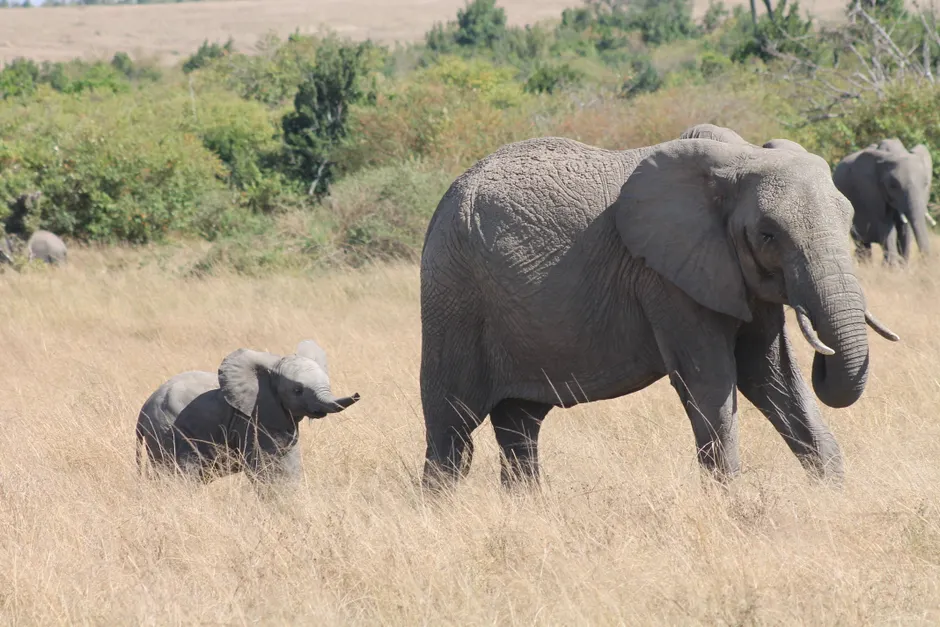
Toxin Suspected as 15 Elephants Die in Kenya's Amboseli Ecosystem

The Kenya Wildlife Service (KWS) is investigating the deaths of 15 elephants in the Amboseli National Park ecosystem over the past month, after preliminary laboratory testing detected a "potential toxic substance" in samples from affected animals. KWS disclosed the investigation in an official statement reported by the Guardian on July 29, 2026 (The Guardian).
Ten of the 15 elephants showed signs of partial paralysis before dying within two days of their first symptoms, according to KWS. The remaining five carcasses were too decomposed or had been scavenged to determine a cause of death. Most of the dead were females and their calves; only one was male. The deaths occurred in the Kimana sanctuary and Kuku ranch areas surrounding Amboseli National Park, which has an estimated elephant population of about 2,000.
The laboratory picture is contradictory. A University of Nairobi lab identified a "potential toxic substance" in elephant samples, but separate analyses by a government laboratory returned negative results for the toxins it tested. KWS has not reconciled the discrepancy publicly. The agency said further tests and environmental investigations, including analysis of water sources and other potential contaminants, are under way. Authorities have stated there is no evidence the condition affecting the elephants can be transmitted to humans.
The Associated Press, datelined from Nairobi, first reported the story on July 28 (AP News), with the Guardian publishing its own account the following day, crediting AP and Agence France-Presse. CBS News reported that Kenya wildlife officials made the announcement on a Tuesday (CBS News). The story was widely syndicated across major outlets, including ABC News and Yahoo News Canada.
Several features of the case are worth examining more closely. The clinical profile — partial paralysis progressing to death within roughly 48 hours across multiple animals — points toward a fast-acting neurotoxin (a poison that attacks the nervous system) or an environmental contaminant rather than an infectious disease. Infectious diseases typically take longer to run their course and would likely produce symptoms in additional animals beyond the cluster identified. The demographic pattern also stands out: the predominance of females and calves suggests a matriarchal family group was feeding or drinking from a shared contaminated source, which fits with the geographically clustered deaths in the Kimana sanctuary and Kuku ranch corridors.
The conflicting laboratory results are less unusual than they may appear. Different facilities typically test for different panels of toxins, so a substance flagged by one lab may simply fall outside the range another lab is equipped to detect. This is a recurring challenge in wildlife toxicology, where sample degradation, interference from biological material, and the sheer diversity of possible plant-derived or synthetic compounds all make it difficult to reach a definitive identification. The decomposition of five carcasses further limits the diagnostic picture, shrinking the sample available for follow-up testing.
KWS's decision to test water sources and the surrounding environment reflects a shift from examining carcasses toward identifying the source of the problem. In Amboseli's ecosystem, water is highly seasonal, and animals gather at a limited number of year-round water points, which increases their exposure concentration. If contamination is tied to one specific water hole or grazing area, the risk to the broader Amboseli population of roughly 2,000 elephants may be limited. If the source is mobile or spread out — for example, a contaminant carried by rainfall runoff — the risk extends across a much wider area.
The assurance from authorities that there is no evidence of human transmission matters for the pastoralist communities living around Kimana and Kuku, who share the landscape and water resources with wildlife. It also narrows the investigative focus: if a disease jumping from animals to people (zoonotic transmission) is not a concern, attention logically stays on an environmental toxin rather than a newly emerging pathogen, though KWS has not explicitly ruled out infectious causes.
The broader context here is that Amboseli's elephants are among the most closely studied populations in Africa, and any unusual mortality event in this ecosystem carries outsized significance for conservation monitoring. The 15 deaths represent less than one percent of the park's estimated population, but the clustering in time, location, and demographic composition is the pattern that triggered the investigation. The speed of the clinical course — two days from paralysis to death — leaves a narrow window for field intervention if additional cases emerge.
KWS has not announced a timeline for completing the environmental investigation or releasing further laboratory results. The agency has also not indicated whether any precautionary measures, such as restricting access to specific water sources, are being considered while testing continues.