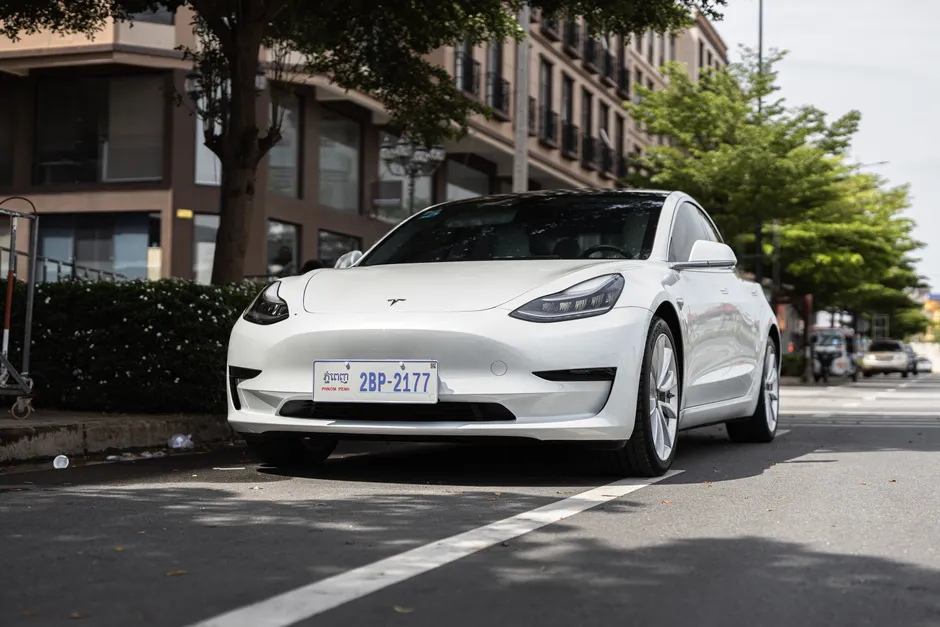
Former Tesla Manager Sues Over Robotaxi Safety Staffing, Claims Retaliation

A former Tesla manager who oversaw Full Self-Driving testing in Houston has filed a lawsuit accusing the company of unlawful retaliation after he tried to escalate safety concerns about understaffed operations. The complaint, first reported by The Independent and subsequently covered by Engadget and Electrek on July 28, 2026, alleges that Tesla's robotaxis became "rolling hazards on public streets" because the safety structure was stretched beyond what it was designed to handle.
Javier Medrano managed a team of safety operators in Houston from October 2024 through May 1, 2025, according to the lawsuit complaint hosted on DocumentCloud. Safety operators are the people who ride in or monitor autonomous vehicles during testing, ready to intervene if something goes wrong. During that period, his team grew to 38 people, well beyond the baseline ratio of 1 manager per 15 operators set by Tesla Autopilot Director Pete Scheutzow. The complaint treats that ratio as the threshold below which safety oversight was considered adequate. Exceeding it by more than double left a single manager responsible for a workload designed for roughly 15 operators.
The lawsuit attributes at least one crash to what it calls Tesla's "under-resourced safety structure." According to the complaint, Medrano processed the accident while physically asleep and gave the operator unsafe guidance, a detail that highlights both the staffing strain and the consequences the filing describes.
Medrano was fired after he attempted to formally escalate safety issues and prove Tesla was withholding resources from the Houston region, the complaint states. The lawsuit characterizes the termination as retaliation for those internal escalation efforts rather than for cause related to the incident itself.
In his filing, Medrano is seeking reinstatement, restitution for an unvested equity award, front and back pay, and compensatory damages for emotional distress, familial strain, and severe financial stress. Engadget reports having asked Tesla for comment on the lawsuit and not receiving a response at the time of publication.
The complaint's allegations arrive as Tesla continues to expand its autonomous driving ambitions, placing the gap between operational deployment and safety oversight under intensified scrutiny. The 1-to-15 ratio set by Scheutzow is, in effect, an internal acknowledgment that human supervision capacity is finite and that exceeding it introduces risk. The lawsuit alleges Tesla made a deliberate resource allocation decision that left the Houston operation beyond that threshold with predictable consequences.
The broader context here is the specific mechanism the complaint describes: a manager processing a crash in his sleep. Whether that characterization is accurate is a matter for the court, but the allegation itself points to a structural question that extends beyond Medrano's individual case. If safety operator teams are sized such that a single manager cannot maintain waking oversight of active incidents, the ratio is not merely a guideline. It is a load-bearing constraint, and exceeding it by 2.5 times suggests either a failure of planning or a deliberate trade-off.
The lawsuit also touches on a pattern familiar from earlier chapters of the autonomous driving industry. Companies pushing the boundary of on-road testing have repeatedly faced tension between deployment speed and adequate safety staffing. What distinguishes this complaint is not the existence of that tension but the specific, documentable claim that an internal ratio was set, exceeded, and that the consequences were escalated internally before the escalation itself became the grounds for termination.
Tesla has not publicly responded to the complaint. The case will turn on evidence presented in court, including internal communications about resource allocation, the timeline of Medrano's escalations relative to his firing, and the circumstances of the crash the complaint describes.
For engineers and safety professionals working in autonomous systems, the details worth tracking are operational: the ratio itself, the team size that exceeded it, and the incident that the complaint ties to that gap. The legal claims of retaliation and wrongful termination will proceed through the courts. The engineering question, whether a 38-person safety operator team under one manager is a viable structure for on-road testing, is one the complaint forces into the open regardless of its outcome.