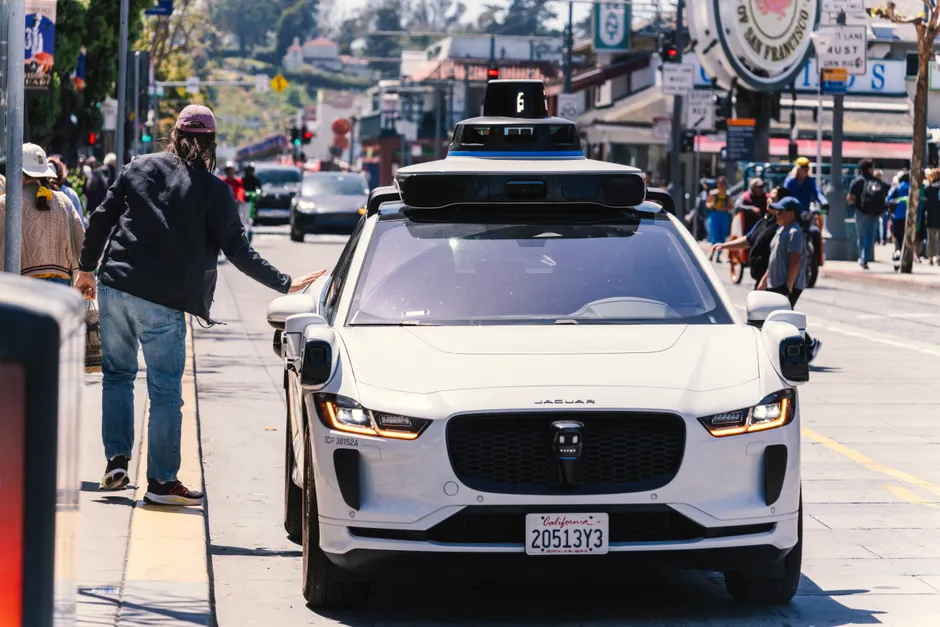
Waymo Robotaxis Return to Phoenix Freeways After Two-Month Safety Pause

Waymo's self-driving taxis will resume freeway driving in Phoenix on July 29, 2026, according to the company's official X account and confirmed by Engadget and TechCrunch. Freeway service in Miami, Los Angeles, and the San Francisco Bay Area will resume "soon," per a Waymo support page.
The return ends a suspension that lasted two months. Waymo launched freeway robotaxi service in San Francisco, Los Angeles, and Phoenix on November 12, 2025, according to Reuters. On May 21, 2026, the company halted freeway rides nationwide and paused Atlanta operations entirely amid safety fixes, as Reuters reported. The trigger: several incidents where Waymo vehicles drove onto sections of freeway closed for construction. On June 18, 2026, Waymo recalled nearly 3,900 robotaxis in the U.S. because a software issue could cause the vehicles to enter closed construction zones, per Reuters.
Waymo told Engadget it "identified an area of improvement regarding performance around freeway construction zones" and paused highway operations to resolve it. The phrasing is measured, but the operational risk was real: a self-driving car entering an active construction closure at highway speed is a failure mode with serious potential consequences. The recall signaled that the fix required a software update pushed across the entire fleet.
Riders in Phoenix who want freeway trips can join an "interest list" in the Waymo app and will be notified when approved for freeway rides. Even approved riders may find the system rerouting vehicles away from highways, citing reasons such as heavy traffic. Riders can check the route and estimated dropoff time before hailing. This phased approach suggests Waymo is bringing freeway capability back cautiously, with an explicit gate between general ride-hailing and freeway-enabled trips.
The broader safety record provides context for that caution. Through March 2026, Waymo has driven 220.6 million rider-only miles — meaning miles with no human driver behind the wheel — according to the company's safety data. Its latest safety analysis covers five operating areas, including Atlanta for the first time. Compared to human drivers in the same areas, the Waymo Driver was involved in 94% fewer crashes causing serious or fatal injuries, 82% fewer airbag-deployment crashes, and 82% fewer injury-involving crashes. For vulnerable road users specifically, the company reports 93% fewer injury-causing crashes involving pedestrians, 84% fewer involving cyclists, and 84% fewer involving motorcyclists.
In Atlanta, across more than 5.4 million fully autonomous miles, the Waymo Driver recorded 94% fewer airbag-deployment crashes and 86% fewer injury-involving crashes than the human benchmark, with zero crashes causing serious or fatal injuries. Waymo now drives more than 4 million miles every week across its fleet and estimates its operations result in one fewer serious-injury-or-worse crash every eight days compared to the human-driving baseline. Over the lifetime of its operations, the company estimates 47 fewer crashes causing serious or fatal injuries, 305 fewer airbag-deployment crashes, and 707 fewer injury crashes than expected from human drivers.
Carol Flannagan, Research Professor at the University of Michigan Transportation Research Institute (UMTRI), has publicly endorsed Waymo's safety methodology and the consistency of results across locations. Waymo has also published the acceptance criteria used to evaluate the Waymo Driver's readiness for public road deployment in a paper on arXiv.
The construction-zone incidents sit in tension with those numbers. The aggregate safety performance is strong on the metrics that matter most for public health outcomes: serious injuries and fatalities. But the failure mode that triggered the suspension was not a crash-statistics problem. It was a perception-and-decision problem: the system's ability to correctly detect and respond to dynamic lane closures and construction barricades at speed. That class of edge case — a rare or unusual situation the system has to handle — is exactly where autonomous driving systems face their hardest tests, because construction zones are irregularly configured, may lack standard signage, and can change from day to day.
Waymo's decision to resume with a gated, interest-list approach rather than a blanket reactivation suggests the company is not treating the fix as fully proven across all conditions. The reroute flexibility, where the system can decline the freeway even for approved riders, adds an additional fallback layer.
Looking ahead, Waymo aims to launch its robotaxi service in London by the fourth quarter of 2026, per Reuters. International expansion will subject the system to left-hand traffic, different road-marking conventions, and an entirely new set of construction-zone patterns. How the construction-zone fix generalizes to infrastructure it has never encountered will be an early test of whether the Phoenix resumption is a localized patch or a durable improvement to the system's core perception pipeline — the software layer responsible for detecting and interpreting what the car's sensors see.