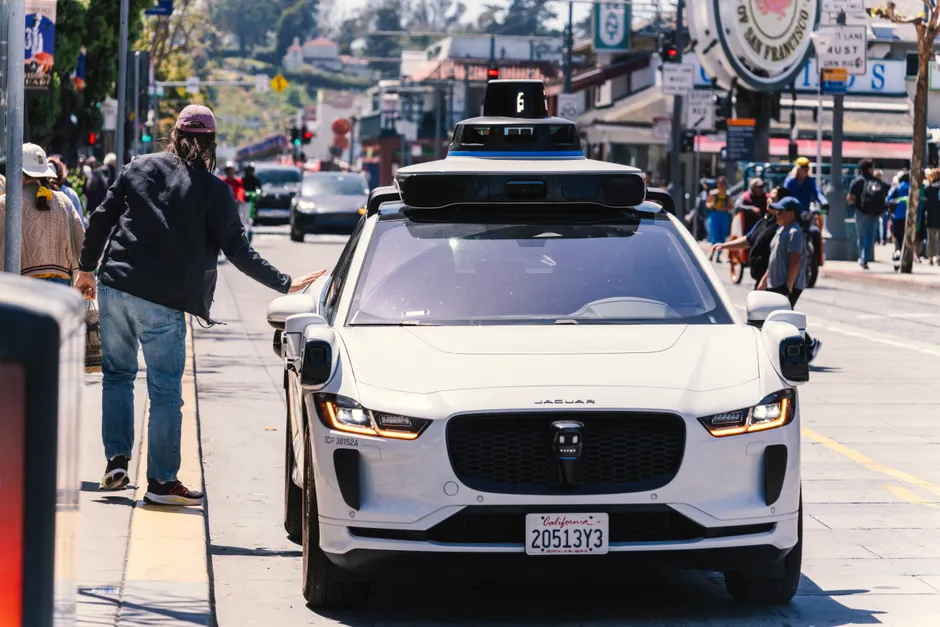
Waymo's Next-Generation Robotaxi, the Ojai, Opens to All Riders in Three Cities

Waymo has opened its next-generation robotaxi, the Ojai, to all riders in Los Angeles, Phoenix, and San Francisco TechCrunch. The move shifts the Ojai from limited employee-and-guest testing that began in February to full public availability across the three initial markets.
The Ojai (pronounced oh-hi) is an electric minivan built by Zeekr, a brand owned by China's Geely Holding Group, on Zeekr's SEA-M vehicle platform. Waymo partnered with Zeekr in 2021 to develop autonomous vehicles for U.S. ride-hailing. The base vehicles arrive without Chinese connected-car software and are fitted with Waymo's self-driving system at the company's Arizona factory. The Ojai is the first vehicle to run Waymo's sixth-generation Driver system, which the company says can operate in snowy conditions, a step beyond the warm-weather cities where autonomous ride-hailing has mostly lived so far Waymo.
Inside, the Ojai has a redesigned rider interface and uses Google's Gemini AI as an in-car assistant. The vehicle was designed from the ground up for ride-hailing rather than adapted from a consumer car, a distinction that affects the interior layout, how passengers get in and out, and the fact that there are no traditional driver controls.
As of the announcement, Waymo had roughly 300 Ojai robotaxis in its commercial fleet, a number climbing quickly. According to MoffettNathanson, 725 Ojai vehicles entered the United States in July 2026 alone, and the firm estimates Waymo is on pace to bring 5,000 Ojai vehicles to the U.S. by the end of 2026, more than double Waymo's current Jaguar I-PACE fleet. Waymo plans to roll out the Ojai in Denver, Las Vegas, and San Diego later in 2026, adding to the 11 U.S. cities where its robotaxi service already operates.
The import-based supply chain carries a cost penalty. U.S. tariffs on vehicles built in China have raised Waymo's per-vehicle cost for each imported Ojai. The company has not publicly disclosed the tariff-adjusted unit economics, but the volume trajectory suggests Waymo views the cost as manageable relative to the deployment scale it intends to reach.
The broader context here is a fleet transition that pairs a cheaper-to-manufacture vehicle platform with a new generation of the autonomous driving system, at a moment when Waymo's cumulative safety data has reached a scale that makes direct statistical comparison to human drivers increasingly credible. UMTRI Research Professor Carol Flannagan has said Waymo is driving enough miles to make direct comparisons to human drivers on crash rates Waymo.
Waymo's safety analysis covers more than 220 million fully autonomous miles through the end of March 2026. Compared to human drivers in the same areas over the same period, the Waymo Driver was involved in 94% fewer crashes causing serious or fatal injuries, 82% fewer crashes in which an airbag deployed, and 82% fewer crashes involving any reported injury. The company reports 93% fewer injury-causing crashes involving pedestrians, 84% fewer involving cyclists, and 84% fewer involving motorcyclists compared to the human benchmark. Waymo now drives more than 4 million miles every week and estimates its operations result in one fewer serious-injury-or-worse crash every eight days. Over its lifetime, the company calculates 47 fewer serious-or-fatal crashes, 305 fewer airbag-deployment crashes, and 707 fewer injury crashes of any kind than human drivers would have been expected to produce over the same mileage.
A city-level Atlanta analysis covering more than 5.4 million autonomous miles found the Waymo Driver was involved in 94% fewer airbag-deployment crashes and 86% fewer injury-involving crashes than the human benchmark. A typical human driver covering Waymo's Atlanta miles would have been expected to be involved in roughly 1.2 crashes causing serious or fatal injuries; the Waymo Driver was involved in none.
Waymo has published its full safety dataset and methodology at waymo.com/safety/impact, and a paper on the acceptance criteria used to evaluate the Driver's deployment readiness is available at arxiv.org/abs/2505.09880.
Waymo riders have taken more than 20 million fully autonomous trips across more than 11 cities Fox News. The company is also introducing fully autonomous driving in five additional cities: Miami, Dallas, Houston, San Antonio, and Orlando Waymo.
The pace from the Ojai's February employee-only debut to full public availability in three cities within six months is brisk by autonomous-vehicle standards, where testing and validation cycles have historically run longer than the consumer hardware cadence many readers are accustomed to. The 5,000-vehicle target by year-end, if reached, would give Waymo a fleet large enough to meaningfully shift ride supply in its operating markets. The Zeekr manufacturing relationship, tariff complications and all, appears to be the mechanism that makes that scale achievable, where the previous Jaguar-based fleet could not.
Two open questions will get answers as the Ojai moves into Denver and other colder-climate markets: whether the sixth-generation Driver's snow-capability claims translate into real winter operations, and whether the Gemini-powered in-car experience is a genuine rider-experience upgrade or a feature in search of a use case.