The US-Iran War: How a Six-Month Conflict Spread Across the Middle East
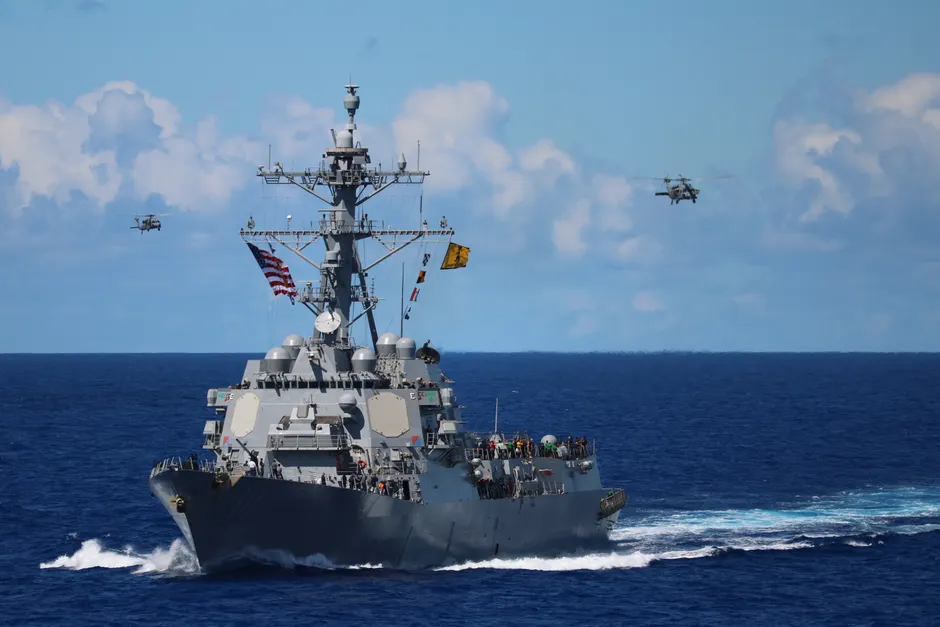
On July 28, 2026, US Central Command announced that American and Saudi Arabian forces had carried out joint strikes against Iran-backed militant targets in Iraq, widening a war now in its sixth month. The next day, Iran repeatedly threatened and attacked ships in the Strait of Hormuz, a narrow waterway through which about one-fifth of the world's oil supply travels. Reuters reported that the joint US-Saudi operations risked pulling additional Middle Eastern countries into a conflict that had already involved direct military exchanges between the United States and Iran since roughly February 2026.
The war began on March 1, 2026, when President Trump launched Operation Epic Fury, a military campaign the White House said was designed to "crush the Iranian regime" and "end the nuclear threat." The opening phase included an overnight strike on three Iranian nuclear sites. Secretary of Defense Pete Hegseth and Chairman of the Joint Chiefs of Staff Dan Caine publicly praised the strike's success. The Pentagon later reported that strikes inside Iran had established local air superiority, meaning US forces could operate in the area with reduced threat from Iranian aircraft or air defenses, improving safety for American personnel deployed in the region.
By early July, the campaign had shifted to sustained, nightly bombardment. On July 7, US forces began striking targets inside Iran, including missile launch sites and air defense systems. A regular rhythm set in: by July 18, the US was striking Iran for the 10th consecutive night, including a strike in Hormozgan province in southern Iran. US Central Command completed a 12th consecutive night, then a 13th on July 24. An earlier Defense Department source had put the count at 12 before the July 24 update raised it to 13. These strikes aimed to weaken Iran's ability to threaten shipping through the Strait of Hormuz.
Iran's responses have come from multiple directions. Around mid-July, Iran attacked a commercial tanker in the Strait of Hormuz. On July 13, Iran launched missile attacks against Qatar, which had been acting as a key mediator, trying to broker peace between the two sides. Then on July 29, Iran again threatened and attacked ships. As of July 10, the US and Iran were exchanging increasingly intense fire across the Middle East, and by July 27, the two sides were trading missile barrages with fading prospects for a quick resolution. The Britannica event summary, published July 30, also confirms that US and Israeli forces began military operations as part of the 2026 Iran war.
On the domestic front, the White House moved to block congressional efforts to wind down US involvement. It issued Statements of Administration Policy, formal documents outlining the president's position on pending legislation, opposing both S.J.Res. 180, a joint resolution directing the removal of US forces from hostilities against Iran, and H.Con.Res. 89, a concurrent resolution with the same goal. Both documents were released in late July, anchoring the administration's legal and political stance as the campaign continued.
The administration has framed its posture around a historical grievance dating to March 2023, when an Iranian drone attack killed an American contractor and wounded five US service members and another contractor. The White House cited this incident in March 2026 as part of a broader record of what it described as the Iranian regime's decades of terrorism against American citizens.
The broader context here is a conflict that has grown from a two-sided US-Iran confrontation into a multi-front engagement. Saudi Arabia joining as a direct operational partner in Iraq and the involvement of Israeli forces represent a widening that earlier phases of the confrontation had not seen. Qatar, previously a channel for de-escalation, became a target. The Strait of Hormuz, through which roughly a fifth of global oil consumption transits, is now an active theater of naval harassment and tanker attacks. Mediators made progress in late July toward bringing the US and Iran back to negotiations to prevent an all-out Middle East war, but those efforts are unfolding against a backdrop of nightly strikes, missile exchanges, and a congressional-executive standoff over war powers.
What comes next hinges on whether diplomatic channels can outpace the military tempo. The administration has shown no indication of curbing operations. Congress has not succeeded in forcing a withdrawal. Iran's attacks on shipping and on a mediator state suggest a strategy of escalation rather than retreat. The question for policymakers and markets alike is whether the campaign's weakening of Iran's military capabilities will change Tehran's strategic thinking, or whether each successive strike and retaliatory salvo hardens the trajectory toward a broader regional war.