XREAL's New AR Glasses Get a Major Upgrade: What 6DoF Means and Why It Matters

XREAL's New AR Glasses Get a Major Upgrade: What 6DoF Means and Why It Matters
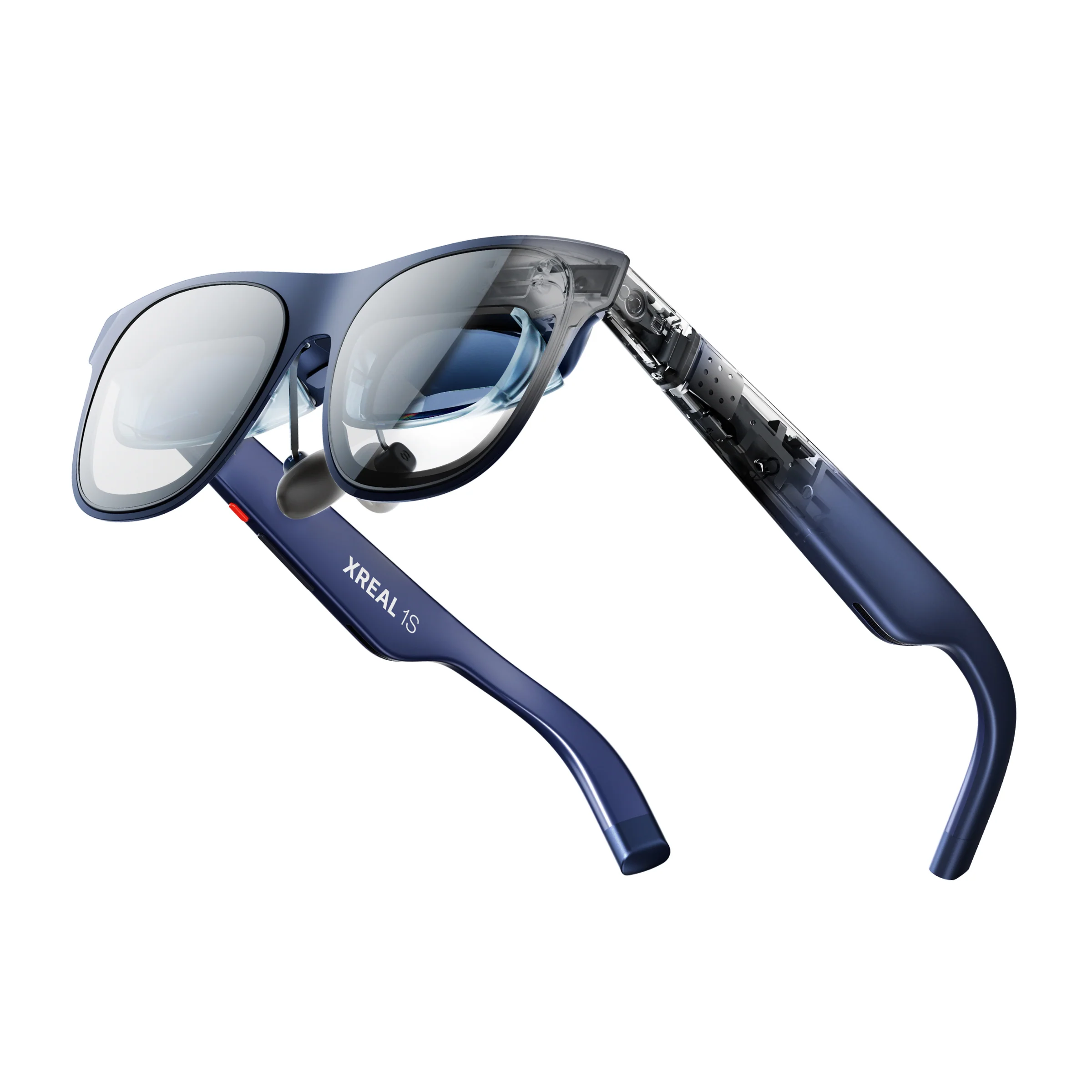
At CES 2024, Chinese AR hardware maker XREAL announced the Air 2 Ultra, a new pair of smart glasses with a significant technical leap: six degrees of freedom (6DoF) tracking. At the same time, XREAL announced partnerships with Qualcomm, BMW, Nio, and others to integrate these glasses into cars, factories, and workplaces.
What does 6DoF mean. Think of it this way: older AR glasses could sense which direction your head was turning—up, down, left, right, tilts. But they couldn't sense that you were moving forward through a room or bending down to look under a table. Six degrees of freedom means the glasses track both rotation and position in three-dimensional space, all at once. That's a meaningful shift in what the technology can do.
What's Actually Changed
XREAL's previous Air and Air 2 models tracked only rotation—three degrees of freedom. The Air 2 Ultra adds full positional tracking, so the glasses know where you are in the room and what direction you're facing simultaneously. This is how the device achieves what industry engineers call "full 6DoF."
The glasses remain tethered to an external compute device—usually a phone or portable computer—rather than running everything onboard. This choice lets the glasses stay lightweight and cool, which is the selling point of the XREAL line. But it also means you can't wander far from your tethered device without losing signal.
The Air 2 Ultra goes head-to-head with more expensive mixed reality headsets from Microsoft, Meta, and Apple. Yet it competes on a different principle: stay light, stay practical, let others build the apps.
Why This Matters for Work and Vehicles
XREAL's new partnerships suggest the company sees AR glasses less as a consumer entertainment gadget and more as a tool for specific jobs. BMW and Nio, a major Chinese electric carmaker, plan to integrate the glasses into vehicles—think navigation, repair guides, and entertainment displayed in your view.
Quintar and Forma Vision, two companies that build industrial software, are building simulation training and manufacturing guidance tools for the glasses. This tells you where the real demand lies: not in entertainment, but in manufacturing floors, repair shops, and training centers.
The Qualcomm partnership is technical scaffolding. Qualcomm's Snapdragon XR chips are now the industry standard for handling the heavy lifting in AR devices—processing camera feeds, motion tracking, and machine learning, all in real time. XREAL is aligning with Qualcomm on today's silicon and tomorrow's roadmap.
The Technical Challenge: Real-Time Processing
Tracking six degrees of freedom is computationally heavy. The Air 2 Ultra has to process video from multiple cameras, sensor data from motion detectors, and mapping algorithms all at once, and deliver the result to your eyes in less than 20 milliseconds—fast enough that your brain doesn't sense a lag. Go slower than that, and users feel nauseous or disoriented.
That's why the glasses stay tethered. Cramming all that processing into a lightweight pair of glasses isn't practical yet. Battery life would crater. Heat would be a problem. So XREAL trades full autonomy for practicality.
Vehicle integration adds another layer of difficulty. Cars see wild temperature swings, vibration from the road, and lighting that ranges from dark tunnels to bright sunlight. Glasses that work fine on a living room couch don't automatically work in a car. BMW and Nio's involvement suggests the Air 2 Ultra has been hardened for those conditions.
The Bigger Picture: Open Platform, Broad Adoption
The broader context here reveals an important choice XREAL has made about how to compete. Apple built the Vision Pro as a closed ecosystem—Apple designs it, controls the apps, owns the experience. Meta wants AR glasses to be a social device, tied to Meta's ecosystem. XREAL is betting differently: open the hardware to multiple partners, let them build their own apps and integrations, and win through breadth rather than control.
This strategy echoes the pattern we saw play out before, when smartphones first arrived. Early phones were locked, closed systems. Over time, open platforms like Android won broader adoption because more manufacturers could build devices and more developers could build software. XREAL is essentially betting that AR glasses follow the same path.
The timing also matters. Manufacturing companies have moved past AR pilots—proof-of-concept projects meant to test the idea. They are now rolling out AR at scale for assembly work, quality checks, and remote support from experts. Those applications need 6DoF. A technician guiding a repair needs to point at a specific bolt on a machine, not just look in a direction. The Air 2 Ultra's 6DoF tracking makes that possible.
Competition is real and getting sharper. Microsoft's HoloLens remains the enterprise leader, even though it's bulkier and more expensive. Meta's Quest Pro targets similar mixed reality work. Apple's Vision Pro raised the bar for display quality. XREAL's edge is a combination of light weight, practical tethering, and a growing network of partners.
In my view, the Air 2 Ultra signals an inflection point for AR adoption. The technology has finally caught up with what real jobs need. 6DoF removes a constraint that has limited previous AR glasses. The partnerships provide distribution and application development—the unglamorous infrastructure that actually gets technology into people's hands and workflows. Hardware alone doesn't win markets; software and partnerships do. That's what XREAL appears to be banking on, and there is historical precedent for that bet paying off.