The U.S. Joined Japan's Yen Rescue. Here's What It Means for Bonds and Your Money.

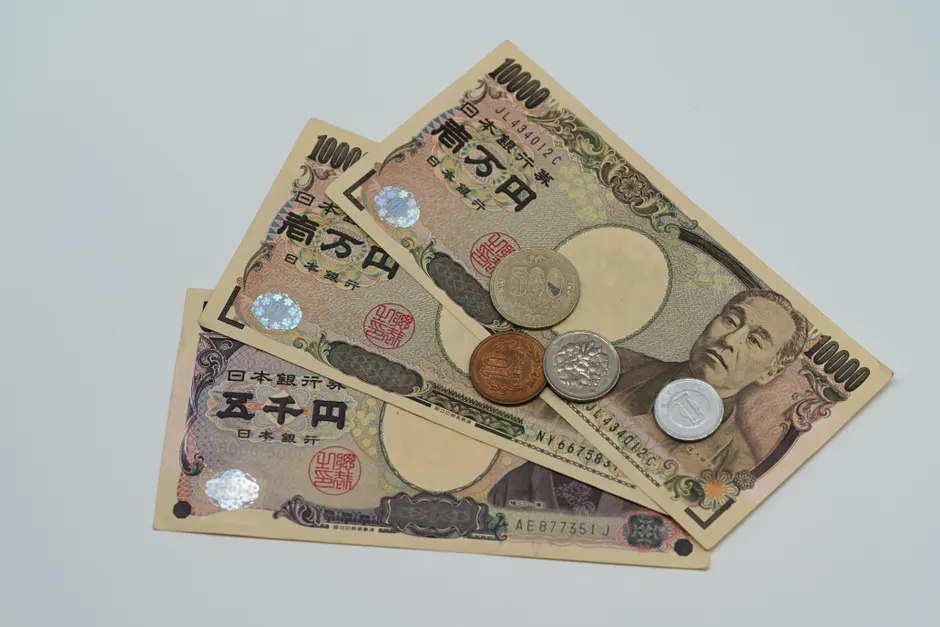
The United States participated in Japan's currency-market intervention to support the yen in early August 2026 — the first such U.S. involvement in decades, according to CNBC reporting dated August 3, 2026. The yen had already gained roughly 3% against the dollar during August, raising the prospect of intervention before the U.S. role was confirmed.
The intervention carries direct spillover risk for U.S. fixed income (the broad market for government and corporate bonds). When Japan moves to support the yen, it typically sells dollars and buys yen. To do that, it draws down dollar-denominated reserves — and those reserves are heavily concentrated in U.S. Treasurys. If those Treasury holdings are sold off or allowed to mature without reinvestment, the supply-demand balance in the U.S. bond market tightens, which can push Treasury yields higher. Think of it like a large landlord suddenly selling rental properties: extra supply hits the market, and prices fall. In bonds, when prices fall, yields rise. On August 4, 2026, Japanese government bond (JGB) yields edged higher, tracking gains in U.S. Treasurys, with the U.S. two-year yield ticking up to 4.179% from 4.162%, CNBC reported.
This intervention caps a year of relentless pressure on Japanese bonds. The Bank of Japan (BOJ) raised its key interest rate to 0.75% from 0.5% on December 30, 2025 — a 30-year high. The same day, the 10-year JGB yield rose 2 basis points (one basis point equals one-hundredth of a percentage point) to 2.075%. By January 2026, 10-year yields surged nearly 19 basis points in two days, the sharpest rise since 2022, in a global bond selloff. Long-dated yields then hit record highs later that month as tax-cut promises across Japan's political spectrum stirred fears about the country's fiscal health.
The selloff deepened through the summer. On July 9, 2026, the 10-year JGB yield rose 3.5 basis points to 2.900%, a 30-year high, amid inflation and fiscal-health concerns. The 20-year climbed 2 basis points to 3.890%, and the 30-year added 3 basis points to 4.030%. As of July 14, the 10-year was trading at 2.781% — over 70 basis points higher than at the start of 2026 — after hitting 2.901% the prior Thursday.
Shorter-term bonds told a more mixed story. On June 9, 2026, ahead of the BOJ meeting, the 2-year JGB yield (the maturity most sensitive to central-bank policy moves) decreased 0.5 basis points to 1.41%, while the 5-year fell 2 basis points to 1.920%. The gap widening between short and long ends reflects a market pricing two different risks at once: BOJ rate normalization at the front end, and fiscal sustainability concerns at the long end.
Japan's Ministry of Finance projected August 2026 JGB issuance accompanied by a buy-back of approximately 250 billion yen. The MOF announced on July 23, 2026 the schedule of 2-year JGBs to be issued in August, and Treasury Discount Bills auctioned on July 30. Five-year government bonds are subject to four issues in fiscal year 2026.
The broader context here is a feedback loop worth watching closely. JGB 10-year yields at 2.900% and 30-year yields above 4% fundamentally change the math for Japanese institutions — historically the largest foreign holders of U.S. Treasurys. At a 4.179% two-year U.S. Treasury yield, the pickup over a 1.41% two-year JGB is roughly 277 basis points. But the cost of hedging currency risk on dollar assets has risen as the yen's level and the BOJ's policy rate shift. Whether Japanese demand for U.S. bonds holds, fades, or actively reverses will depend on the intersection of currency-intervention mechanics, domestic fiscal supply, and the trajectory of the BOJ's normalization cycle.
None of these cross-currents lend themselves to a single directional call. What is known: the U.S. joined the intervention, JGB yields are at multi-decade highs, and the August issuance calendar proceeds with buy-backs of modest scale. What is priced in versus what is merely feared is the distinction that will separate the next leg of this trade.