Uber Calls Waymo Partnership 'Very Strong' Despite Strain Signals
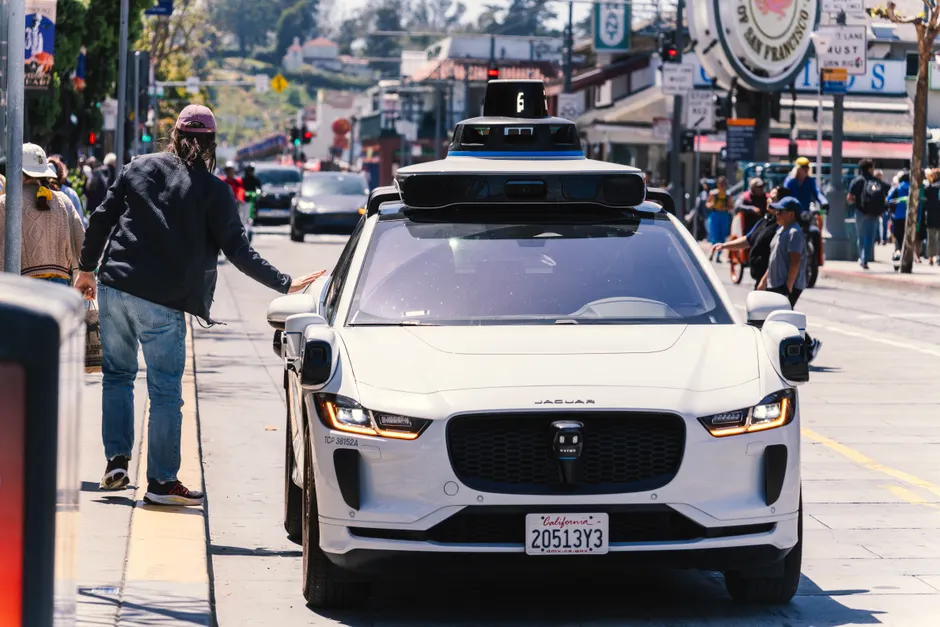
Uber CEO Dara Khosrowshahi told investors on the company's second-quarter 2026 earnings call on August 5 that the Uber-Waymo partnership remains "very strong" and that the two companies will continue operating together in Austin and Atlanta. His remarks come less than two weeks after a Reuters report on July 24 said Waymo was considering ending the partnership over operational and commercial issues, a report that sent Uber shares down 4.3 percent that day. Reuters
Khosrowshahi brushed off the Reuters report during the call, even as Uber shares fell on a weak profit forecast for the coming quarter. The company simultaneously reaffirmed plans to spend upwards of $10 billion building out its robotaxi business. Reuters
The partnership's geography has already contracted. Uber and Waymo ended their robotaxi partnership in Phoenix earlier in 2026, though Austin and Atlanta operations continue. The Phoenix collaboration was the original beachhead: Uber announced the multi-year strategic partnership with Waymo in its Q2 2023 results, making the Waymo Driver available on the Uber platform in Phoenix first. The companies expanded the arrangement in September 2024 to bring autonomous ride-hailing to Austin and Atlanta beginning in early 2025, with rides available only on the Uber app. The Verge
Khosrowshahi was explicit that Uber does not want to be dependent on a single robotaxi partner and will continue building services with other AV players alongside Waymo. AV, short for autonomous vehicle, refers to self-driving cars that operate without a human driver. Uber has partnered with at least six autonomous-vehicle companies: Zoox, Wayve, Avride, Nuro, Motional, and Waabi. The multi-partner strategy is not new for Uber, but the framing on this call signals that the company views platform distribution — meaning its role as the marketplace where riders book trips — rather than exclusivity with any one AV operator, as its structural advantage in autonomous ride-hailing.
The scale of that opportunity, at least today, remains modest. Khosrowshahi said robotaxi rides account for less than 0.5 percent of Uber's overall trip volume. For context, Uber's full-year 2025 results showed revenue growing 20 percent year-over-year to $14.4 billion, with gross bookings of $193 billion. The company's net income for 2025 included a $5.0 billion benefit from a tax valuation release alongside a $97 million net headwind. Those numbers make clear that robotaxis are a forward bet, not a current revenue driver.
Uber has also taken its multi-partner posture into the regulatory arena. In July 2026, Uber and Waymo took opposing positions on a Washington, DC bill that would legalize robotaxi services. Waymo supported the bill. Uber pushed for a hybrid model that would combine human-driven and autonomous rides, consistent with a white paper the company published emphasizing that approach over an AV-only model. The Verge
The policy split is notable. A platform operator arguing for a hybrid framework against a pure-play AV operator is a divergence that goes beyond commercial disagreements over terms or operations. It reflects a structural difference in how each company sees the transition to autonomous ride-hailing unfolding, and at what pace human drivers should be displaced from the mix.
The broader context here is a familiar pattern in technology markets: platform-versus-partner tension. Uber is building a distribution layer for autonomous rides while simultaneously funding its own capabilities and hedging across six AV partners. Waymo, for its part, is a vertically integrated operator with its own driverless software stack and a direct consumer app, which gives it less structural dependence on Uber's marketplace. The Phoenix exit and the DC policy clash suggest the commercial relationship is under genuine strain even as Khosrowshahi characterizes it as strong on the call.
The question worth asking is whether a "very strong" partnership that has lost a major market, faced public reports of a potential rupture, and produced opposing regulatory lobbying in the same month can sustain the operational integration needed for the remaining cities. The $10 billion robotaxi commitment gives Uber significant runway to build its own position. But with robotaxis at under half a percent of trip volume today, the returns on that investment are still far on the horizon, and the partnership dynamics that surround it are visibly unsettled.