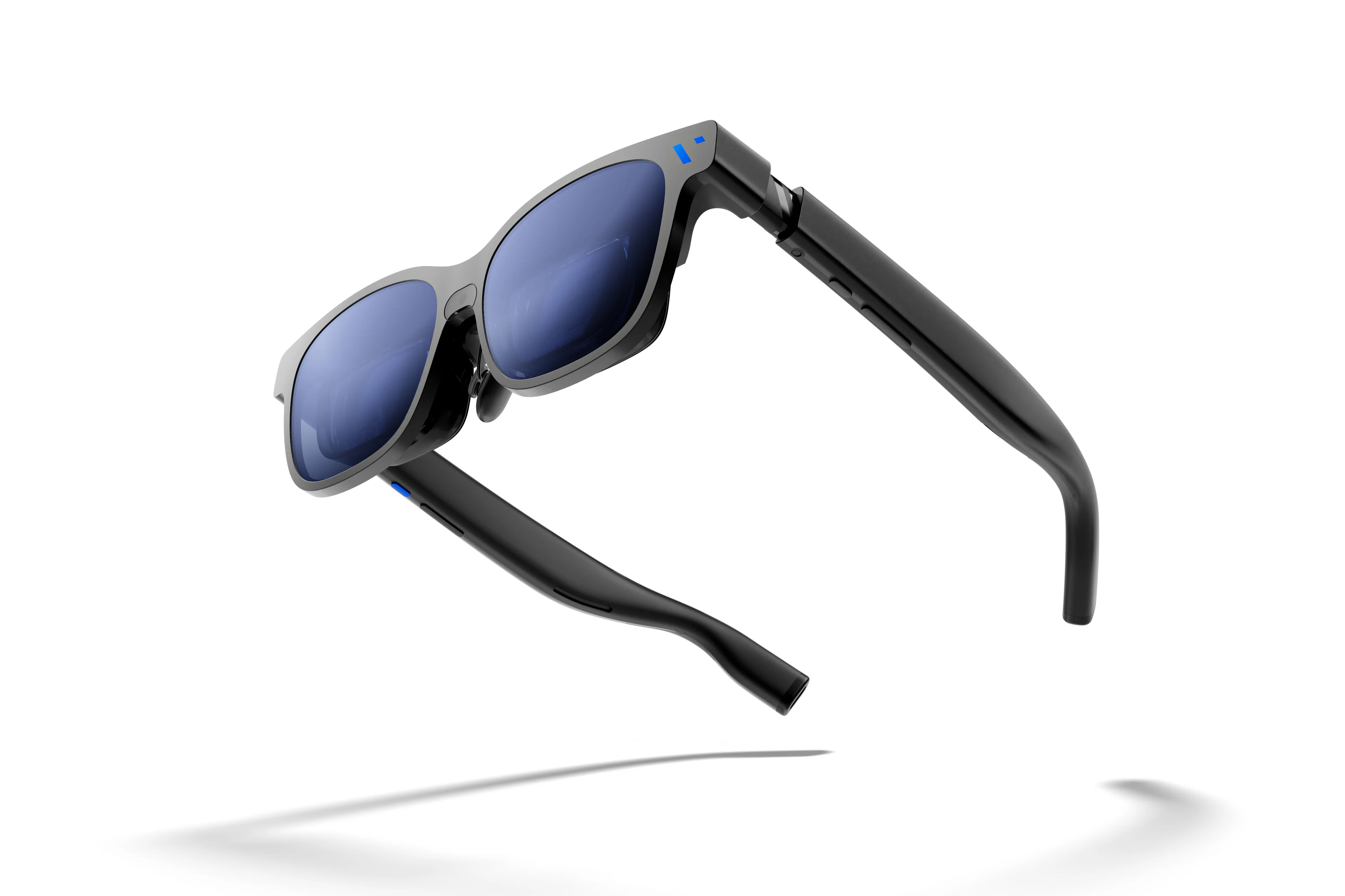
Viture Pro 2 Smartglasses: Lighter, Brighter, Still Tethered
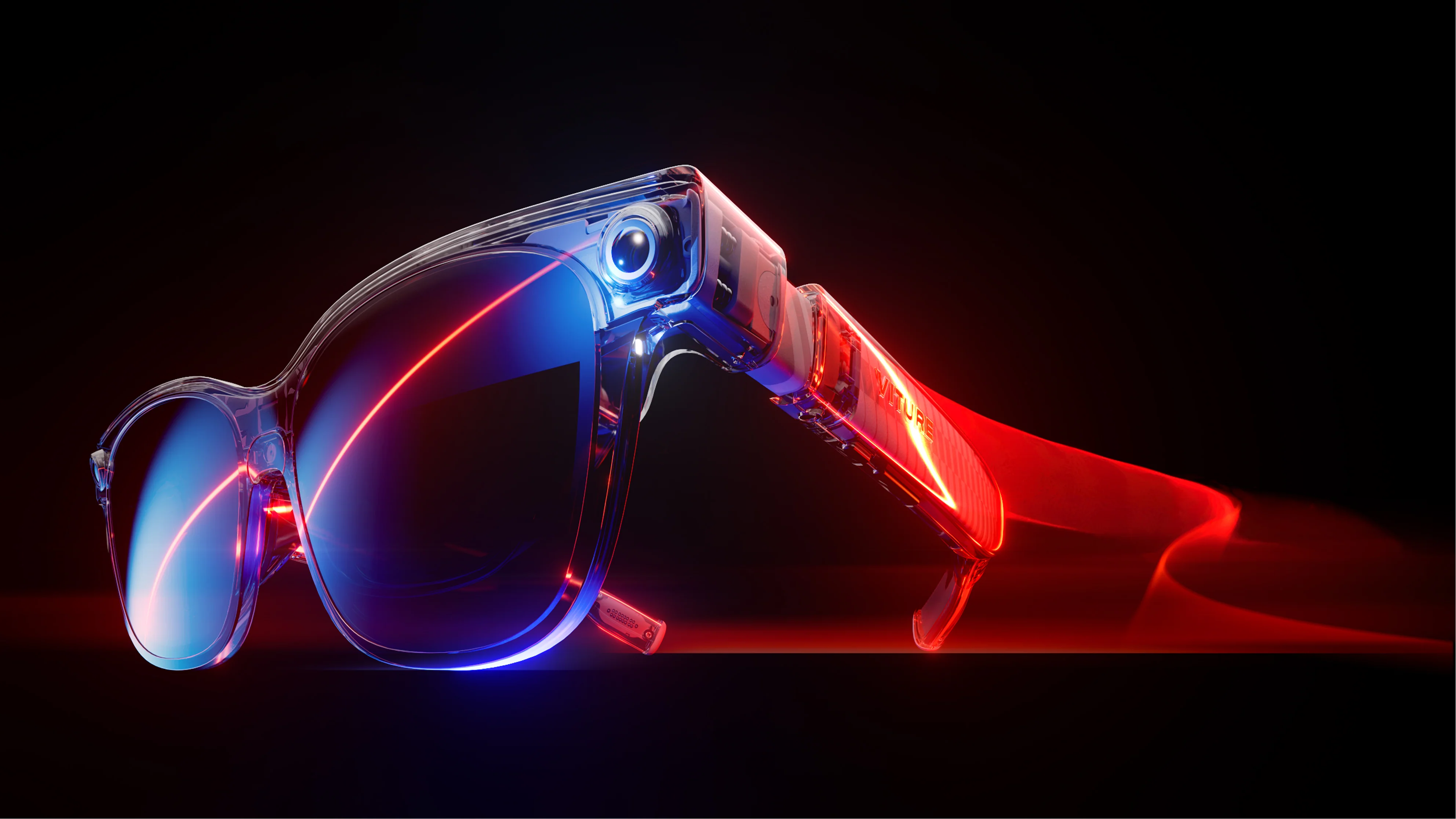
Viture announced the Pro 2 smartglasses on August 6, 2026, the company's fifth anniversary. The device is Viture's lightest and thinnest to date, with pricing starting at $299. Engadget
The Pro 2 weighs 63 grams, a 20 percent reduction from the original Viture Pro, and is 16 percent thinner. The displays still use birdbath optics, a type of lens system that bounces light from a small screen through a series of mirrors to your eye. It is a deliberate tradeoff: birdbath optics are comparatively inexpensive and deliver solid image quality, but they require a wired USB-C connection to a host device such as a smartphone or laptop. That rules out the standalone, wireless operation that more advanced waveguide-based AR glasses aim for.
Sony micro-OLED panels drive the displays, delivering 1920 x 1080 per eye at a 120Hz refresh rate. Viture has tuned the gamma curve for more accurate color reproduction than prior models. Peak brightness reaches 1,600 nits through what the company calls UltraClarity 3.0 technology, a meaningful figure for outdoor or high-ambient-light use where earlier generations struggled. The field of view widens from 46 degrees on the previous model to 50 degrees, closing some of the gap with dedicated VR headsets while remaining in the wearable optics category.
A built-in diopter allows individual eye adjustment from 0 to -5.00D, eliminating the need for prescription lens inserts for many users. That is a practical inclusion: short-sightedness correction integrated into the frame removes a friction point that has dogged smartglasses since the category's inception.
Alongside the Pro 2, Viture announced the Mobile Dock Mini at $99. The dock weighs roughly 250 grams, making it 34 percent smaller and 30 percent lighter than its predecessor. It houses a 10,000mAh battery and supports the Nintendo Switch 2, with a detachable magnetic adapter that functions as a standalone hub. The previous-generation Pro Mobile Dock was updated ahead of the Switch 2 launch to enable what Viture described as the world's first Switch 2 XR gaming experience, and the Mini extends that compatibility in a more portable form factor. Viture
The company's earlier VITURE One XR glasses displayed content on a 120-inch virtual screen when connected to a phone, laptop, or gaming console, and the Pro 2 maintains that spatial display paradigm. Viture's product blog has highlighted the comfort and versatility of its broader AR lineup, including praise for sharp picture quality and smooth refresh rates across devices.
Viture secured $100 million across two Series B rounds in September 2025, capital that has evidently gone into refining the Pro 2's display pipeline and industrial design rather than pursuing a fundamental optics shift. The Pro Mobile Dock line is positioned as the only device capable of making any HDMI or USB-C source shareable in XR, a claim that hinges on the dock's broad input compatibility.
The broader context here is that tethered smartglasses occupy a specific rung on the AR ladder. They are not competing with Meta's Ray-Ban smart glasses, which prioritize capture and ambient computing, nor with fully standalone AR headsets still in early commercialization. The Pro 2 is aimed at a user who wants a high-quality private display for gaming, media, or productivity, with the host device doing the compute heavy lifting.
At 63 grams and $299, the Pro 2 sits at a price point that undercuts many dedicated portable monitors while offering a fundamentally different experience: a 50-degree virtual screen mounted on your face, corrected to your prescription, bright enough for most environments. Whether birdbath optics have a long-term future as waveguide costs decline is a legitimate question. For now, the format delivers a combination of image quality and affordability that waveguide-based designs have not matched.
Viture has not abandoned the category's core limitations. The wired connection is still a tether. Battery life depends entirely on the host device. But the Pro 2 narrows the gap between smartglasses as a niche accessory and smartglasses as a practical personal display, and the $299 entry price puts that proposition in front of more buyers than ever.