Houthi Rebel Strikes Kill at Least 30 Yemeni Government Troops in Coordinated Multi-Site Attack

At least 30 Yemeni government troops were killed in Houthi rebel attacks on military camps in central Yemen on August 6, 2026, according to government sources cited by Reuters and the Associated Press.
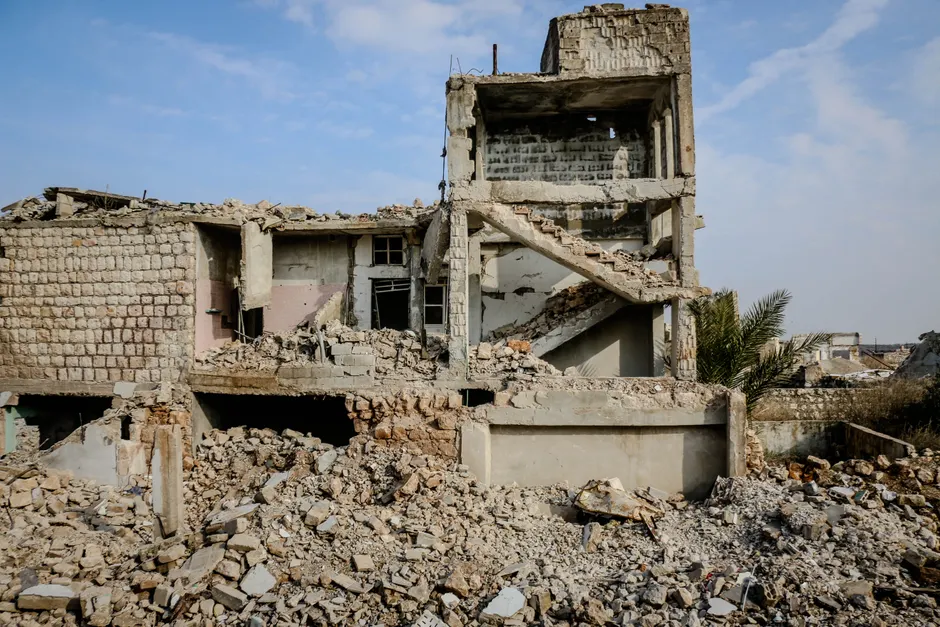
The strikes targeted camps run by the Emergency Forces in the al-Ruwaik area of Marib province and the al-Abr area of Hadramawt, government sources said. Missiles and drones were used in the coordinated assault, hitting two geographically separated locations that serve as key staging and operational hubs for forces loyal to Yemen's internationally recognized government (BBC).
Yemeni Health Minister Qasim Bahibah condemned the attack as "treacherous" but declined to provide a casualty figure. The death toll of at least 30 was reported by government sources and has not been independently verified.
A military spokesman for the Iran-backed Houthis said the group had targeted "large Saudi military build-ups" at the camps. The claim that Saudi forces were present or massing at these installations was not corroborated by Yemeni government sources, and the Houthi statement did not specify the basis for that assessment (BBC).
The August 6 strikes follow a broader pattern of escalation. On July 25, Houthi rebels announced they had fired missiles and drones toward Saudi Arabia, describing the launches as retaliation for Saudi air strikes on Houthi positions (The Hill). Houthi military spokesman Yahya Saree separately accused Saudi Arabia of carrying out air strikes targeting Sanaa, the Yemeni capital under Houthi control since 2014.
Saree also announced the targeting of three U.S. destroyers in the Red Sea (CFR), a claim consistent with the Houthis' prior pattern of attacks on naval vessels in the Red Sea and nearby waterways. The timing of that announcement relative to the August 6 camp strikes was not specified in available reporting.
The choice of Marib and Hadramawt as simultaneous targets carries operational weight. Marib province has been a focal point of Yemen's ground war for years, home to energy infrastructure and acting as a stronghold for government-aligned forces. Hadramawt, Yemen's largest province by area, stretches to the country's eastern reaches and has seen periodic insurgent activity but is not a traditional front line in the same intensity as Marib. Striking both at once suggests a deliberate effort to stretch government defensive capacity across multiple directions rather than concentrate on a single contested zone.
The Houthi characterization of the targets as "large Saudi military build-ups" is a framing worth examining. Conflating Yemeni government forces with Saudi military presence has been a recurrent feature of Houthi communications, serving both an internal propaganda function and an external signaling purpose directed at Riyadh and its coalition partners. Whether any Saudi personnel or equipment were actually present at al-Ruwaik or al-Abr at the time of the strikes remains unconfirmed.
The broader context here is one of compounding escalation across multiple theaters simultaneously. Houthi forces are operating against Yemeni government troops on the ground, launching projectiles toward Saudi territory, and engaging U.S. naval assets in the Red Sea. These are not necessarily coordinated campaigns with a single strategic logic, but they collectively signal a posture of sustained, multi-vector pressure that complicates any de-escalation pathway. The August 6 camp strikes, in particular, show a capability for coordinated, multi-site strikes using both missiles and drones against hardened military targets, which is a level of operational sophistication that raises the cost calculus for any party contemplating a return to negotiations.
Casualty figures in Yemen's conflict have been consistently difficult to verify independently, given restricted access to conflict zones and the information control exercised by all parties. The 30-troop figure comes from government sources; Houthi-controlled media has not released a corresponding assessment of the strikes' effects, and no independent confirmation was available at the time of reporting.
The attack also places pressure on the internationally recognized government's military posture at a moment when its forces are spread across multiple fronts. The loss of personnel at Emergency Forces camps, which function as rapid-response and internal-security units rather than conventional frontline infantry, may have disproportionate consequences for the government's ability to maintain order and respond to subsequent Houthi advances in the interior.
Saudi Arabia has not publicly commented on the Houthi claim that its forces were targeted at the camps, and the coalition's response, if any, has not yet been articulated. The trajectory of this escalation, whether it draws direct Saudi retaliation or stays within the Yemeni theater, will depend on whether the August 6 strikes are treated as an isolated operation or the opening of a renewed campaign against government-held interior positions.