Houthi Strikes on Yemeni Government Forces Signal a Fragile Truce Unraveling
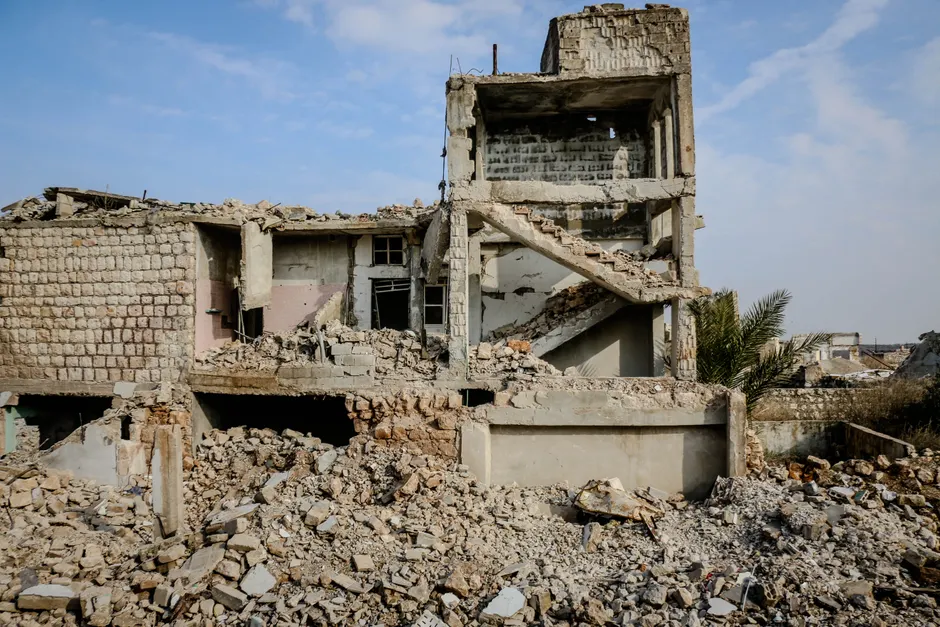
On August 7, 2026, Houthi missiles and drones struck military camps and gatherings in Yemen's Hadramout and Marib provinces, killing at least 30 government soldiers and wounding 15 others, according to Reuters. The assault marked the first major Houthi attack on government forces inside Yemen in years (Al Jazeera).
Houthi military spokesperson Yahya Saree claimed in a broadcast statement that the attacks killed "hundreds" and "destroyed a large number of camps and depots" (Al Jazeera). Saree said the strikes were launched after Houthi forces detected a large Saudi military mobilization aimed at escalation (Al Jazeera). The reported casualty figures from ground sources and Houthi claims diverge sharply.
To grasp why this matters, some background: the Houthis and Yemen's internationally recognized government have been at war since the Houthis captured the capital, Sanaa, in September 2014. A Saudi-led coalition — a military alliance of countries led by Saudi Arabia — intervened in March 2015 on the government's side. The conflict has largely halted since April 2022, when the rival sides reached a United Nations-sponsored truce, a formal agreement to pause fighting (Al Jazeera).
The August 7 strikes follow a rapid sequence of escalations across multiple fronts. On July 4, 2026, direct military confrontations between government and Houthi forces took place in Hodeidah governorate (Security Council Report). On August 3, government forces repelled a Houthi infiltration attempt in southeastern Taiz, destroying a militia vehicle with artillery fire (Saba News).
In July 2026, the Houthis fired missiles at Saudi Arabia after accusing the kingdom of bombing an airport under their control, breaking years of cross-border calm (Reuters). Later that month, the Houthis announced a naval blockade — an effort to cut off maritime access — on Saudi ports and attacks in the Bab al-Mandeb Strait, a narrow chokepoint between the Red Sea and the Gulf of Aden through which a large share of global trade passes (Al Jazeera). The Saudi-led coalition stated it would respond to the blockade with force (Reuters).
The Houthis have also escalated their maritime campaign. On July 28, Saree announced a missile attack on the Saudi oil tanker NCC GHAZAL (Al Jazeera). On August 5, Saree said the group targeted a second Saudi oil tanker, the "Daisy," in the Gulf of Aden with a ballistic missile. The Houthis threatened to expand their Red Sea attacks while claiming the tanker strikes (New York Times.
Yemen's Parliament strongly condemned Houthi attacks on international shipping in the Red Sea (Saba News). Yemen's Foreign Minister discussed the Iran-backed Houthi militia's threats to international maritime security and its attacks on oil export facilities, while praising Norwegian humanitarian support and noting continuous Houthi attacks on commercial ships (Saba News; Saba News).
US President Donald Trump threatened to strike Yemen and Iran if the Iran-backed Houthis continue attacking ships in the Red Sea (DW).
The August 7 strikes on Marib and Hadramout marked a turning point in Yemen's conflict, according to Al Jazeera, with analysts saying the country appears to be edging closer to a wider conflict. Ahmed Nagi, a senior analyst at the International Crisis Group, said the Houthis' expansion of cross-border attacks on government forces means the threat of all-out war is no longer far-fetched (Al Jazeera).
The broader context here is a simultaneous unraveling of the April 2022 truce along both internal and external axes. The Houthi strategy appears to involve coordinated pressure on Saudi maritime infrastructure, Red Sea shipping lanes, and Yemeni government military positions. Saree's claim of a detected Saudi mobilization, whether accurate or a pretext, gives the group a stated rationale for striking government camps in Marib — a province critical to Yemen's energy production — and the vast Hadramout governorate. The convergence of Houthi maritime escalation in the Bab al-Mandeb and Gulf of Aden with direct ground-force strikes inside Yemen suggests a deliberate widening of the operational theater rather than a localized exchange of blows. With the Saudi-led coalition committing to a forceful response and the United States threatening direct strikes against Houthi and Iranian targets, the chain of escalation now involves multiple state actors with overlapping but distinct red lines.