Yemen's Government Goes on the Offensive as Houthi Strikes Escalate Across Multiple Fronts

Yemeni government forces launched attacks on Houthi positions across several front lines on August 8, 2026, hours after the Houthis renewed shelling of Marib city. A Yemeni military spokesman said the operation targeted Houthi capabilities and forces along multiple axes and the line of contact, describing it as necessary to protect unarmed civilians (Al Jazeera).
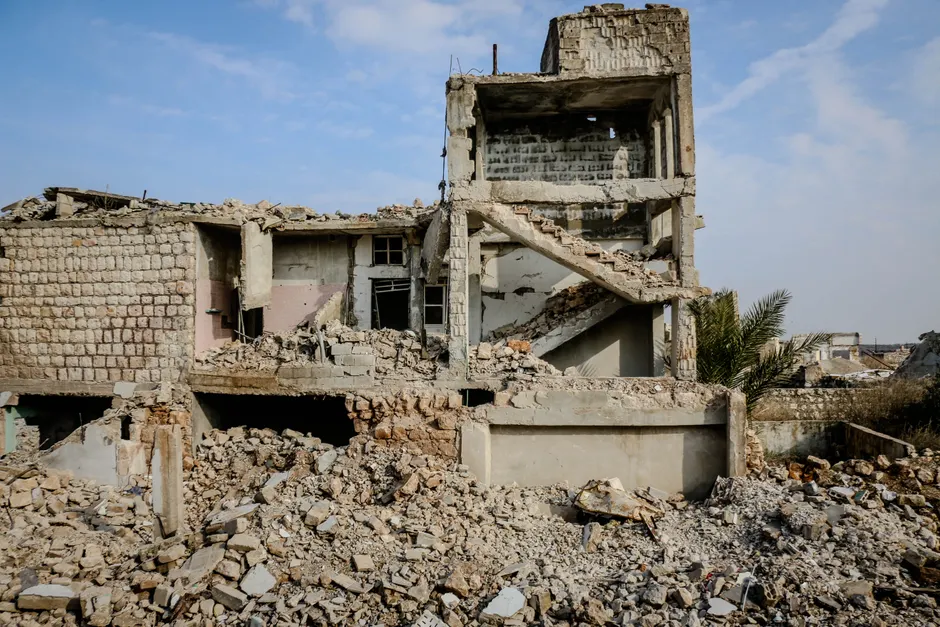
The counteroffensive follows a sharp escalation that began on August 6, when Houthi missile and drone attacks on the provinces of Hadramout and Marib killed at least 30 government soldiers and wounded 15 others. Yemen's defense ministry said ballistic missiles and drones struck several military camps in both provinces (BBC). The Houthis said they launched drones and ballistic missiles at Saudi-led coalition and Yemeni government military sites in Marib and other locations (Al Jazeera). On August 7, Houthi forces fired at least 12 additional missiles at Hadramout and Marib (Al Jazeera), and an attack on Marib city that day killed two civilians and wounded 14 more, according to Yemen's Health Ministry. Reuters reported that ballistic missiles and drones were launched at displacement camps (camps for people forced to flee their homes) and residential neighborhoods (Reuters. The Houthis said they were targeting a military camp on the outskirts of Marib city, while the Yemeni army said it repelled a separate attack on Friday evening without casualties (Al Jazeera).
Deputy Information Minister Mohammed Gezan said on August 8 that the Houthis had resumed shelling civilian neighborhoods in Marib city with missiles and drones (Al Jazeera). Anadolu Agency separately confirmed the renewed shelling of the densely populated city (Anadolu Agency). The stakes for civilians are acute: Marib city hosts more than 2 million of Yemen's nearly 5 million displaced people.
Al Jazeera's Yousef Mawry, reporting from Sanaa, noted that the August 8 counteroffensive was the first time in months the government had announced such an operation (Al Jazeera).
The Houthis claim they are acting on suspicions that Yemeni government forces are coordinating with Saudi Arabia on a broader offensive against Houthi-held territory (Al Jazeera). Those suspicions are not unfounded in the context of recent events. On August 6, the Houthi group said in a statement that it would not "tolerate" any Saudi military presence inside Yemen's borders (Al Jazeera). Earlier, Yemeni military forces targeted the runway at Sanaa airport to stop an Iranian plane from landing, according to a defense statement reported by Reuters on July 14. The Houthis then fired missiles at Saudi Arabia after accusing the kingdom of bombing an airport under their control (Reuters. On July 21, Reuters reported that the Houthis had announced a naval blockade of Saudi Arabia (a military effort to block ships from entering or leaving Saudi ports), threatening a new front in the conflict, and the Saudi-led coalition said it would respond with force (Reuters. Saudi air defense units have intercepted multiple missiles fired from inside Yemen, according to the Saudi-led coalition (AP. A series of Houthi attacks also left more than 10 civilians injured in Saudi Arabia, including a 4-year-old child (AP).
Yemen's 2022 truce (a temporary ceasefire agreement) has expired, so the country's civil war never technically ended. The UN has called for de-escalation, condemning both the Houthi missile attacks and the group's continued strikes on oil tankers in the Red Sea (Al Jazeera). Reuters reported on August 7 that the UN warned Yemen was nearing a wider conflict (Reuters.
Elisabeth Kendall, a Middle East specialist and president of Girton College at Cambridge, said the escalation carries a looming possibility of tipping Yemen back into full-scale conflict. Kendall also noted that Yemeni government forces are now more unified than in previous years, a shift that could work in the government's favor if Saudi Arabia intervenes decisively (Al Jazeera). Al Jazeera reported on August 7 that the pattern of Houthi attacks on government forces hints a major battle is brewing (Al Jazeera).
The broader context here is one of layered escalation across three simultaneous vectors — think of three fires burning at once, each feeding the others. The first is the intra-Yemeni front, where Houthi strikes on military positions in Marib and Hadramout have produced the highest government casualty figures in a single day in months. The second is the Houthi-Saudi axis, where a declared naval blockade, cross-border missile fire, and civilian casualties on Saudi soil have drawn coalition threats of force. The third is the maritime dimension in the Red Sea, where Houthi strikes on commercial shipping have persisted alongside the land campaign. These vectors are not independent. The Houthis' stated rationale for striking government forces is a perception of Saudi-Yemeni military coordination, and any decisive Saudi intervention would likely accelerate rather than dampen the Houthi offensive. Kendall's observation about government force unification adds a variable that was absent during earlier phases of the war, when factional fragmentation within the anti-Houthi camp blunted successive offensives. Whether that unification holds under sustained pressure will be a determining factor in how far the current escalation travels beyond the current line of contact.