US Revokes Iran Oil Waiver After Hormuz Tanker Strikes, Deepening Sanctions Squeeze

The U.S. Treasury Department revoked the Iran oil sanctions waiver on Tuesday, July 7, 2026, days after three tankers were struck in the Strait of Hormuz CBS News. The waiver, issued June 21, 2026, had authorized the sale of Iranian oil and petrochemicals — not solely crude, as OFAC's program page had earlier framed it — and its revocation triggers a wind-down period under a new instrument, Iran General License X1 OFAC The Hill.
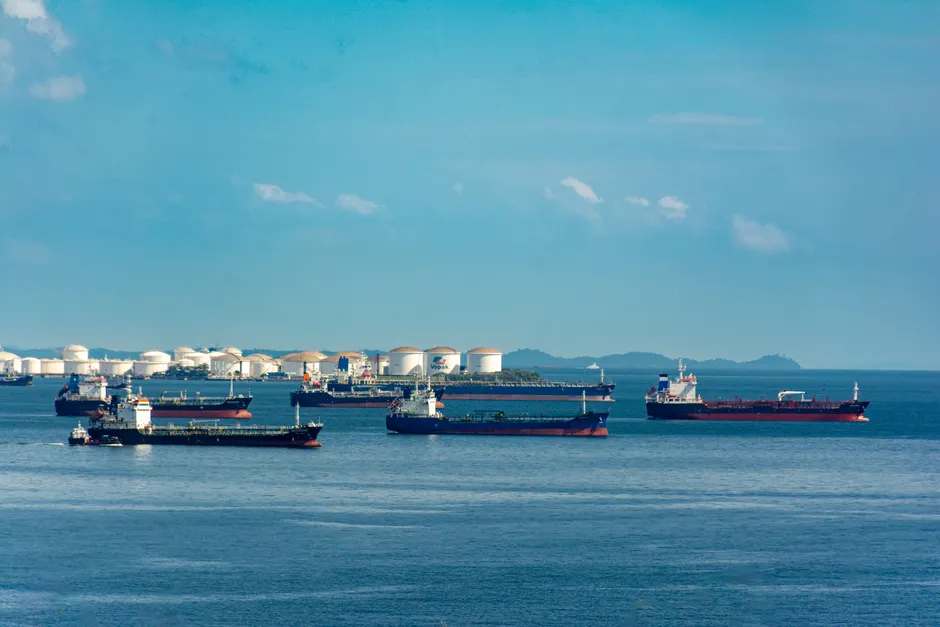
The tanker attacks that prompted the move struck in the Strait of Hormuz, the chokepoint through which roughly a fifth of global seaborne oil transits France 24. Neither France 24 nor CBS News has yet specified the tankers' flags, cargo, or the party responsible for the strikes, and Treasury's public notice does not assign attribution. The revocation nonetheless arrives as the latest escalation in a conflict that has run for more than a year.
That conflict traces to the U.S. strike on three Iranian nuclear infrastructure sites in the overnight hours of June 21-22, 2025, executed by U.S. Central Command between 6:40 p.m. and 7:05 p.m. Eastern Time Defense Department. One target was the Fordow Fuel Enrichment Plant, struck with 30,000-pound GBU-57 Massive Ordnance Penetrator bombs — the first operational use of that weapon against a hardened underground enrichment facility Defense Department. Secretary of Defense Pete Hegseth and Joint Chiefs Chairman Gen. Dan Caine laid out the operation's mechanics at a joint press briefing the following day.
What followed was not containment but an open-ended air campaign. The U.S. has since conducted sustained strikes against Iran under the designation Operation Epic Fury, which Hegseth described as narrowly scoped in objectives as of early March 2026 Defense Department. The campaign's legal footing was set out by the State Department's Office of the Legal Adviser in April, in a document responding directly to what it characterized as Iran's historically massive direct and indiscriminate ballistic missile and drone strikes against Israel that same month State Department. A separate Iranian attack in late March 2026 injured U.S. service members at a targeted facility, according to a State Department fact sheet released in June State Department.
Parallel to the kinetic campaign, Washington has layered on a sanctions architecture aimed at Iran's revenue and procurement networks. President Trump signed Executive Order 14382 on February 6, 2026, reaffirming the long-standing national emergency with respect to Iran and, notably, establishing a tariff-imposition mechanism tied to Iranian conduct — a tool distinct from the asset-freeze and export-control measures that have anchored the sanctions regime since 1979 White House fact sheet. In May, State sanctioned four entities accused of supplying satellite imagery that enabled Iranian military targeting State Department. June brought two further tranches: sanctions on digital asset exchanges tied to terror financing on June 2, and measures against energy-smuggling and illicit-finance networks on June 5 State Department.
The waiver revocation reads as the logical next rung on that ladder rather than a departure from it. Where the February executive order and the spring sanctions targeted the periphery of Iran's sanctions-evasion infrastructure — shadow-fleet enablers, satellite imagery vendors, crypto exchanges — Tuesday's action strikes at the core authorization that had permitted any Iranian petroleum sales at all. General License X1's wind-down provisions will matter enormously for counterparties still holding cargoes or contracts under the June 21 authorization; the length and terms of that wind-down period, not yet detailed in available reporting, will determine how much near-term disruption spot and term buyers absorb.
The timing relative to the Hormuz strikes invites an obvious reading: that Washington is treating attacks on tanker traffic as sufficient cause to eliminate the legal channel for Iranian crude and petrochemical exports outright, rather than tightening it incrementally. Whether that calculus holds if Iran or affiliated actors escalate further in the Strait — a waterway Iran has periodically threatened to close outright over the past two decades — is the open question hanging over markets and shipping insurers alike. Global benchmark crude prices and war-risk premiums for Gulf transits will be the near-term barometers of how seriously the market weighs renewed closure risk.
What remains unresolved in the public record is attribution for the tanker strikes themselves. Until Iran, a proxy, or another party is formally named, the waiver revocation functions as a policy response to an act of uncertain authorship — a pattern consistent with how Washington has handled ambiguous provocations in the Strait since the tanker war era of the 1980s, when responsibility was often contested even as retaliatory measures proceeded.