The Impossible Choices of a Deadly Wildfire Season: Europe Burns, and the Triage Has Only Begun

Deadly wildfires engulfed western Europe in July 2026, the consequence of a trio of heatwaves that turned vegetation into dry tinder, killing 13 people in southern Spain's Almería province and torching an unprecedented area of France as of mid-July The Guardian. France, Portugal, and Spain each recorded a record-breaking number of wildfires for that point in the calendar year. On July 17, 2026, firefighters backed by 30 aircraft were still struggling to contain a blaze in northeastern Spain Reuters.
The crisis is not confined to the European landmass. Smoke from approximately 100 fires burning in northern Ontario, Canada made Toronto the most polluted city in the world on Wednesday, July 15, 2026 The Guardian. That smoke crossed the US border and degraded air quality in New York City. The EU's Copernicus agency issued "extremely poor" air quality warnings for areas including New Jersey on Friday, July 17, 2026. New Jersey hosted the World Cup final the following day, July 19. The transboundary smoke threat is not hypothetical: a study cited in The Guardian's feature found that far-reaching fumes from Canadian wildfires caused 82,000 early deaths in 2023, including 33,000 in the United States and 22,000 in Europe.
The United Kingdom, rarely associated with large-scale wildfire emergencies, had 19 separate wildfires burning at the start of the week of July 13, 2026. Experts quoted in The Guardian warned of a "firewave" more widespread than any previously recorded in the country.
The human and operational toll is most visible on the fire line. César Alcaraz, an officer (Oficial) and spokesperson (portavoz) for the Consorcio Provincial de Bomberos de Alicante, has been fighting wildfires since the late 1990s The Guardian; Cadena SER. Early in his career, he was ambushed by a fast-moving blaze in Spain's Montgó mountain region. Alcaraz likened wildfire command decisions to those of a doctor in an emergency room with too few ventilators. He reports that concurrent blazes are now occurring more often and earlier in the year, forcing immediate triage decisions when two or three fires break out simultaneously.
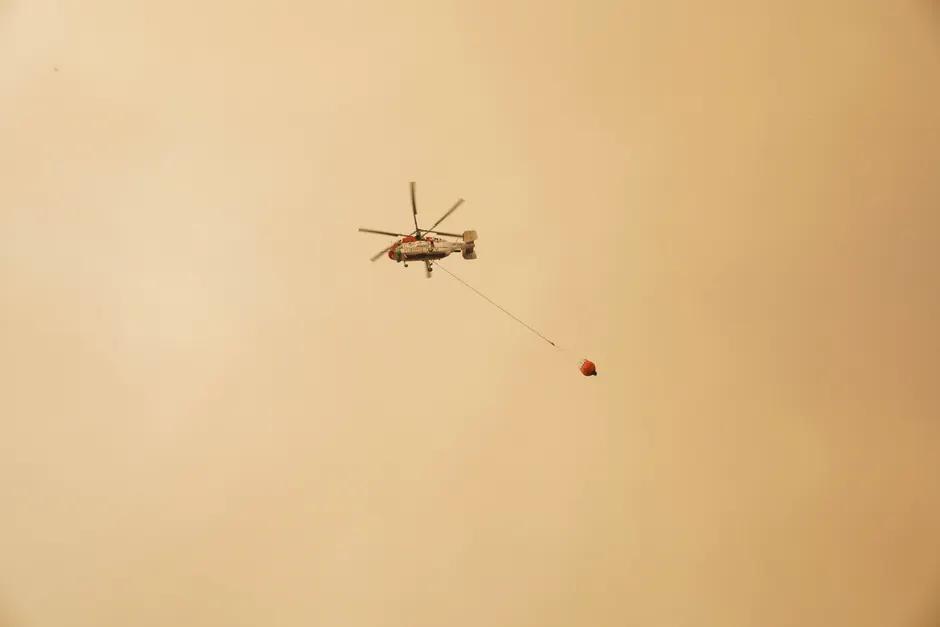
The triage analogy cuts to the core of what European fire services face. Portugal, anticipating further deterioration, asked the EU, Spain, and Morocco on July 3, 2026 to have extra firefighting aircraft ready in case wildfires worsened during an ongoing heatwave Reuters. Firefighting planes were scrambled from southern France to tackle a huge wildfire near Almería, as The Guardian reported on July 10 The Guardian. These mutual-aid requests underscore how thin the European aerial firefighting fleet has become under concurrent multi-front demand.
A report published in March 2026 found that Europe is dangerously unprepared for worsening wildfires, citing an aging firefighting fleet and bureaucratic red tape as key weaknesses Reuters. The European Commission was expected to present new wildfire measures as of that same month. Whether those measures have materialized in time for the 2026 season is an open question; the evidence on the ground suggests they have not arrived in sufficient scale.
Spain's own preparedness trajectory illustrates the structural tension. Spanish Prime Minister Pedro Sánchez announced on May 21, 2026 that the country's 2026 wildfire campaign constitutes "the largest state deployment for a wildfire campaign," with reinforced resources, coordination, and public awareness La Moncloa. Yet Spain's spending on forestry declined by 22% in the period leading up to September 2025, even as wildfires grew larger and more destructive Reuters. Hotter and drier weather is stoking those larger and more destructive fires, the same Reuters report noted. The pattern is not new: in August 2025, Spain battled 20 major wildfires simultaneously and deployed an additional 500 soldiers from its military emergency unit amid searing heat Al Jazeera. In July 2024, hundreds of firefighters backed by waterbomber aircraft sought to contain two raging wildfires in eastern Spain during a peak heatwave Reuters.
There is a paradox embedded in the global data. The trend in total wildfire size has been toward fewer hectares of burnt land, largely because large tracts of African savannah susceptible to fires are now fragmented by farmland The Guardian. Global aggregate burned-area statistics, in other words, can decline even as individual fire seasons in Europe and North America become more lethal, more economically disruptive, and more operationally demanding.
The broader context here is one of mismatch between institutional capacity and the rate of climatic forcing. European fire services are being asked to manage concurrent, multi-front campaigns with fleets and coordination mechanisms designed for a sequential fire season that no longer exists. The "emergency room with too few ventilators" framing is not merely metaphorical; it describes a resource-allocation problem that will deepen as heatwave clustering intensifies. The Commission's promised wildfire measures, the 22% decline in Spanish forestry spending, and the aging aerial fleet flagged in the March 2026 report are not separate stories. They are components of a single structural deficit, and the July 2026 season is stress-testing it in real time.