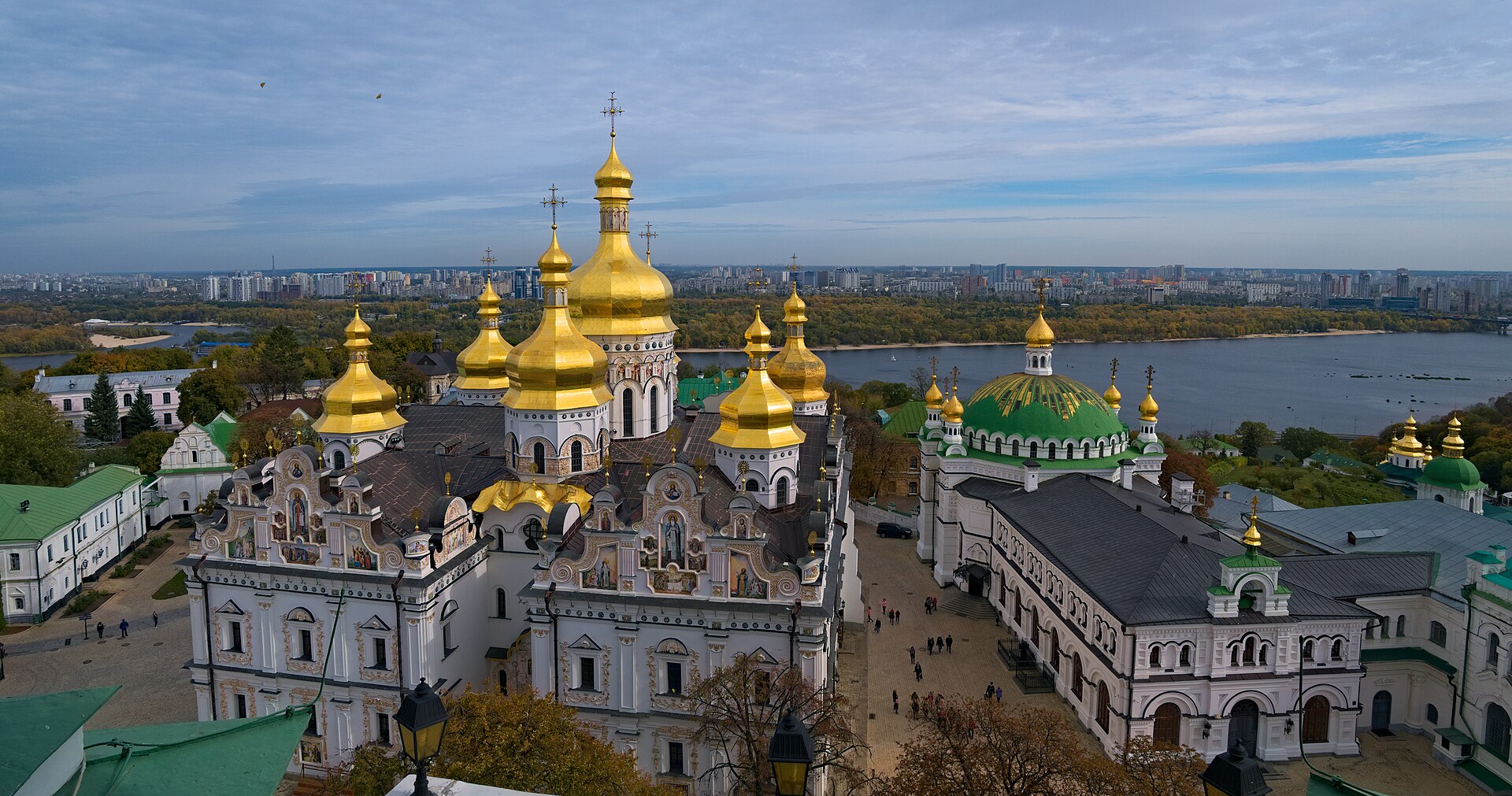
A Historic Church Was Hit in Kyiv. Here's What Happened and Why It Matters.

On June 14, a Russian drone struck the roof of an ancient cathedral in Kyiv called the Dormition Cathedral, setting it on fire. The building dates back to the 11th century and is protected by UNESCO, the international organization that safeguards important cultural sites, according to Reuters. This was the second time the monastery complex housing the cathedral had been attacked in 2026. Ukrainian officials said this second strike looked deliberate, not accidental, per Reuters reporting.
Russia says it did not carry out the attack. Instead, Moscow says the damage came from a U.S.-made Patriot air-defense missile that misfired, according to Reuters reporting from June 15. This claim has not been independently verified. Russia has made this same argument several times before during the war: it says that when Ukraine fires its air-defense missiles at incoming Russian attacks, the debris from those missiles can hit nearby buildings instead. While this is technically possible, no physical evidence from either side has been made public to prove what actually happened.
President Zelenskiy of Ukraine framed the strike as an attack on Christianity and on the cultural heritage of the entire world, according to Reuters. This choice of words is intentional. The cathedral is part of a larger monastery complex at the center of an ongoing dispute between Ukraine's government and a church affiliated with Russia. The government began the process of removing that Russian-aligned church from the site in 2023. By calling this an attack on global heritage rather than just Ukrainian identity, Zelenskiy is trying to persuade European leaders and the Pope to care more about the war.
The Dormition Cathedral is not just old—it has extraordinary symbolic importance. It was built in the 11th century, destroyed and rebuilt several times throughout history. Most dramatically, Nazi forces blew it up in 1941 during their occupation of Kyiv. The building was carefully restored in the 1990s and 2000s and reopened in 2000. Because it is protected by UNESCO and by an international law called the Hague Convention, intentionally striking it would be illegal under wartime rules that Russia has signed.
There is now a crucial question: was this attack intentional, or did it happen by accident when Ukraine's air defenses fired at incoming missiles? This matters legally and diplomatically. International law says that even protected cultural sites lose their legal protection if they are used for military purposes. Some people have questioned whether any buildings at the monastery were used for military reasons, but there is no credible evidence that the cathedral itself was used this way. If it is proven that Russia intentionally hit the cathedral, the case would likely be sent to the International Criminal Court, which is already investigating President Putin for other alleged war crimes.
There is a larger strategy at play here. When Russia targets infrastructure like power plants or water systems, the damage is easy to measure. But when Russia hits a famous church or cultural landmark, something different happens: the world's media pays attention, other countries become upset, and Russia's relationships with religious countries and independent nations suffer. Whether this cathedral strike was the main goal or just collateral damage from something else, the political consequence for Russia is real.
As of June 15, damage assessments were still underway. One person was injured during the broader attack on Kyiv that included the cathedral strike, per Reuters. Exactly how much damage was done inside the cathedral has not been publicly announced. Ukrainian government agencies are expected to conduct a full inspection, and their findings will likely be used in investigations by the International Criminal Court and other organizations documenting alleged war crimes.