An Al Jazeera Journalist Killed in Gaza: What We Know About the Rising Toll on Reporters

An Al Jazeera Journalist Killed in Gaza: What We Know About the Rising Toll on Reporters
Mohammed Wishah, a journalist for Al Jazeera, was killed in an Israeli drone strike in west Gaza City in April 2026. He was the 12th Al Jazeera journalist or media worker to die in Gaza since the war began, according to Al Jazeera.
His death adds to a much larger number. More than 260 Palestinian journalists have been killed in Gaza since the conflict started, per Al Jazeera's reporting. This figure includes reporters, cameramen, fixers (local staff who help foreign journalists), and support workers across many news outlets. By any measure used by organizations that track press freedom, this is one of the deadliest environments for journalists in modern history.
The dispute over how and why journalists are being killed
Throughout this war, there has been fundamental disagreement about whether journalist deaths are intentional or accidental.
Israel says its military strikes target military sites and infrastructure. The government argues that journalists who work near or alongside Hamas operatives put themselves at higher risk. This is their stated position.
Press freedom organizations and news outlets reject this explanation. They have documented cases where journalists were killed in clearly marked press vehicles or at known media locations — places that should have been identifiable and avoided. Wishah's death in west Gaza City adds one more case to a record that the two sides have not resolved in any international forum.
Why Al Jazeera's losses matter
Twelve deaths within a single news organization's Gaza team is extraordinary. This includes both journalists and support staff. For any news organization working in a war zone, losing that many people is devastating and unsustainable.
Al Jazeera has faced additional pressure from Israel throughout this war. In 2024, Israel closed the network's offices there under a law that allowed the government to shut down foreign broadcasters it deemed a security threat. Al Jazeera kept reporting from Gaza by relying on local journalists and staff — a choice that kept the news flowing but placed those workers in constant danger.
How this compares to other conflicts
The number of journalists killed in Gaza has surpassed death tolls from the wars in Syria and Iraq over similar time periods. Two major press freedom organizations — the Committee to Protect Journalists and Reporters Without Borders — have both identified Gaza as the deadliest place for journalists in their recorded histories. (They count deaths slightly differently, which is why exact numbers vary a bit between them.) As of June 2026, the 260-plus figure from Al Jazeera is the most current count available.
The unanswered question about accountability
These numbers raise a difficult legal question: at what point does a pattern of journalist deaths become something that international law should investigate and potentially prosecute?
International law protects civilians during armed conflict, and journalists are considered civilians unless they actively fight alongside military forces. The International Criminal Court — a global body that investigates serious crimes in war — has the legal authority to look into journalist killings in Gaza. The court can do this because the relevant parties have accepted its authority or because of how the conflict has been referred to it.
Yet as of June 2026, no one has been formally charged by the International Criminal Court for killing journalists in this conflict.
The gap between grief and justice
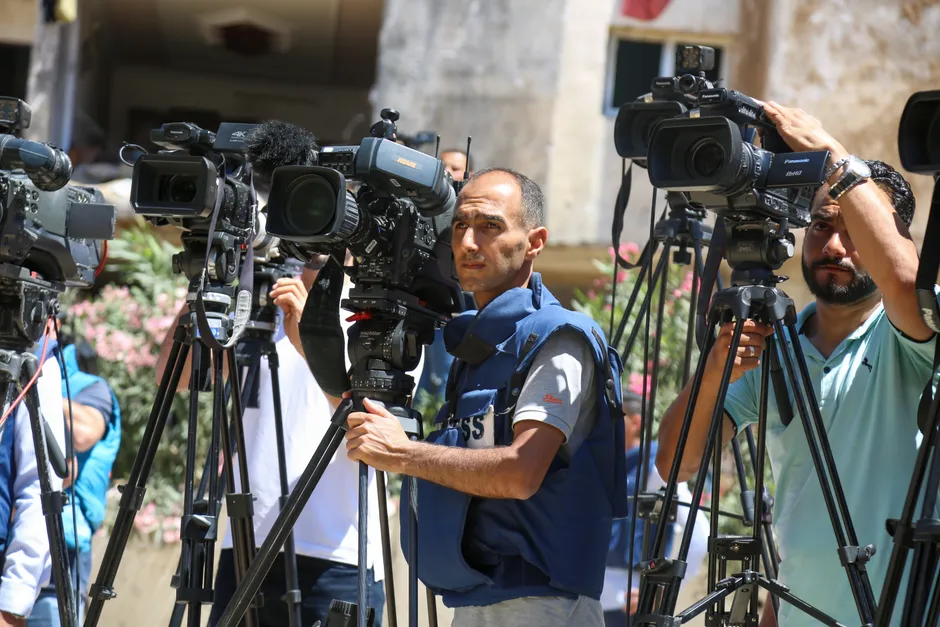
Al Jazeera's colleagues mourned Wishah in the days after his death. This kind of ritual — journalists gathering to remember fallen colleagues — has become routine over the course of this war. Grief has been constant in Gaza's press corps.
What has been missing is accountability. For people who track both this war and the legal systems meant to constrain it, that absence is the core problem.