Why Ukraine's President Just Fired His Defence Minister

Ukrainian President Volodymyr Zelenskyy on July 16, 2026 publicly defended his decision to fire Defence Minister Mykhailo Fedorov. He said the working relationship between the defence ministry and Ukraine's top military leader had broken down completely. Speaking at a press conference in Kyiv with British Prime Minister Keir Starmer, Zelenskyy said the dispute between Fedorov and military commander Gen Oleksandr Syrskyi had become impossible to manage The Guardian.
Zelenskyy described a "challenging dialogue" between the two men. "I would very much like to see unity. The sides have not found it. And the problem lies not only with the sides, but with me as well," he said. "In such a situation, you have a choice: either one side or the other." By firing Fedorov, Zelenskyy chose to keep Syrskyi, the general who runs day-to-day military operations, over the civilian official in charge of the defence ministry's administration and equipment purchasing.
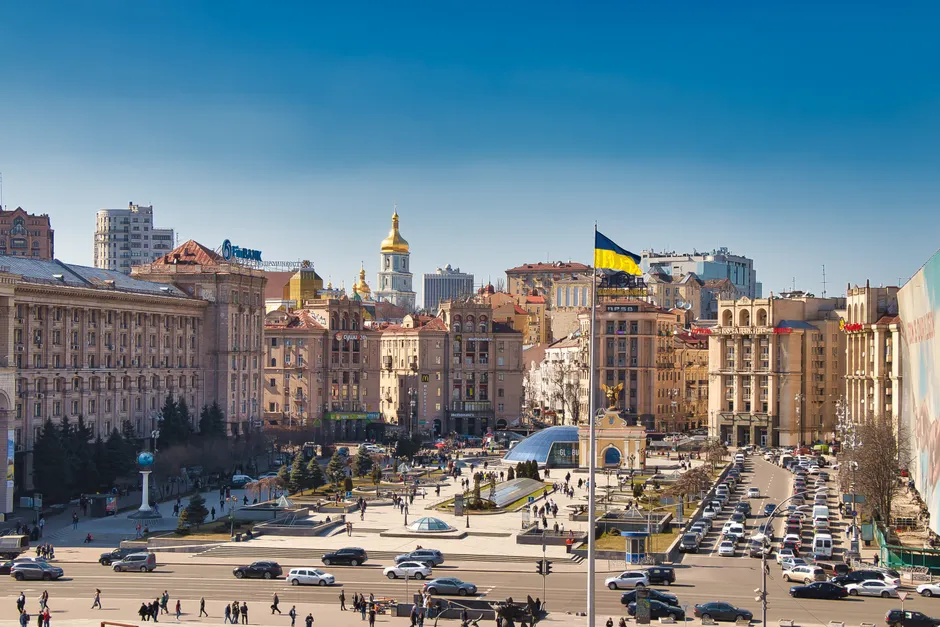
More than 1,000 protesters gathered outside the presidential office in Kyiv the same day to support Fedorov. They held signs reading "For what?" and "Is your head screwed on?" and chanted "Syrskyi out." This was only the second time since Russia invaded Ukraine in February 2022 that large numbers of people had protested against their own government. That matters because Ukraine has had wartime restrictions on public gatherings for over four years.
The broader context here is a common tension in wartime governments between civilian leaders and military commanders. The defence minister handles supplies, budgets, and politics. The military commander runs the fighting. Their goals can pull in opposite directions, like a company where the finance department and the sales team each think they know best. This kind of tension is built into the system, not just a personal clash. Zelenskyy's admission that he himself shares blame is unusual in a country where leaders rarely admit mistakes. By choosing Syrskyi, Zelenskyy signaled that keeping the war effort steady matters more to him than managing the political side of the defence ministry. But it cost him support among people who saw Fedorov as good at his job.
The press conference also served as the stage for Keir Starmer's farewell visit to Kyiv before he leaves office as Britain's prime minister. The two leaders had been meeting frequently: they met in Évian, France, on June 16, discussed how to counter Russia's "shadow fleet" (ships used to secretly sell Russian oil despite international sanctions) on July 14, and met again on July 15 about air defense and Ukraine's power grid President of Ukraine. They also discussed preparations for talks on defense weapons and a plan for ending the war President of Ukraine.
During the visit, Starmer and Zelenskyy walked along the Wall of Remembrance near St. Michael's Cathedral to honor Ukraine's fallen soldiers President of Ukraine. Zelenskyy gave Starmer the Order of Freedom, Ukraine's highest honor for a foreign leader. Starmer gave Zelenskyy a framed Ukrainian flag that had hung outside his office in February 2022, when Russian tanks were moving toward Kyiv.
Starmer said Ukrainian drone strikes on targets deep inside Russia had shifted the war's momentum and that Russian President Vladimir Putin was "losing." Whether that is accurate based on what is actually happening on the battlefield is a separate question. But it reflects the stance Britain's government wanted to project as Starmer's time in office ends.
Zelenskyy said he hoped to meet Starmer's successor "as soon as possible," though he did not name Andy Burnham. A new prime minister means uncertainty for Ukraine. Military aid, intelligence sharing, and diplomatic support will depend on what the next leader prioritizes.
In my view, these events all happening at once create a pivotal moment for Zelenskyy. He is dealing with a shakeup that has made some citizens angry, saying goodbye to a close ally, and preparing to work with a new British government. The protest outside his office was small compared to before the war but notable for wartime. Whether it stays a one-time complaint or grows into something bigger will tell us a lot about how much public support Zelenskyy still holds after more than four years of war.