Why Thousands of Young Indians Are Marching on Parliament Under the Name 'Cockroach'

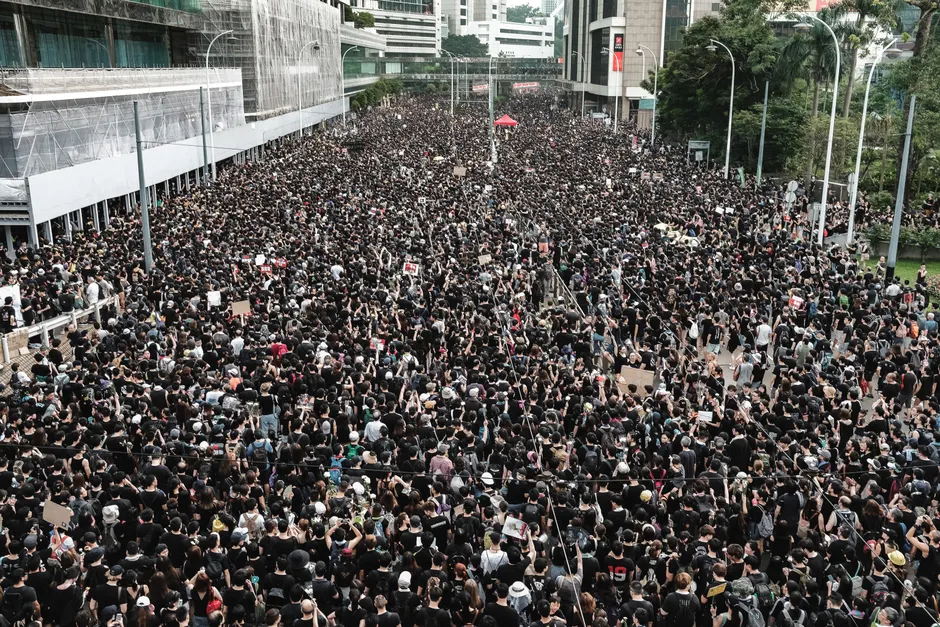
On July 20, 2026, thousands of mostly young Indians defied a lockdown and a police ban to march on parliament, demanding answers for a broken education system. Police used tear gas and batons at Jantar Mantar, the capital's designated protest site, and more than 100 students were injured, according to Al Jazeera.
The march was organized by the Cockroach Janta Party, or CJP, a group founded on May 16, 2026, by Abhijeet Dipke, a political communications professional. It started as an online youth movement, as France 24 reported. By June 2026, it had 22 million followers, per Reuters. The CJP is a satirical movement, meaning it uses humor and irony to make serious political points. But the demands it has made, and the response from authorities, are no joke.
The immediate trigger was the cancellation of India's National Eligibility cum Entrance Test, or NEET. NEET is the exam students take to get into medical school. It was called off after widespread allegations that the exam questions had been leaked and the process was unfair, Reuters reported. The cockroach metaphor, according to DW, started as a satirical protest against these exam leaks before growing into a broader movement about jobs and education. The name carries a pointed message: like cockroaches, the movement's supporters intend to survive and keep going no matter how hard someone tries to get rid of them.
The BBC reported that the demonstrators demanded sweeping changes to how the education system is run. Al Jazeera described the protesters as demanding accountability and reforms following the exam scandal. Reuters separately reported that CJP protesters have called for the resignation of India's federal education minister.
The scale of the protest appeared to catch the ruling party off guard. The New York Times reported that the size and force of the protests suggested the government underestimated how angry young Indians are. Many in this group feel let down by the government and are struggling to find jobs. Government data cited by Reuters shows India's overall unemployment rate was 3.1% for those aged 15 and above in 2025. But it was much higher in the 15-to-29 age bracket, which is the core group behind the CJP.
Delhi authorities responded to the planned march with a lockdown on July 20 and a police ban on the gathering. Supporters gathered anyway, Reuters reported. Police used tear gas and batons against protesters at Jantar Mantar, the NYT confirmed. Al Jazeera, in its July 21 reporting, documented more than 100 student injuries from police action during the march.
The movement has grown fast. Reuters first reported on June 1, 2026, that the CJP was planning a street protest in New Delhi to challenge Prime Minister Narendra Modi. Dipke led the group's first street protest on or around June 6. By July 19, Al Jazeera reported, tens of thousands of protesters, most of them students, were expected to march on parliament over jobs and education. The movement has also faced restrictions online: its official X account was blocked in India, while its Instagram page at @cockroachjantaparty remains active.
On July 20, a federal Indian minister promised the CJP that the government would consider its demands, Reuters reported. Whether that promise leads to real action is an open question.
The broader context here is a mismatch between what India's young people were promised and what they are actually experiencing. India has a huge working-age population, meaning a large share of its people are old enough to work. Economists have expected this to boost the country's growth. But that boost has not arrived, and the gap between what young people hope for and what they can actually find, especially in the job market, keeps widening. The NEET scandal brought a general frustration into focus: that the system meant to reward hard work and talent may itself be broken, and that those in charge are slow to answer for it.
A movement that started as satire reaching parliament's doorstep within two months of its founding is itself a signal. The CJP's rapid growth, from online origin to millions of followers to street mobilization under a police ban, tracks a pattern where social media organizing speeds up the path from feeling wronged to taking to the streets. The state's response, a city lockdown and forceful dispersal, further angered the very group the government needs on its side.
The question for Indian politics is whether the CJP becomes a lasting pressure campaign that pushes the government to change policy, or whether it falls apart without established institutions to channel its energy. The movement's satirical framing helps it spread online but also limits its ability to enter formal electoral politics. Its demands are specific: education reform, ministerial accountability, employment. Its leverage is crowd size and media attention. Its vulnerability is the same as any movement that leans heavily on a single founder's visibility and a social media presence that can be restricted. India's opposition parties have not visibly embraced the movement, which could be a sign of its independence, or of its political isolation.