The U.S. Just Made a Big Nuclear Deal With Saudi Arabia. Here's What's Going On.

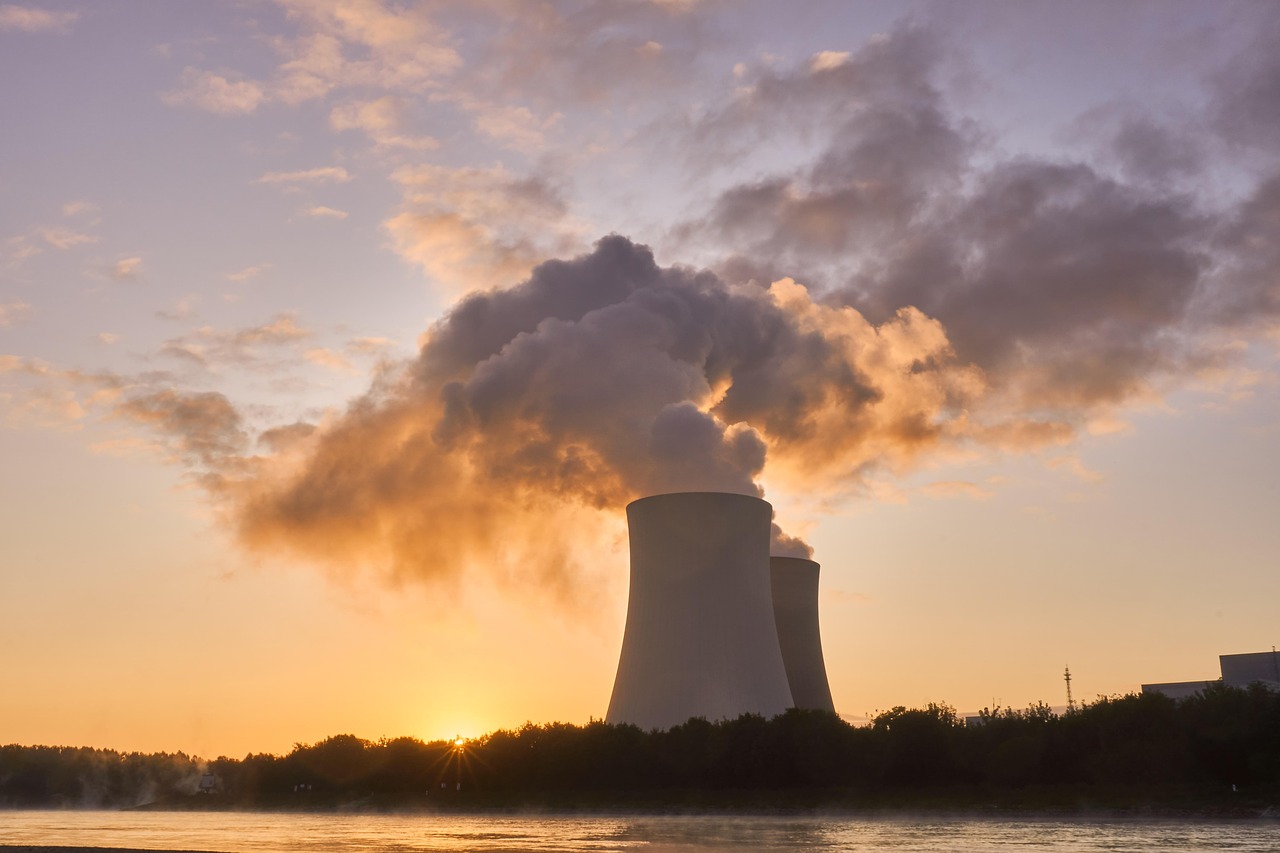
On July 22, 2026, the United States and Saudi Arabia signed a 30-year agreement worth billions of dollars that gives American companies first dibs on building Saudi Arabia's nuclear reactors and supplying the fuel they run on (Vox; Marfa Public Radio). The deal covers civil nuclear technology, which means reactors used to generate electricity, not weapons. But there was a catch: Saudi Arabia has to join the Abraham Accords, a set of agreements aimed at normalizing relations between Gulf nations and Israel (CBS Mornings). The deal comes about a year after President Trump signed four executive orders (official presidential directives) meant to revive the U.S. nuclear energy industry. That effort has since pulled in billions of dollars in government and private money, and it has drawn intensifying scrutiny of the Trump family's business ties.
Those executive orders, issued in mid-2025, touched every part of the nuclear fuel cycle, the chain of steps from mining uranium to powering reactors. One order, in May 2025, called for a full overhaul of the Nuclear Regulatory Commission, the government agency that oversees nuclear safety, covering its structure, staff, rules, and basic operations (White House). The administration set a goal for new reactors to start running by July 4, 2026, and aimed to quadruple the country's nuclear energy output by 2050 (DOE; CSIS; Skadden). These goals build on earlier targets to triple nuclear capacity by 2050, with a plan to add 35 gigawatts by 2035 and build at a pace of 15 GW per year by 2040 (DOE).
Money followed quickly. In January 2026, the Department of Energy announced a $2.7 billion investment to boost domestic uranium enrichment, the process of making uranium concentrated enough to use as reactor fuel (DOE; DOE). A program called UPRISE aims to add 2.5 GW of nuclear capacity by 2027 and 5 GW total by 2029 (DOE). In April 2026, DOE named four companies for a nuclear energy program and invited more applicants through July 2026 (DOE). Private firms secured about $1.2 billion in funding in the weeks after the executive orders (Fox Business). On October 28, 2025, the administration announced a plan to build several new nuclear power plants in what it called an $80 billion deal involving Westinghouse (New York Times). In December 2025, Trump Media and Technology Group announced a $6 billion merger with a fusion-energy company called TAE Technologies (Wall Street Journal).
The Saudi deal takes this push global. The 30-year term and multibillion-dollar scope put American firms in position as the go-to suppliers for Saudi Arabia's new civilian nuclear program. The Abraham Accords contingency ties the deal to the broader effort to normalize relations between Gulf states and Israel, which raises the geopolitical stakes of what might otherwise be a simple business arrangement (BBC; DOE).
The overlap of presidential policy, federal funding, and private deals involving entities connected to the Trump family has drawn conflict-of-interest scrutiny. President Trump's business holdings earned more than $2 billion in the year before July 2026 (New York Times). Donald Trump Jr. has financial ties to companies that secured Pentagon contracts (New York Times). The Trump Media merger, the Westinghouse deal, and the Saudi agreement all sit inside an industry the administration is simultaneously regulating, funding, and promoting. The White House has repeatedly stated that President Trump and his family never engage in conflicts of interest (New York Times).
The broader context here is a nuclear policy running on three tracks at once: cutting regulations, spending money, and making diplomatic deals. The NRC reform order aims to speed up licensing timelines that the industry has long said are too slow. The $2.7 billion enrichment investment addresses a gap in the fuel supply, since the U.S. has not had enough enrichment capacity to support all the new reactors it wants to build. The UPRISE targets and the 35 GW-by-2035 plan require a construction pace the U.S. has not sustained in decades. Whether the reforms and federal money can actually translate into new power on the grid — and whether the July 4, 2026 reactor goal is met — will be the real test. The Saudi deal adds another layer: it is a civilian nuclear agreement with a country that has not historically followed the extra safeguards that usually come with U.S. nuclear cooperation pacts, and it is tied to a normalization process whose path forward is uncertain.