The U.S. and Japan Team Up to Support the Yen — Here's What's Going On

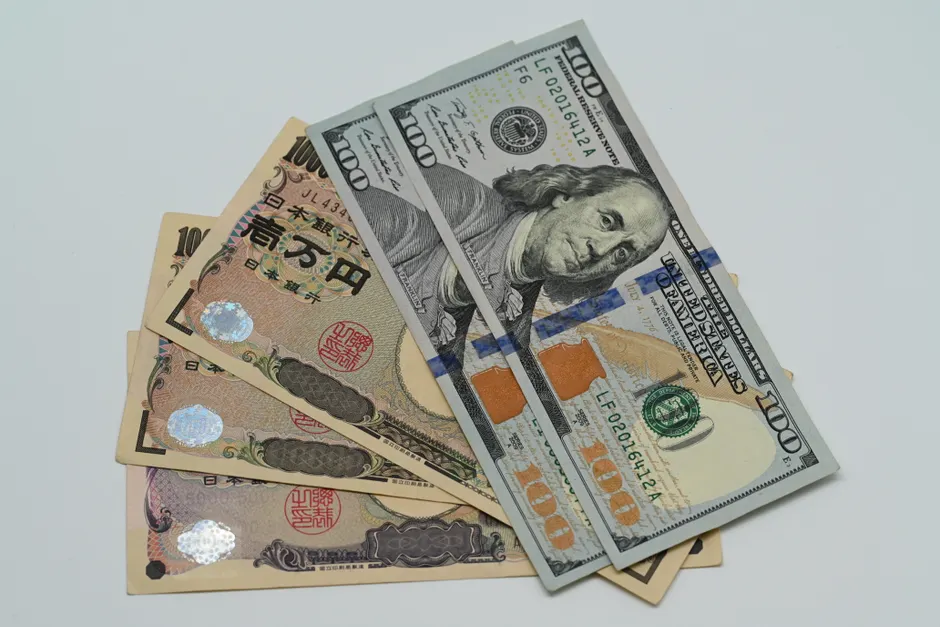
In early August 2026, the United States and Japan did something unusual: they worked together to buy Japanese yen and push its value up. The yen had fallen to its lowest level against the dollar in 40 years. After the announcement, the yen jumped more than 1%, reaching 155.20 per dollar. The U.S. Treasury bought yen to help, marking Washington's first joint effort with Tokyo to support the currency (Reuters).
Japan carried out its part of the operation during New York trading hours on Thursday, according to a market source (Reuters). Both governments then publicly confirmed they had acted together, a rare step for two countries that have been careful about how their currency policies look to the rest of the world (Al Jazeera; Reuters).
This is not the first time the two governments have teamed up on the yen. On June 17, 1998, U.S. authorities bought $833 million worth of yen to help Japan strengthen its economy. That event, recorded in the Treasury's own Exchange Stabilization Fund history, was the previous example of joint U.S.-Japan yen support.
Japan had already been trying to prop up the yen on its own for months. Between April 28 and May 27, 2026, Japan's Ministry of Finance spent ¥11,734.9 billion buying yen in the foreign exchange market (Ministry of Finance, Japan). Before that, in July 2024, Japan spent ¥5.5 trillion ($35 billion) in a solo intervention when the yen was under heavy selling pressure (U.S. Treasury FX Report).
According to the U.S. Treasury's July 2026 report, Japan has in recent years pointed to excess volatility and speculation as reasons for stepping in to support the yen (U.S. Treasury July 2026 FX Report). A joint statement from the U.S. Treasury and Japan's Ministry of Finance in September 2025 said Japan would keep consulting closely with the U.S. on economic and currency matters (U.S. Treasury). Those talks now appear to have turned into real, coordinated action.
Japan's central bank, the Bank of Japan (BOJ), plays a key role in this story. On June 16, 2026, the BOJ kept its key interest rate at about 1.0% (Bank of Japan). The bank is also gradually cutting back on its purchases of Japanese government bonds, reducing them by about ¥400 billion each quarter under a plan announced in July 2025 (Bank of Japan).
Here is the core problem: interest rates in the United States are much higher than in Japan. When that gap is wide, investors can borrow yen cheaply, convert it to dollars, and earn a higher return in the U.S. That is called the carry trade. It is like borrowing money from a bank charging 1% interest and depositing it in another bank paying 5%. As long as the gap stays wide, investors keep selling yen and buying dollars, which pushes the yen down.
The BOJ's interest rate of 1.0% is low compared to other developed countries. Reducing bond purchases is a step toward raising rates over time, but the BOJ is moving slowly. So the gap between U.S. and Japanese rates stays wide, and the carry trade keeps pressuring the yen.
The broader context here is that one country buying its own currency, even at the massive scale Japan tried earlier in 2026, has limits when the interest-rate gap stays this wide. The carry trade does not go away from a one-time purchase. Bringing in the U.S. Treasury suggests Japan decided its own efforts were not enough to turn things around. Whether this joint action lasts depends on whether U.S. and Japanese interest rates move closer together over time.
The last time the U.S. and Japan bought yen together, in 1998, the yen did recover afterward. But other things were happening too, including the broader Asian financial crisis, so the intervention was not the only factor. This time looks different. The BOJ is just starting to tighten its policy, the Federal Reserve's next moves on rates are uncertain, and the yen had already absorbed over ¥11 trillion in solo intervention this year without holding its ground.