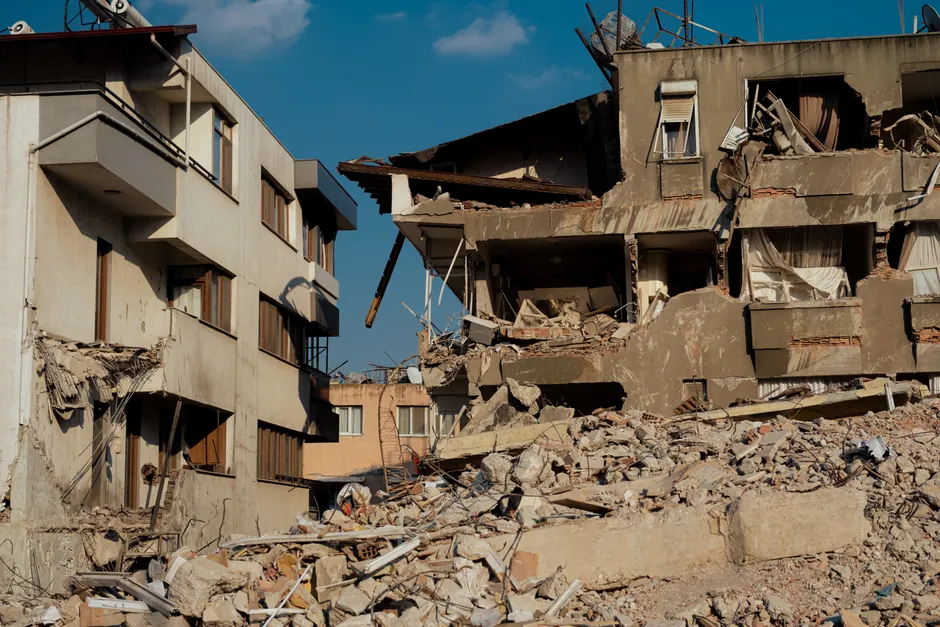
Western Colombia Hit by Magnitude 7.4 Earthquake: 111 Dead, Nearly 100 Buildings Lost

A magnitude 7.4 earthquake struck western Colombia on Monday, August 10, 2026, killing at least 111 people and injuring 87 more, according to CNN en Español and the BBC. The quake caused 61 buildings to collapse and damaged hundreds of additional structures across the affected region (BBC; AP News). Colombian officials counted 37 additional buildings completely destroyed (The New York Times).
The death toll rose sharply over the course of the day. Reuters initially reported at least 20 fatalities in the immediate aftermath (Reuters). By the time CNN en Español and the BBC published their updated reports, the figure had climbed to 111 dead and 87 injured, reflecting the pace at which information from collapsed and remote structures reached national authorities.
The structural toll is substantial. Sixty-one buildings collapsed outright. Thirty-seven more were completely destroyed. Hundreds of additional buildings sustained damage of varying severity, per AP's reporting. The distinction between "collapsed" and "completely destroyed" in the official tally suggests that assessment teams are separating total structural failure from buildings rendered irreparable but still partially standing. That categorization will shape demolition and reconstruction priorities in the coming weeks.
Western Colombia sits along the eastern margin of the Pacific Ring of Fire, a zone of frequent seismic and volcanic activity that rings the Pacific Ocean. Here, the Nazca Plate — a massive slab of oceanic crust — subducts, or slides beneath, the South American Plate. This tectonic interaction produces frequent earthquakes across the country, though events of magnitude 7.4 are rare for the region. The Colombian Geological Service (SGC) operates a national seismological network that monitors this activity continuously.
A precursor event is worth noting. On August 7, 2026, three days before the mainshock, a magnitude 4.3 earthquake struck Cumbal in the department of Nariño at a depth of 8 kilometers, with a maximum intensity of 5, according to the SGC's felt-earthquake database. Whether this foreshock is geologically linked to the August 10 mainshock will require post-event seismological analysis, but the temporal and geographic proximity warrants attention from both scientific and emergency-management perspectives.
Colombia has experienced significant seismic events in recent years. In August 2023, the Colombian National Seismological Network recorded a magnitude 6.1 earthquake centered 10 kilometers northeast of El Calvario in the department of Meta (SGC, August 17, 2023). The SGC subsequently published aftershock reports for that event. That quake, while damaging, was roughly 30 times smaller in energy release than a magnitude 7.4 event, given the logarithmic nature of the moment magnitude scale, where each whole-number increase represents roughly 30 times more energy released.
The broader context here is one of scale and institutional capacity. A magnitude 7.4 earthquake in a populated region of western Colombia places immediate strain on search-and-rescue operations, medical infrastructure, and temporary shelter capacity. The collapse of nearly 100 buildings, combined with damage to hundreds more, means that displacement figures are likely to be significant even if not yet fully reported. Colombia's disaster management framework, coordinated through the national unit for disaster risk management, has protocols for exactly this scenario, but the scale of structural loss in the affected zone will test the speed and reach of those systems.
The pattern of escalating casualty figures throughout August 10 is a familiar one in major seismic events. Initial reports from Reuters captured the early picture; later reporting from CNN, the BBC, and the Times reflected the expanded count as rescue teams reached additional sites and communications from affected municipalities improved. Further revisions upward remain plausible as assessments continue, particularly in areas where collapsed buildings have not yet been fully searched.
The earthquake's impact extended to building stock across western Colombia, and the presence of both collapsed and completely destroyed structures in the official count indicates that the engineering performance of buildings in the affected zone will be a central question for post-event investigation. Colombia has seismic building codes, but enforcement varies, particularly in older construction and informal settlements. The proportion of damaged versus collapsed structures may offer early indications of where code compliance held and where it did not.
For now, the verified picture is grim but still taking shape: 111 dead, 87 injured, nearly 100 buildings lost, and hundreds more damaged, with assessments ongoing across western Colombia.