Colombia's Strongest Earthquake This Century Exposes Deep Fault Lines in Buenaventura
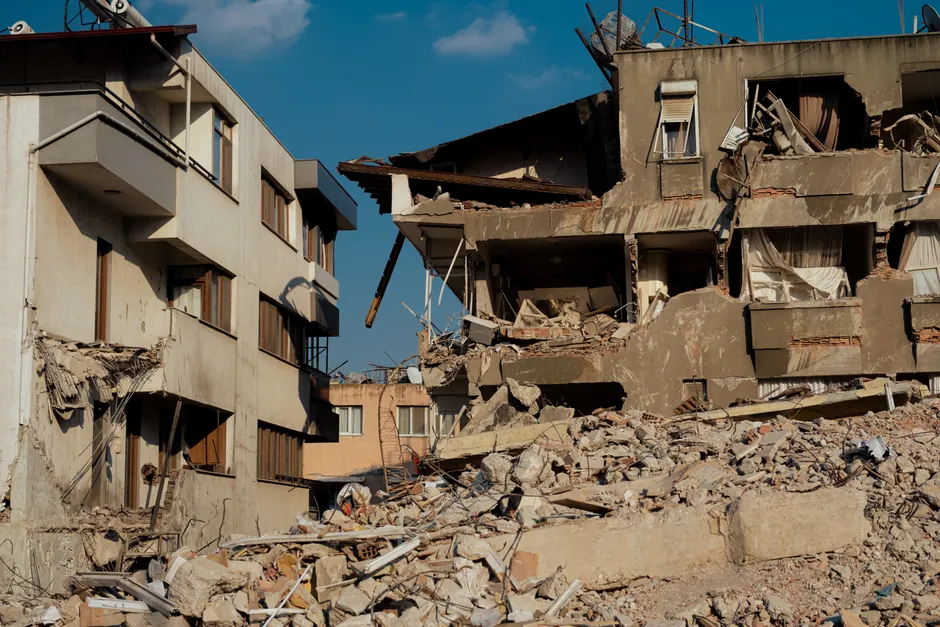
A magnitude 7.4 earthquake struck western Colombia on 10 August 2026, killing at least 132 people with hundreds still missing, according to Al Jazeera's most recent reporting on 15 August. Reuters described the quake as the strongest to hit the country this century. It toppled buildings, damaged hospitals, and devastated the Pacific port city of Buenaventura, where 540 homes collapsed, 3,416 sustained damage, and 330 residents were injured Al Jazeera.
The Colombian Geological Survey (Servicio Geológico Colombiano, SGC) recorded the epicenter 139 km from Buenaventura in Valle del Cauca, with its seismic event bulletin dated 11 August 2026. The SGC's intensity-evaluation portal also lists a felt event at Buenaventura on 14 August, and the broader Pacific coast region has experienced continued seismic activity: separate SGC records show events at San José del Palmar, Chocó (magnitude 4.2 on 13 August, magnitude 3.9 later the same day) and at El Litoral del San Juán (magnitude 3.1). The agency has also issued extraordinary activity bulletins for Volcán Puracé on 12, 13, and 14 August, with alert status affecting the departments of Cauca and Huila.
The human cost in Buenaventura is sharpened by institutional fragility that predated the disaster. Several wards at the Luis Ablanque de la Plata District Hospital were out of operation following the quake. Hospital workers had gone on strike before the earthquake because they had not been paid, meaning the city's primary medical facility was already compromised when the ground shook. Bryan Reyes, a 29-year-old shipyard worker, sustained three leg fractures after jumping from a first-floor window to escape.
Buenaventura's structural vulnerabilities long predate this earthquake. According to 2024 Colombian government estimates, 15.4 percent of the city's population lives in multidimensional poverty — a measure that goes beyond income to capture overlapping deprivations like access to healthcare, education, and basic services. That figure is more than double the 6.7 percent rate in Cali, the departmental capital of Valle del Cauca. In 2025, the civic monitoring group Buenaventura Como Vamos found that 72 percent of residents struggled to find work, and approximately 70 percent reported eating fewer than three meals a day due to insufficient food. Some 88.5 percent of the population identifies as being of African descent, a demographic fact that frames longstanding debates over whether the state's chronic underinvestment in the city reflects broader patterns of racialized neglect.
The Colombian national government has announced a response plan that includes 23 water tankers (carrotanques), medical equipment, and virtual classes for affected students. Officials stated they will accompany Buenaventura until the emergency is overcome and potable water service is fully restored UGRD. The Unidad Nacional para la Gestión del Riesgo de Desastres — Colombia's national disaster risk management agency — also conducts an annual national emergency-response simulation (Simulacro Nacional de Respuesta a Emergencias) aimed at strengthening disaster preparedness capacity.
Colombia's seismic history gives the current disaster a longer arc. The largest earthquake ever recorded in the country was a magnitude 8.8 event on 31 January 1906, with its epicenter on the Colombian Pacific coast, the same tectonic margin that produced the 10 August quake. The SGC's homepage also records regional events beyond Colombia during the same window, including a magnitude 5.5 quake near Chirilagua, El Salvador (12 August) and a magnitude 4.3 shallow event off the coast of Venezuela near Maturín (12 August), pointing to the active tectonic setting across northern South America.
The broader context here is not simply one of tectonic bad luck. Buenaventura handles a disproportionate share of Colombia's Pacific trade yet registers poverty and food insecurity rates that would be alarming in a peacetime economy, let alone under post-disaster conditions. A hospital unable to pay its staff before an earthquake strikes is not a facility that can absorb a surge of 330 injured residents. Water tankers are an emergency measure, not an infrastructure fix, and the gap between Buenaventura's multidimensional poverty rate and Cali's suggests that whatever redistribution mechanisms exist at the departmental level are not reaching the coast at adequate scale.
For anyone tracking disaster governance in the Andean region, the salient question is whether the national government's emergency commitment translates into sustained investment once the acute phase passes. Colombia has the institutional architecture for disaster risk reduction: the annual Simulacro, the SGC's monitoring network, the UGRD's coordinated response framework. The gap between that architecture and Buenaventura's lived conditions is where this earthquake's political aftershocks will register. The death toll may stabilize; the underlying questions about which communities get built back, and how robustly, will persist well past the news cycle.


