Russian Airstrike Damages Kyiv's Holiest Monastery Amid Competing Claims

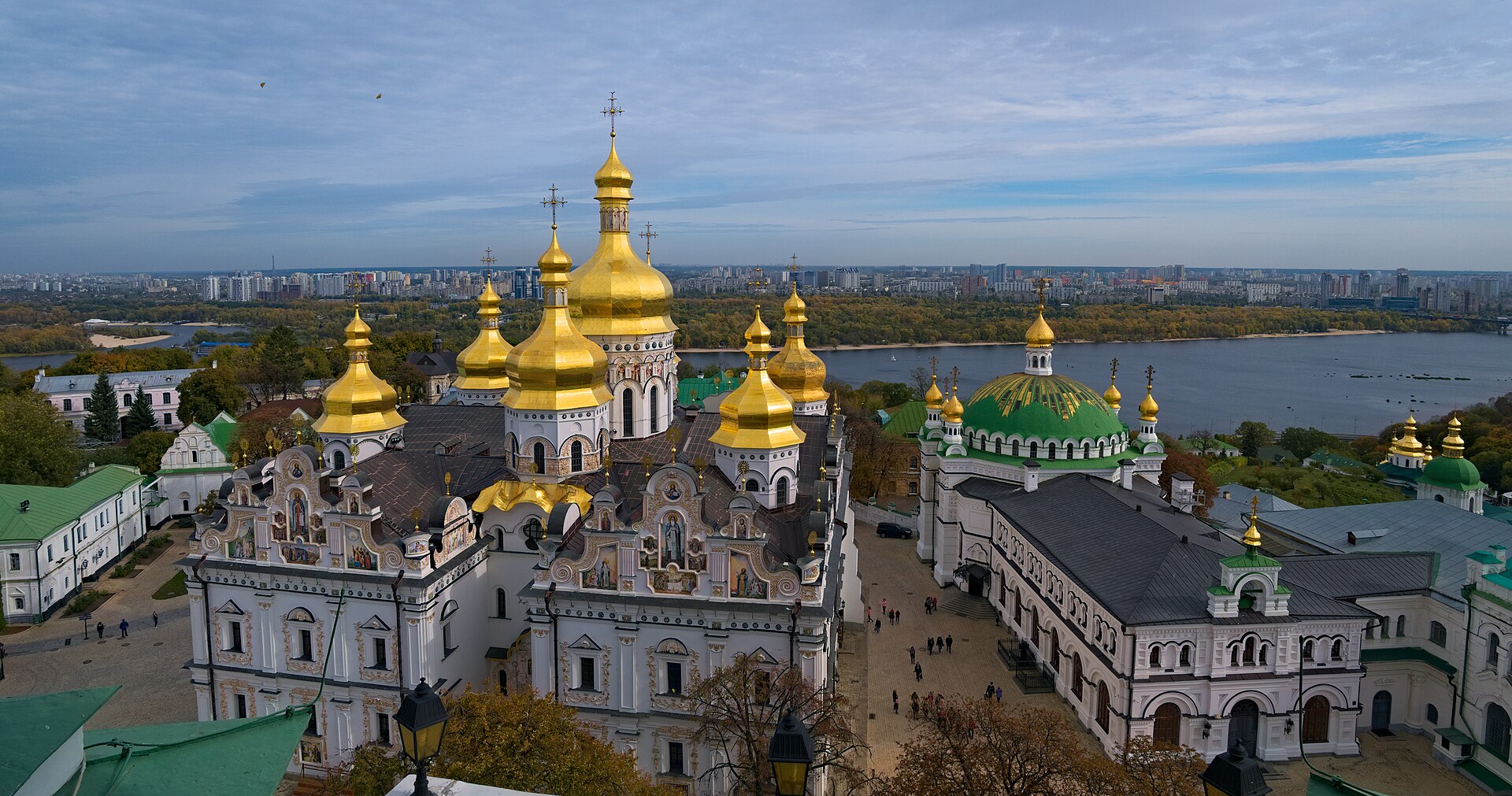
A large-scale Russian air attack on Kyiv overnight in mid-June 2026 sparked a fire at the Dormition Cathedral, the main church of the thousand-year-old Kyiv-Pechersk Lavra. The blaze caused extensive roof damage, though the structure and walls remained intact. Local authorities described it as the heaviest Russian air attack on the Ukrainian capital in two weeks. The barrage killed 11 people and wounded children in Kyiv. Rescue workers attempting to extinguish the fire at the cathedral were among those killed by the ongoing assault. Ukrainian officials estimate that restoring the damaged monastery complex could take two years.
The strike immediately produced conflicting accounts about what caused the cathedral damage. Russia denied striking the Kyiv monastery, claiming instead that the site had been hit by a U.S.-made Patriot air defense missile — a surface-to-air system designed to intercept incoming projectiles. Ukrainian authorities attribute the blaze directly to a Russian strike. The Kyiv-Pechersk Lavra is recognized as a UNESCO World Heritage site, meaning the United Nations' cultural body has designated it as a place of outstanding universal value. It also serves as a prominent symbol of Ukraine's spiritual and cultural heritage.
The broader context here involves the site's recent religious and political realignment. Ukraine reclaimed the Dormition Cathedral from the Moscow-linked Orthodox church amid a religious dispute worsened by Russia's war in Ukraine. After the transfer, the cathedral held Christmas services in Ukrainian for the first time — a notable shift for a religious institution that had historically operated under Moscow's ecclesiastical authority. The physical damage to the cathedral therefore lands on terrain already contested along cultural, linguistic, and institutional lines.
In operational terms, the attack continues Russia's sustained aerial pressure on Ukrainian critical infrastructure and population centers. The simultaneous targeting of rescue workers responding to the initial strikes complicates damage assessment and recovery efforts, stretching municipal emergency response capacities. For those tracking the conflict's trajectory, the fact that a UNESCO World Heritage site sustained extensive damage raises potential diplomatic and legal questions about the protection of cultural property in armed conflict — a principle codified in international agreements such as the 1954 Hague Convention.
What comes next involves both physical and institutional recovery. Ukrainian officials have set an initial two-year timeline for the cathedral's restoration, a process that will require structural assessments, conservation expertise, and sustained security conditions. The dispute over the weapon system responsible for the damage — whether a direct Russian strike or an intercepted air defense missile — will likely shape international discourse on accountability and the operational risks of deploying air defense systems near dense historical districts.
Despite the June damage, religious activity at the site has continued. A festal Divine Liturgy was celebrated at the Dormition Cathedral on August 15, 2026, to mark the anniversary of the miraculous rescue of the monastery from destruction. The continuation of liturgical life within the damaged structure points to the site's ongoing operational status and its centrality to Ukrainian Orthodox observance, even as the physical restoration process remains in its early phases.