NASA Cancels Swift Boost Mission, Ending Bid to Extend $500 Million Observatory's Life
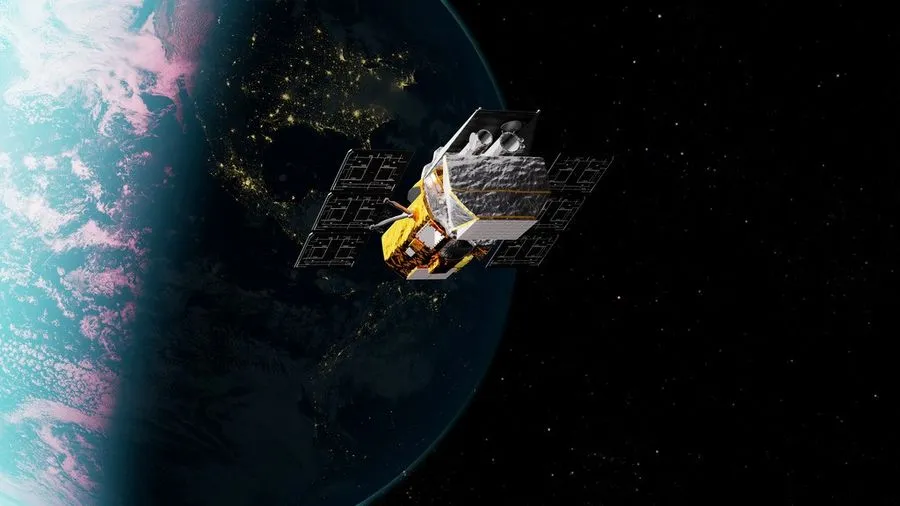
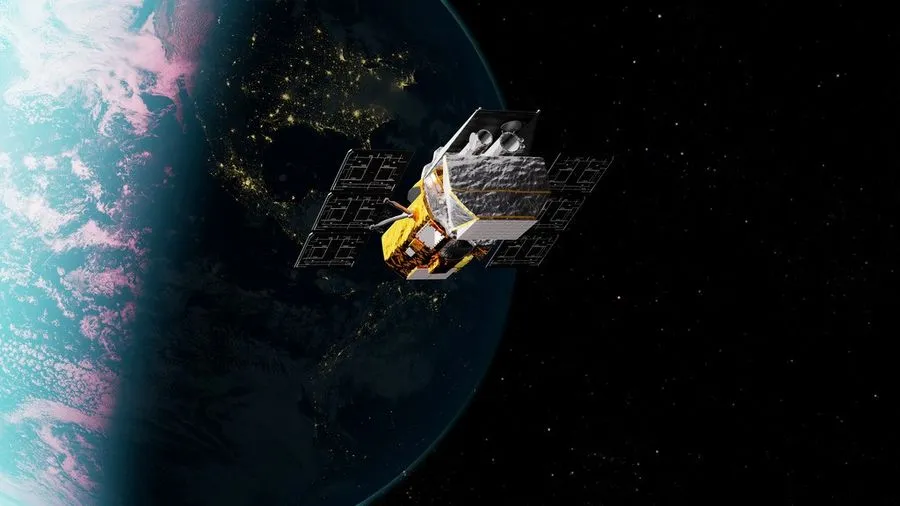
NASA cancelled the Swift Boost mission on August 19, 2026, abandoning a first-of-its-kind attempt to use a commercial spacecraft to raise the orbit of the Neil Gehrels Swift Observatory and extend its operational life by roughly a decade. The observatory is now expected to re-enter Earth's atmosphere and burn up later this year. Engadget
The mission's failure traces back to an attitude control problem aboard Katalyst Space's LINK spacecraft, which began in late July. Attitude control refers to a spacecraft's ability to manage its orientation and stability in space. The issue caused LINK to spin, resulting in sporadic communications and degraded functionality in its thruster system. NASA attributed the mission's cancellation directly to this ongoing problem. Engadget
LINK launched in early July as part of the Swift Boost mission. Under the plan, LINK would rendezvous with the 2004-era Swift satellite, grapple it, and slowly raise its altitude over several months to prevent atmospheric re-entry. Katalyst had less than a year to design the spacecraft for the mission. Engadget The observatory, which cost approximately $500 million, has been studying gamma-ray bursts for over two decades. Spaceflight Now
Swift's orbit has been decaying rapidly due to increased solar activity in recent years. Heightened solar activity heats and expands Earth's upper atmosphere, which increases drag on satellites in low Earth orbit, gradually pulling them downward. Re-entry predictions published as far back as November 2023 showed a split, with some forecasts indicating the observatory would re-enter the atmosphere. NASA Science
The cancellation caps a turbulent few weeks for the mission. CNN reported on August 7 that LINK had spun out of control ahead of its rendezvous attempt. CNN Four days later, on August 11, NASA published a blog post reporting that Katalyst had successfully uploaded a flight software update for LINK, apparently aimed at correcting the issue. NASA Science The fix was not enough. NASA called off the mission on August 19. Reuters
The mission's timeline was compressed from the start. NASA published a blog post on February 11, 2026 announcing that Swift was transitioning operations to prepare for the orbit boost. By May 8, the mission had passed a notable prelaunch testing milestone. Spaceflight Now NASA had framed the effort not merely as a rescue but as an opportunity to demonstrate a key capability in commercial satellite servicing, rather than allowing Swift to re-enter uneventfully. NASA Science
Despite the cancellation of the boost itself, LINK will still attempt to rendezvous with Swift. NASA and Katalyst plan to gather data from those rendezvous operations to inform future satellite servicing missions. NASA Administrator Jared Isaacman said the team will learn everything from LINK's rendezvous attempt and apply those lessons to future missions. Shawn Domagal-Goldman, Astrophysics Division director at NASA Headquarters in Washington, oversees the program. Engadget
The broader context here is the still-nascent state of in-orbit servicing. The concept of a commercial spacecraft docking with an existing satellite to extend its life has been discussed for years, and a handful of demonstrations have reached orbit. Swift Boost would have been among the most ambitious attempts to date: a commercial vehicle grappling a NASA astrophysics platform and performing a sustained altitude-raising campaign. That LINK will still attempt a rendezvous, even without the boost, means the mission retains some data-gathering value. But the core objective, extending Swift's operational life by a decade, has been lost.
Worth noting is the timeline pressure Katalyst faced. Less than a year to design, build, and test a spacecraft for an autonomous rendezvous and grapple mission is an aggressive schedule by any standard in the industry. The attitude control failure that ultimately scuttled the mission may or may not be directly attributable to that compressed development cycle, but the correlation is hard to ignore. In-orbit anomalies in newly designed spacecraft are common enough that a rushed design cycle raises the risk profile considerably.
For the astrophysics community, the loss is tangible. Swift has been a workhorse for gamma-ray burst detection and rapid-response multiwavelength follow-up since 2004. Its Burst Alert Telescope has triggered observations across the electromagnetic spectrum for over two decades, contributing to thousands of publications. No direct replacement with Swift's specific combination of rapid slew capability and simultaneous X-ray, UV/optical, and gamma-ray coverage is currently operating.
What remains is the rendezvous attempt and the data it yields. If the commercial satellite servicing sector can extract lessons from LINK's partial success and full failure, the mission will not have been wasted. But a $500 million observatory will still burn up in the atmosphere, and the gamma-ray burst community will lose a primary instrument before a successor is in place.