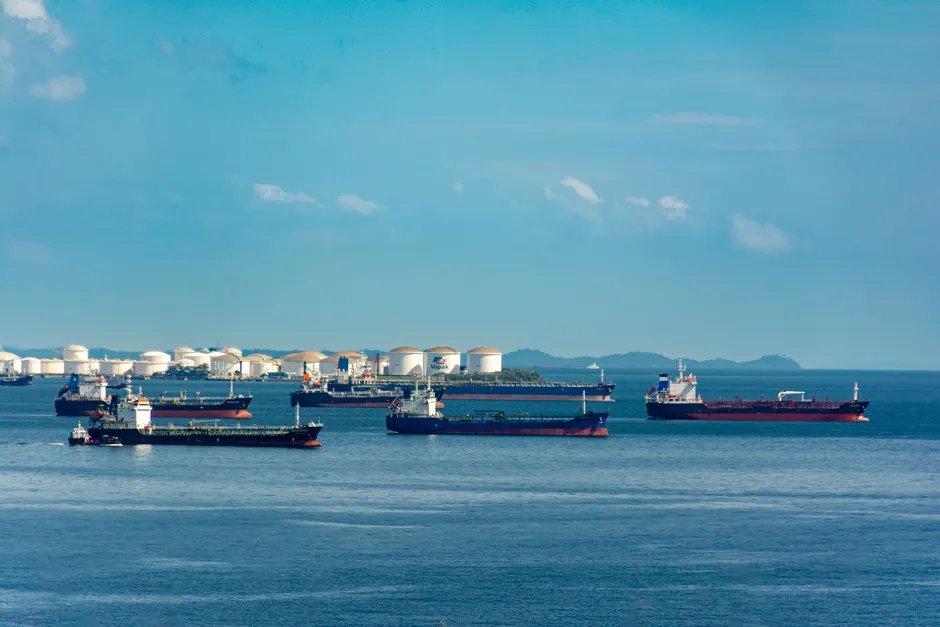
Iran Warns Gulf States: No Oil Leaves the Region If You Side With Washington

Iran's top security official, Mohsen Rezaei, warned Gulf Arab states on August 23, 2026, that not "a single drop of oil" would leave the region if they joined what Tehran calls President Donald Trump's economic war against Iran. The threat escalates a confrontation that already includes Iran's declared closure of the Strait of Hormuz — the narrow waterway at the mouth of the Persian Gulf through which about a fifth of the world's daily oil supply passes.
Rezaei's remarks, reported across multiple outlets, bundle several threats into one message. He vowed to "neutralize the economic war" waged by the United States and threatened direct retaliation against Trump himself. His core warning to neighboring Gulf states was blunt: join Washington's economic measures — meaning sanctions and other financial restrictions aimed at pressuring Iran — and Iran will shut down all oil exports from the Persian Gulf and the Strait of Hormuz. "Not even a drop of oil" would leave the Gulf, Rezaei said, according to Al Jazeera and Press TV.
The threat extends beyond the strait itself. Rezaei warned that Iran would target alternative oil-shipping routes out of the Gulf as well. That means the pipelines and overland channels Gulf states might use to get around a Hormuz closure would also be at risk. By widening the threat from a single chokepoint to the entire export infrastructure of the Arabian Peninsula, Iran is signaling that there is no easy bypass.
A day earlier, on August 22, Rezaei stated that the Strait of Hormuz remains closed until Gulf oil is allowed to leave via an alternative route, as reported by IRNA. That statement flips the logic of the August 23 warning. On August 22, the strait's closure was framed as leverage — a way to force the opening of alternative export corridors. On August 23, Rezaei threatened to close those same alternative routes if Gulf states cooperated with US economic measures. Taken together, the two statements build a framework in which Iran controls the terms under which any Gulf oil reaches global markets.
This latest escalation builds on a trajectory Rezaei outlined on July 17, 2026, when he warned that Tehran would move beyond the military phase of deterrence in the US-Iran conflict, according to Al Jazeera. That reference to a "military phase" — and its implicit replacement by economic and maritime tools — frames the current threats as a deliberate shift in strategy rather than improvised rhetoric.
The threats land against the backdrop of sustained US military operations against Iran. The July 17 reporting references a seventh consecutive night of American strikes, placing Rezaei's warnings within an active bombing campaign. The economic measures he references are a complementary track of pressure, and Iran's response now spans both the military and economic domains.
The Strait of Hormuz carries roughly a fifth of global oil consumption through its narrowest point, making any sustained disruption an immediate supply shock. Gulf producers — Saudi Arabia, the UAE, Kuwait, Qatar, and Iraq — depend on it for the bulk of their crude and condensate exports. Saudi Arabia and the UAE maintain partial bypass capacity via pipelines to Red Sea and Gulf of Oman terminals, but throughput on those routes is a fraction of total Gulf export volume. Rezaei's August 22 statement about keeping the strait closed until alternative routes are opened, combined with his August 23 threat to target those same routes, constructs a catch-22 for Gulf capitals: they face closure at Hormuz and the targeting of any workaround they attempt.
The broader context here is that Rezaei's statements function as a coercive signaling instrument aimed at multiple audiences at once. For Washington, the message is that economic pressure will carry military and maritime costs — not merely on Iranian soil but across the global energy supply chain. For Gulf states, the message is that neutrality is not an option; compliance with US measures will be treated as participation in warfare and punished accordingly. For the international market, the message is that Iran holds and is prepared to exercise escalation dominance over the most critical energy transit corridor on the planet.
Whether Iran can sustain a closure of the strait against a US naval presence already engaged in active strikes remains an open operational question. Iran's naval and asymmetric capabilities in the Gulf — including fast attack boats, mines, and anti-ship missiles — are substantial. But a full closure would invite direct military confrontation with the United States at a moment when American forces are already conducting operations against Iranian territory. The gap between declaratory posture and sustained operational capacity is where the credibility of Rezaei's threats will be tested.
What is unmistakable is the framing. Rezaei is not issuing discrete tactical warnings. He is articulating a doctrine of total economic deterrence — one that treats the entire Gulf export infrastructure as hostage to US policy choices and regional alignment. The July 17 declaration of a shift beyond the military phase, the August 22 conditioning of Hormuz access on alternative-route negotiation, and the August 23 threat to close those alternatives form a coherent sequence. Each statement raises the stakes and narrows the off-ramps available to the parties Iran is pressuring.
Gulf states now face a convergent set of pressures: a US administration pursuing economic measures against Iran, an Iranian security establishment threatening catastrophic consequences for compliance, and a military campaign already underway with no declared endpoint.