Guinea's Recurring Landfill Disaster: Why Conakry's Waste Collapsed Again
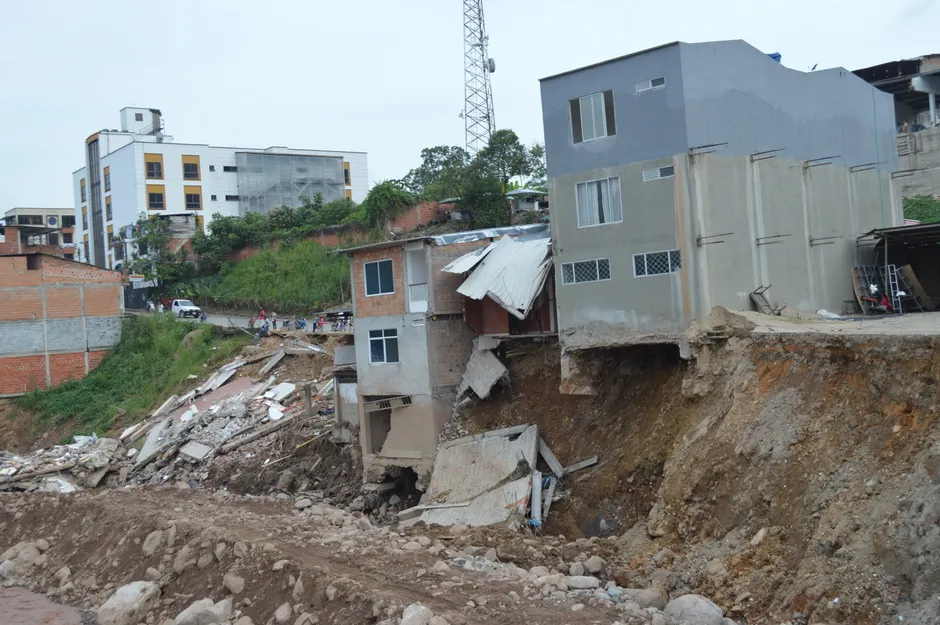
At least 30 people died when a rubbish mound collapsed onto houses in Conakry, Guinea's capital, in the early hours of August 23, 2026. The collapse happened around 2:00 a.m. local time after heavy overnight rain, sending a massive heap of refuse from the city's largest landfill sliding down onto nearby homes. BBC News
Neighbourhood leader Lancine Sylla told the AFP news agency that 18 bodies had been recovered and taken to the morgue. The gap between that count and the government's toll of at least 30 likely reflects the pace of recovery efforts and the difficulty of reaching areas still buried under compacted waste. BBC News
Guinea's Prime Minister, Mamadou Oury Bah, visited the collapse scene to assess the situation and oversee search efforts. The government said significant resources and personnel, including the military, had been deployed to search for survivors. BBC News
The human cost is concentrated in the immediate area around the landfill. A woman told local media that her five children had died in the disaster. BBC News
This is not the first time the same waste site has given way. Another landslide at the site killed 10 people in 2017, according to the most recent reporting. A contemporaneous account from Al Jazeera, published in August 2017, reported that a rubbish dump on the outskirts of Conakry collapsed after heavy rain, killing at least eight people and injuring dozens more. The difference between the eight and ten figures likely reflects revised counts as recovery efforts progressed. Either way, the site's history is clear: heavy rainfall has triggered catastrophic failure of this landfill before, under near-identical conditions, with fatal consequences for those living nearby. BBC News; Al Jazeera
Officials expected the death toll to rise as the waste was cleared, a pattern consistent with the 2017 event and with landslide rescue operations generally, where the full extent of casualties often only emerges once heavy machinery can safely access buried areas. Waste360
The broader context here is one of structural urban failure. Conakry, a rapidly growing coastal capital, has limited formal waste management infrastructure. Its largest landfill receives refuse from across the metropolitan area, piling up in vast, loosely compacted heaps that are inherently unstable. During the rainy season, water seeps into the ground and reduces its shear strength — the soil's ability to resist sliding. When that happens, the waste can behave like a flow slide, moving with enough force to engulf homes at the base of the dump.
The recurring nature of this disaster raises pointed questions about land-use regulation and the enforcement of buffer zones — designated open spaces meant to keep homes at a safe distance from hazardous sites. That the same landfill collapsed in 2017 with the same mechanism, the same trigger, and the same fatal outcome suggests that whatever corrective measures were taken in the intervening nine years were either insufficient or never carried out. Residential structures remained in the path of a known hazard.
For Guinea's transitional government, the political stakes are immediate. Prime Minister Bah's presence at the site signals recognition of the disaster's gravity, but the optics of emergency response will be weighed against the record of preventive inaction since 2017. Deploying the military to search for survivors is the visible layer. The underlying question is whether the state has the capacity or the will to relocate communities from the perimeter of an unstable landfill, or to engineer the dump itself to withstand seasonal rainfall.
That question is not abstract. Guinea's rainy season is ongoing. Further destabilisation of the remaining waste heap, or of adjacent sections of the landfill, remains a live risk for residents who have not yet been moved.