Guinea Waste Dump Landslide Kills 30 Days After Closure Was Announced
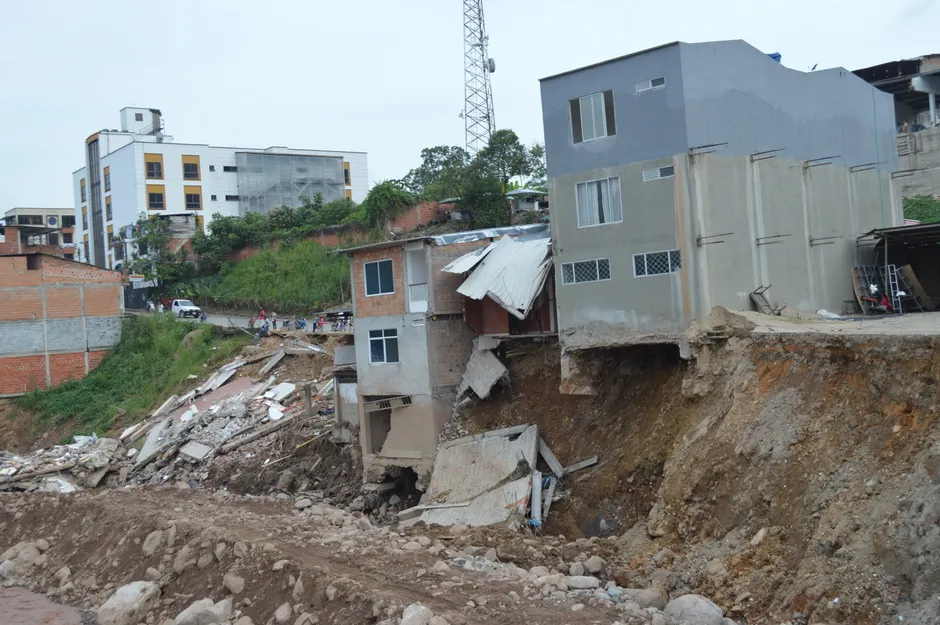
A landslide at a waste dump in Conakry, Guinea, killed 30 people in the early hours of Sunday, August 23, 2026, according to a government statement reported by The Guardian. The collapse left six people seriously injured and 16 more lightly injured.
The landslide struck at approximately 2 a.m. local time in the Gbessia commune of Conakry. Heavy rains overnight caused the waste mound to collapse, engulfing nearby tents and shacks. Witnesses at the scene said the slide was large enough to bury an apartment building along with more fragile dwellings, giving a sense of the sheer volume of material that gave way.
A woman at the site, Cire Diallo, told reporters that five of her children were killed in the landslide. Her account, alongside the government's casualty figures, conveys the human cost concentrated among those living in close proximity to the landfill.
Rescue workers deployed excavators and other tools to clear the site. The government confirmed that rescue operations were continuing at the landfill following the initial recovery effort, according to Reuters. Guinea's prime minister, Amadou Oury Bah, visited the landfill on Sunday to assess the damage and supervise the response, per the government statement.
The disaster occurred less than a week after the government had announced plans to close the Conakry waste site and relocate the waste because of the threat it posed, especially during the rainy season. On Thursday, Guinea's minister of territorial administration, Djénabou Touré Camara, announced that the government was closing the landfill because it was unsafe and that the waste was to be moved outside Conakry. The closure announcement and the landslide were separated by a matter of days.
The timing raises pointed questions about the gap between recognizing a hazard and acting on it. The government had identified the dump as dangerous, particularly during seasonal rains, yet the waste mound remained in place and people continued to live around it when the collapse occurred. Urban landfill sites in West African capitals frequently serve as informal settlements — communities of waste-pickers and their families who build shelters near or on top of dumps to sort and sell recyclable materials. The presence of tents and shacks at the Conakry site indicates a similar pattern. When a structure of accumulated waste gives way under saturated conditions, the density and weight of the material, combined with the flimsy construction of nearby dwellings, leaves little time for evacuation.
The rainy season in Guinea typically runs from May through October, with August among the wettest months. The government's stated rationale for closure, the risk posed during this period, was not abstract: the mechanism of failure — heavy rainfall destabilizing an unengineered waste mound — is a well-understood hazard. What remains unclear from the available reporting is whether any evacuation of residents from the vicinity of the dump had begun between Thursday's announcement and Sunday's landslide.
The broader context here involves the governance challenges of rapidly growing urban centers where infrastructure, waste management, and informal settlement patterns intersect. Conakry, like many West African capitals, has experienced sustained population growth that strains municipal services. Waste dumps expand to absorb what formal collection systems cannot handle, and informal economies develop around them. The government's plan to relocate the waste outside the city signals recognition of the structural problem, but the Conakry landslide shows the consequences of acting on a timeline measured in days or weeks rather than preemptively.
For regional and humanitarian actors, the event reinforces the urgency of addressing urban environmental hazards before seasonal triggers convert recognized risks into mass-casualty events. The death toll of 30, with 22 additional injuries, places this among the more deadly landfill collapses recorded in the region. Whether the government's relocation plan proceeds with accelerated urgency in the wake of the disaster will be a marker of its institutional response capacity.