Flash Floods on the Nepal-Tibet Border: What the Disaster Reveals About Information Control

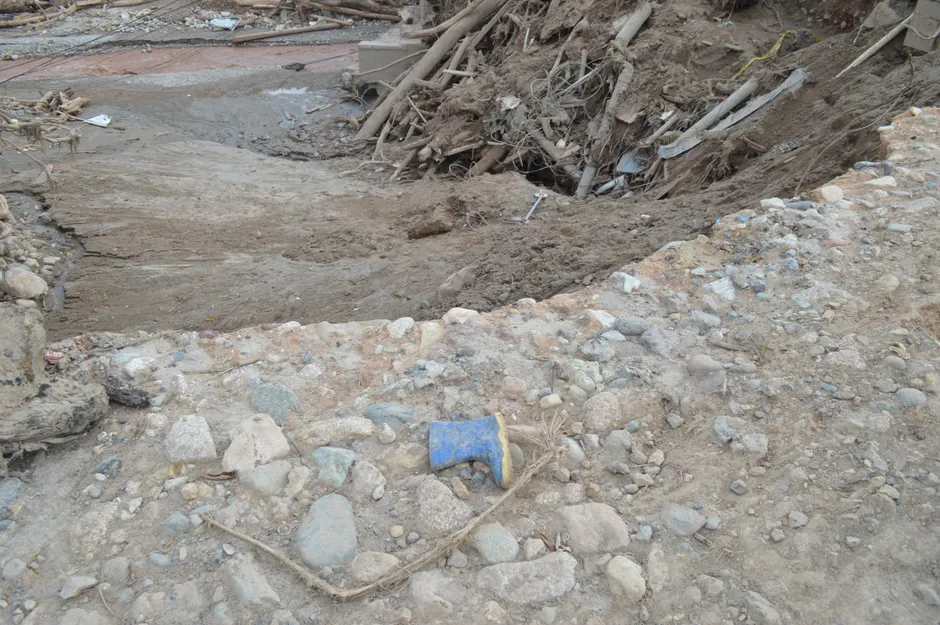
At least 160 people are dead and hundreds remain missing after catastrophic flash floods tore through Himalayan border communities of Nepal and Tibet on August 26, 2026, destroying villages and overwhelming emergency services across the remote, geologically unstable region. France 24 reports the confirmed death toll at 160, with earlier Reuters figures placing recovered bodies at 157. More than 5,000 army and police rescue personnel were mobilized for search-and-rescue operations and had pulled 125 survivors to safety by Thursday. Reuters reports the mobilization scale and rescue count. The floods washed away villages and infrastructure project sites near the Tibet border, according to Reuters.
The disaster unfolds in a region where information flows between Nepal and the Chinese side of the border have long been subject to layers of restriction, filtering, and outright suppression. The New York Times maintains a dedicated topic page aggregating its coverage of internet censorship in China, a body of reporting spanning years of tightening controls over domestic digital spaces and cross-border information pathways. (New York Times)
A Documented Pattern of Regional Censorship
The Nepal-Tibet border flood does not occur in an informational vacuum. The verified reporting record shows a sustained arc of censorship activity across South and East Asia, each case carrying direct relevance to how a cross-border disaster might be communicated, covered, and politically managed.
In September 2025, Nepal's own government imposed a social media ban that the New York Times described as part of a broader global censorship trend. The ban helped spark widespread unrest and ultimately forced the government to reverse course — a rare instance of domestic backlash succeeding against an information-control measure. (New York Times) That reversal established that public pressure in Nepal can constrain censorship, but it also showed the government's willingness to deploy such tools in the first place.
Pakistan's experience offers a different data point. In February 2020, the New York Times reported that Facebook, Google, and Twitter faced Pakistani internet censorship rules requiring the removal or blocking of content deemed objectionable under Islamabad's regulatory framework. (New York Times) The rules placed Western platforms in a compliance-or-block dilemma, setting precedent for how governments across the region can compel content takedowns from multinational tech companies.
China's domestic information architecture operates at a different scale entirely. In May 2020, the Times reported that Beijing deployed its propaganda apparatus to defend new laws aimed at limiting dissent and protest in Hong Kong. (New York Times) The Hong Kong case illustrated how legal instruments and media machinery work in tandem: restrictive legislation is enacted, then a coordinated narrative campaign reframes the measures as legitimate governance rather than repression.
The Stakes at the Border
When a flood kills 160 people across an international border, the flow of accurate, timely information — casualty figures, rescue progress, infrastructure damage, causes — becomes operationally critical for humanitarian response. It also becomes politically sensitive. China maintains tight control over reporting from Tibet; Nepal's own recent history with social media restrictions shows that authorities in Kathmandu have both the appetite and the tools for throttling digital communications.
The question of what triggered the August 26 flood carries its own informational politics. Reuters published an explainer titled "What triggered the catastrophic flood on the Nepal-Tibet border," indicating active investigation into the cause. In a region where glacial lake outburst floods (sudden releases of water from melting glaciers), landslide dams, and infrastructure failures are all plausible triggers, the attribution of causation can carry significant implications for bilateral relations, infrastructure policy, and climate adaptation funding — particularly if Chinese-side construction or water management projects prove to be a factor.
The broader context here is that censorship infrastructure, once built for political purposes, does not switch off during a humanitarian crisis. It shapes what affected populations can tell each other, what journalists can report, and what governments feel compelled to acknowledge publicly. Nepal's 2025 social media ban was reversed under public pressure, but the episode revealed the speed at which information controls can be imposed. Pakistan's content-removal rules showed how governments can leverage regulatory frameworks to compel platform compliance. China's Hong Kong propaganda campaign showed how legal and narrative instruments reinforce each other.
For the August 26 flood, the immediate operational concern is search and rescue — those 5,000 personnel and the hundreds still missing. The structural concern is whether the information environment around this disaster will allow the kind of transparent, cross-border reporting that affected communities and humanitarian responders need, or whether the censorship architectures documented across the region will shape what the public learns, when they learn it, and from whom.