Autonomous Vehicle Test Drivers Are Getting Hurt — and the Injuries Are Only Now Surfacing
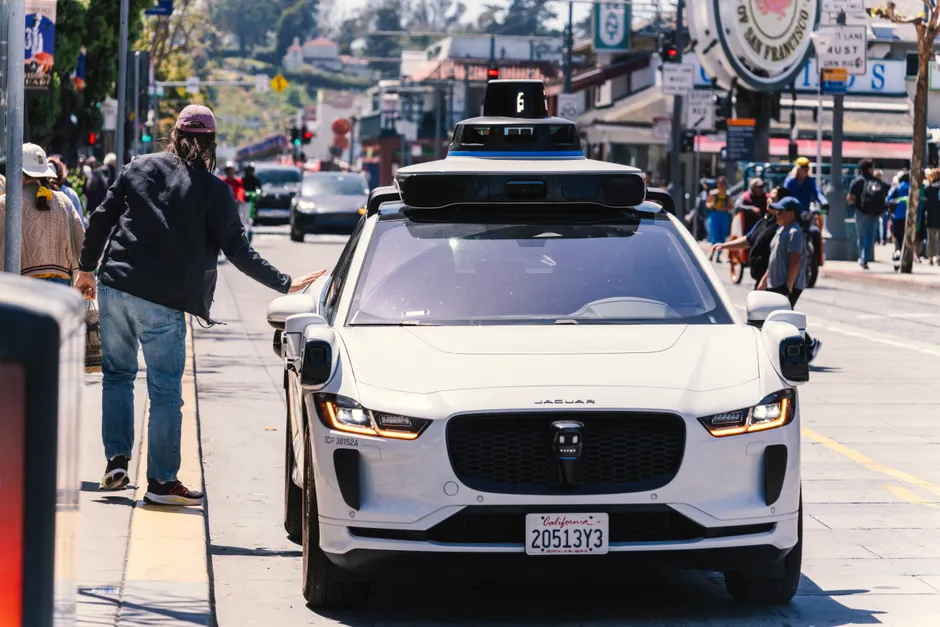
More than two dozen injuries to Waymo and Zoox test drivers in 2024 and 2025 have surfaced in OSHA workplace safety data, revealing a human cost to autonomous vehicle development that has gone largely unreported outside of regulatory filings. The injuries, detailed in data submitted to the Occupational Safety and Health Administration and reviewed by TechCrunch, include sprains, strains, and whiplash caused by self-driving software braking hard or swerving suddenly. Some test drivers were sidelined for weeks or months.
Transdev, the company that employs and manages Waymo's test drivers, reported 16 injuries tied to Waymo depot locations across three cities. Zoox reported as many as eight worker injuries linked to hard braking. Zoox's test fleet consists of modified Toyota Highlander SUVs equipped with its self-driving system.
The data became public because of a regulatory threshold. OSHA requires companies with 100 or more employees in taxi, limo, or transit services to publicly report injury data. Both Waymo and Zoox classify themselves within these higher-hazard industry categories, which placed their injury records in the public dataset.
The injuries are not confined to the 2024-2025 reporting window. Current and former Zoox contractors told TechCrunch that Zoox test vehicles were still braking hard and abruptly as recently as July 2026, and that workers continue to be injured. The persistence of the issue suggests the underlying driving behavior has not been fully resolved even as both companies scale operations.
Waymo's commercial fleet grew from more than 1,500 vehicles in May 2025 to more than 3,500 vehicles by August 2026. The company reported 220.6 million rider-only miles driven without a human driver through March 2026 (Waymo). Waymo has also published safety claims based on that mileage: as of June 24, 2026, the company reported that the Waymo Driver was involved in 94% fewer crashes causing serious or fatal injuries than human drivers, 82% fewer crashes in which an airbag deployed, and 82% fewer crashes overall (Waymo). An earlier report using data through March 2026 put the reduction in serious or fatal injury crashes at 92% regardless of fault (Waymo).
These safety claims address crash performance relative to human drivers. They do not capture the occupational injuries that test drivers experience inside the vehicles during development and testing, which fall under a different regulatory framework and a different category of risk.
NHTSA, the National Highway Traffic Safety Administration, oversees both companies on the road, and its oversight runs parallel to the OSHA injury data. The agency opened a preliminary investigation into 500 Zoox vehicles with automated driving systems after two crashes (Reuters), and separately opened a probe into Zoox self-driving vehicles following unexpected braking that led to two rear-end collisions injuring motorcyclists (Reuters). NHTSA also opened a probe after a Waymo self-driving vehicle struck a child near a school, causing minor injuries (Reuters). The agency closed its probe into Waymo self-driving collisions involving unexpected behavior in July 2025 (Reuters).
In August 2026, Zoox recalled all 105 of its robotaxis and released the framework behind its claim to be safer than human drivers (The Next Web).
The OSHA data draws attention to a workforce that sits between two regulatory regimes. The vehicles they oversee are evaluated by NHTSA for on-road crash performance. The injuries they sustain are evaluated by OSHA for workplace safety. Neither framework fully captures the interaction: an autonomous system that brakes or swerves to avoid a collision may simultaneously reduce crash risk for road users while generating occupational injury risk for the test driver inside the vehicle.
The broader context here is that the injury data does not contradict Waymo's published crash-reduction figures. Both can be true simultaneously. The Waymo Driver may be involved in fewer crashes per mile than a human driver while still producing braking events forceful enough to injure occupants. The distinction matters because public confidence in robotaxis has been framed around crash statistics, and the OSHA filings introduce a different metric: how the vehicle's operational behavior affects the people inside it during testing.
The timing adds pressure. Waymo has more than doubled its fleet in roughly fifteen months. Zoox recalled its entire robotaxi fleet in August 2026 and released its safety case framework the same month. Workers inside Zoox vehicles reported ongoing hard-braking incidents as recently as July. Both companies are expanding or repositioning their commercial operations while the occupational safety record of their development programs remains an open thread.