A Glacier Collapsed in Nepal. Scientists Say Climate Change Made It More Likely.

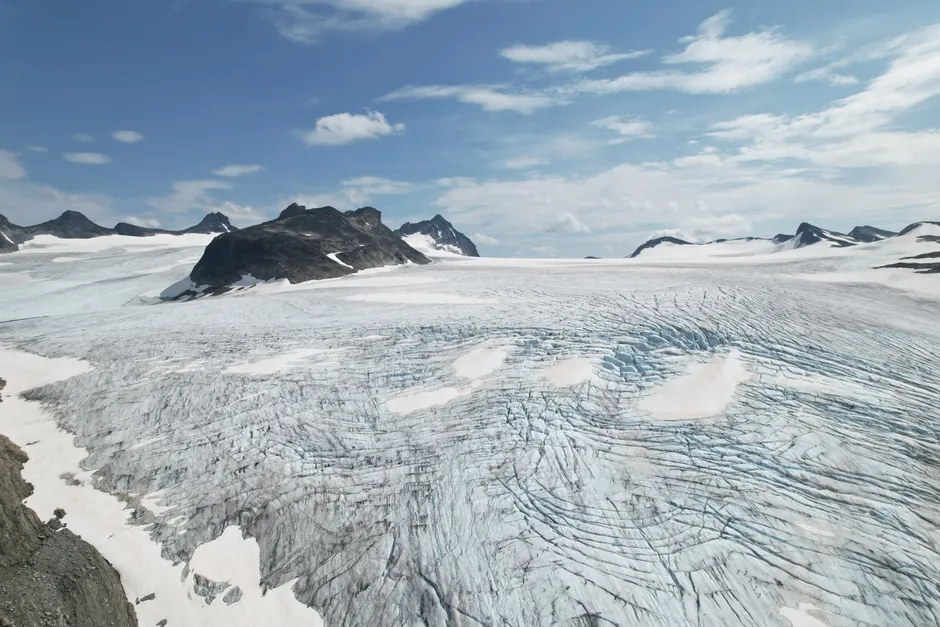
A glacier collapse triggered a deadly flash flood in Nepal's Rasuwa region, and scientists now link the disaster directly to the destabilization of high-altitude terrain under a warming climate. The collapse and flood hit an area that researchers have flagged as increasingly disaster-prone, as rising temperatures weaken both mountain slopes and the glaciers sitting on them across the Hindu Kush Himalaya — the vast mountain system stretching from Afghanistan to Myanmar. Nature
The Hindu Kush Himalaya is warming fast, driving major changes in glaciers and snow cover, according to reporting published on August 27, 2026. Global warming is making high-altitude regions unstable and could trigger more glacier-related disasters, scientists say. The same body of research identifies Rasuwa specifically as becoming more prone to natural disasters as climate change raises temperatures that compromise the region's stability. The Washington Post; The New York Times
The Rasuwa event is the latest data point in a well-documented pattern of accelerating ice loss across the Hindu Kush Himalaya. A March 2026 report from the International Centre for Integrated Mountain Development (ICIMOD) confirmed that glaciers across the range are losing ice at double the rate observed since the year 2000. An earlier ICIMOD landmark report found that Hindu Kush Himalayan glaciers disappeared 65% faster in the 2011–2020 decade than in the preceding one. Those same changes, driven by global temperature rises, threaten two billion people who depend on rivers fed by the range's snow and ice, and are accelerating species extinction. ICIMOD, March 2026; ICIMOD, June 2023
The majority of glacier fluctuation observations indicate substantial retreat across the range, especially in China and India. Melting permafrost — the layer of permanently frozen ground that underpins many mountain slopes — and destabilized slopes, worsened by climate change, pose further risks to human and cattle safety. ICIMOD's cryosphere monitoring initiative notes that risks across the Hindu Kush Himalaya are becoming more severe with each passing year, showing up as concrete hazards. ICIMOD Cryosphere Initiative; ScienceDirect; ICIMOD
The Rasuwa flash flood follows a devastating 2024 flood season in Nepal. Record rainfall triggered flash floods, landslides, and riverine flooding that killed 244 people in central and eastern Nepal. A World Weather Attribution analysis found that rapid urbanization and climate change were key drivers of those dramatic flood impacts, particularly in Kathmandu and nearby regions. A separate attribution analysis found that climate change made Nepal's 2024 floods approximately 70% more likely. Earth.org; World Weather Attribution
Attribution science — the field that calculates how much climate change influenced a specific weather event — has matured specifically for Nepal. An attribution analysis of climate-induced loss and damage in Nepal confirms that human-caused climate change has significantly increased the probability and intensity of extreme events such as extreme heat. A 2024 study examined the role of climate change in disaster mortality in Nepal, a low-income and highly disaster-prone country, using a robust regression-based impact attribution method. Frontiers in Climate; ScienceDirect
The pattern is not confined to Nepal. Colossal bursts of rain like those that caused deadly flooding in Texas are becoming more frequent and intense around the globe as the world warms. Bangladesh, downstream of much of the Himalayan meltwater system, is already witnessing more severe and more frequent river flooding, with rains becoming more unpredictable. The New York Times, July 2025; The New York Times, July 2020
The broader context here is that the Rasuwa glacier collapse fits a globally consistent mechanism. Warming air holds more moisture, delivering more intense precipitation bursts. Simultaneously, warming destabilizes the cryosphere — the frozen parts of the Earth system, including glaciers, permafrost, and snow — creating conditions for sudden glacial lake outburst floods, ice avalanches, and slope failures. The 2024 Nepal floods showed the compound effect when extreme rainfall hits terrain already destabilized by rapid urbanization. The Rasuwa event shows the other axis: what happens when the destabilized terrain itself is the trigger.
What stands out about the current moment is the convergence of multiple accelerating trends. Ice loss rates have doubled since 2000. The 2011–2020 decade saw 65% faster glacier disappearance than the preceding one. Attribution analyses can now quantify the climate signal in specific events with growing confidence, linking individual disasters to human-caused warming with percentage increases in probability. For a low-income, highly disaster-prone country like Nepal, the mortality implications of this trajectory are direct and measurable, as the 2024 regression-based study confirmed.
The two-billion-person figure ICIMOD attaches to cryospheric changes in the Hindu Kush Himalaya encompasses populations across the river basins fed by the range's snow and ice. Bangladesh's intensifying river flooding, driven in part by more unpredictable monsoon patterns, is one downstream expression of the same hydrological disruption. The Texas flooding, caused by a different mechanism, illustrates that the warming-driven intensification of extreme precipitation is global, not regional.
For policymakers and disaster risk reduction planners, the Rasuwa event raises a difficult operational reality: glacier collapse hazards in high-altitude regions are growing harder to anticipate as the pace of cryospheric change outstrips the historical baseline on which early warning systems were designed. The ICIMOD data showing accelerating ice loss since 2000 means that models calibrated on late-20th-century glacial behavior are increasingly unreliable. Nepal's 2024 flood season, where rapid urbanization compounded climate-driven extreme rainfall, suggests that exposure is rising at the same time that hazard intensity is increasing. The convergence of those two trends — more people and assets in vulnerable areas alongside more frequent and severe cryospheric and hydrological events — defines the risk landscape ahead for the Hindu Kush Himalaya and its downstream basins.