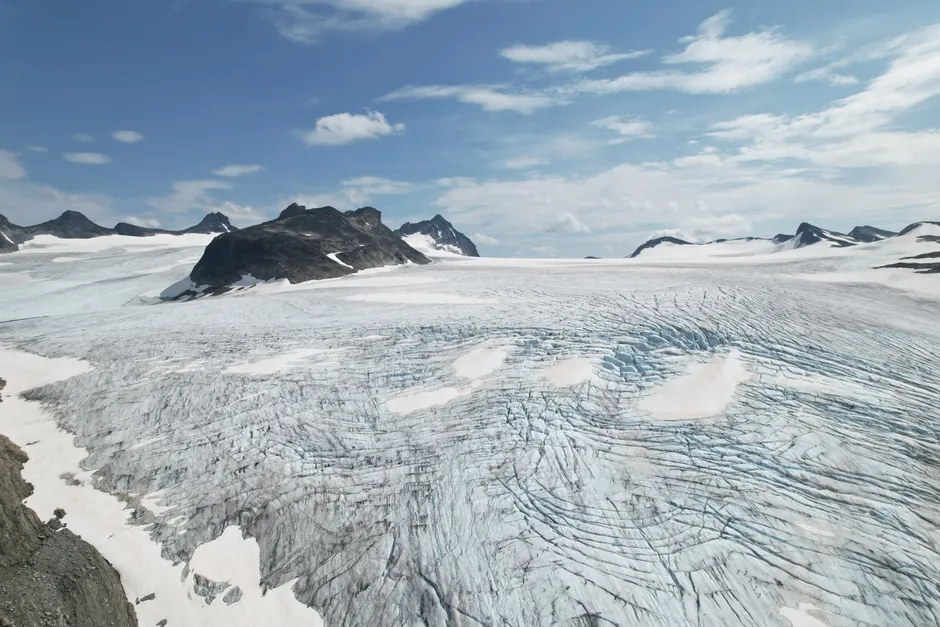
Himalayan Glacier Collapse Triggers Cross-Border Disaster Across Nepal and Tibet
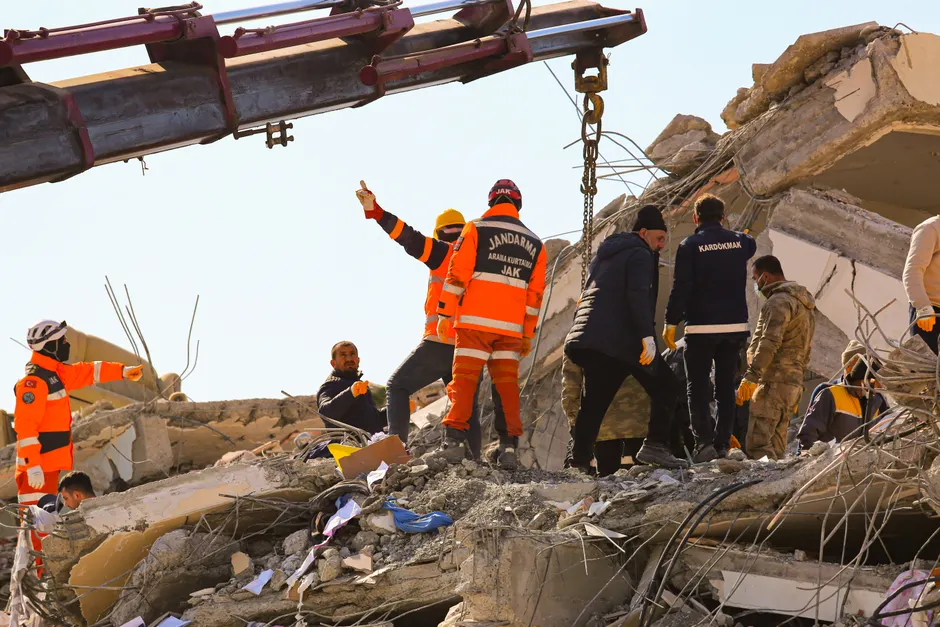
A glacier collapse in the Himalayas on August 26, 2026, triggered a catastrophic flood that tore through Nepal and into southern Tibet, killing at least 669 people and leaving nearly 3,000 unaccounted for as of August 30, according to The Guardian. The disaster struck Rasuwa District near the Nepal-China border with major flash flooding and a mudslide. It has drawn one of the largest domestic search-and-rescue deployments in Nepal's recent history and raised urgent questions about glacial hazard vulnerability across the region.
The flood's destructive path extended at least 62 miles downriver, destroying roads and buildings across both Nepalese and Chinese territory, ABC News reported on August 29. On the Chinese side of the border, more than 550 people remained unaccounted for as of August 30. The Nepal Red Cross Society, whose Disaster and Crisis Management Department is led by Sagar Shrestha from Kathmandu, has been coordinating elements of the on-ground response alongside government agencies.
The toll climbed rapidly over four days. PBS NewsHour reported on August 26 that at least 160 had been killed. By August 27, Reuters put the figure at 359. Nepal police said on August 28 that the death toll had reached 469. The Guardian's August 30 reporting brought the confirmed count to 669, with an estimated 2,000 to 3,000 people still missing, consistent with Reuters's August 29 assessment. Among those unaccounted for were 41 Australian citizens, a number that had risen from earlier reports of 39, as Foreign Minister Anne Aly and Assistant Minister Matt Thistlethwaite confirmed the government was working urgently to establish their welfare. Michael Keats, a New South Wales man, reached the Nepal-Tibet border crossing at Gyirong Port just ten minutes before the flood hit; he was confirmed missing on August 30.
The international dimension of the disaster is significant. Reuters reported on August 27 that as many as 540 foreigners from 31 countries were among the 667 tourists listed as missing in Nepal. Smartraveller, the Australian government's travel advisory service, issued a crisis alert for the Nepal-China border area on August 26. The volume of foreign nationals caught in the disaster reflects the heavy tourist traffic through the Himalayan trans-border corridor, a route connecting Nepal's trekking destinations with Tibet's overland travel network via the Gyirong crossing.
Nepal's government has deployed approximately 15,000 personnel, drawn from the army and police, to search for survivors across the flood zone. At a teaching hospital in Kathmandu, Nepalese authorities hung photographs of unidentified deceased victims on a wall, each body bearing a paper label noting the district where it was found and a contact number. Relatives gathered at the hospital to attempt identification, a grim procedural reality that reflects both the scale of casualties and the logistical difficulty of conducting forensic operations in a disaster zone spanning remote mountainous terrain and an international border.
The National Disaster Risk Reduction and Management Authority (NDRRMA), Nepal's government body for disaster management, publishes daily disaster bulletins through its official portal at ndrrma.gov.np. The Nepal Disaster Risk Reduction Portal at drrportal.gov.np records incident-level disaster data, including deaths by gender, total deaths, and missing persons, broken down by municipality. Bhotekoshi Rural Municipality, which lies in the flood's path, is among the jurisdictions catalogued in that system. The NDRRMA's bulletin dated August 23, days before the glacier collapse, recorded two child deaths from snakebites and 20 injuries from various other disaster incidents, a baseline that illustrates Nepal's chronic exposure to multiple concurrent natural hazards even outside of catastrophic events.
A Government of Nepal water plan document notes that 6,025 people have lost their lives in floods and landslides across the country, reflecting deep and well-documented vulnerability to monsoon-season hydrological disasters. The August 2026 glacier collapse, however, falls into a distinct and increasingly studied category: glacial lake outburst floods and ice-avalanche-triggered flood cascades. These events behave differently from monsoon-driven flooding in both velocity and geographic reach. A glacial lake outburst flood, or GLOF, occurs when a glacier-fed lake suddenly releases its water, sending a surge downstream that can travel for dozens of miles at high speed.
The broader context here is the accelerating concern among glaciologists and disaster risk specialists about the stability of Himalayan ice in a warming climate. Glacier collapse events, as distinct from gradual glacial lake expansion, can generate instantaneous discharge volumes that overwhelm downstream infrastructure before any early-warning system can activate. The fact that the flood crossed an international border, affected Chinese territory with over 550 people missing on that side, and swept through a major tourist transit point simultaneously creates a multi-jurisdictional crisis that no single national disaster management authority is structured to handle alone. Nepal's 15,000-person deployment is substantial by domestic standards, but the scale of the missing, the remote terrain, and the cross-border dimension will test regional coordination mechanisms that have historically been thin in the Himalayas.
For the families of the missing, including those of the 41 Australians still unaccounted for, the window for rescue narrows with each day. The identification process at Kathmandu's teaching hospital, with its photographs and paper labels, is a procedural admission that the operation is shifting from rescue toward recovery. Whether the final toll stabilizes near the current 669 or climbs significantly depends on what search teams find in the canyons and riverbanks downstream, terrain that remains accessible only to personnel on foot and in rotary-wing aircraft.