Nepal Glacier Disaster: Over 540 Dead, 1,500 Missing in Himalayan Flash Floods

At least 543 people are dead and more than 1,500 remain missing after a glacier broke away in Nepal's Langtang National Park, triggering flash floods that tore through river valleys along the Nepal-Tibet border on 26 August 2026. By Friday afternoon 28 August, the death toll had reached 538 in Nepal and five across the border in Tibet, according to The Guardian.
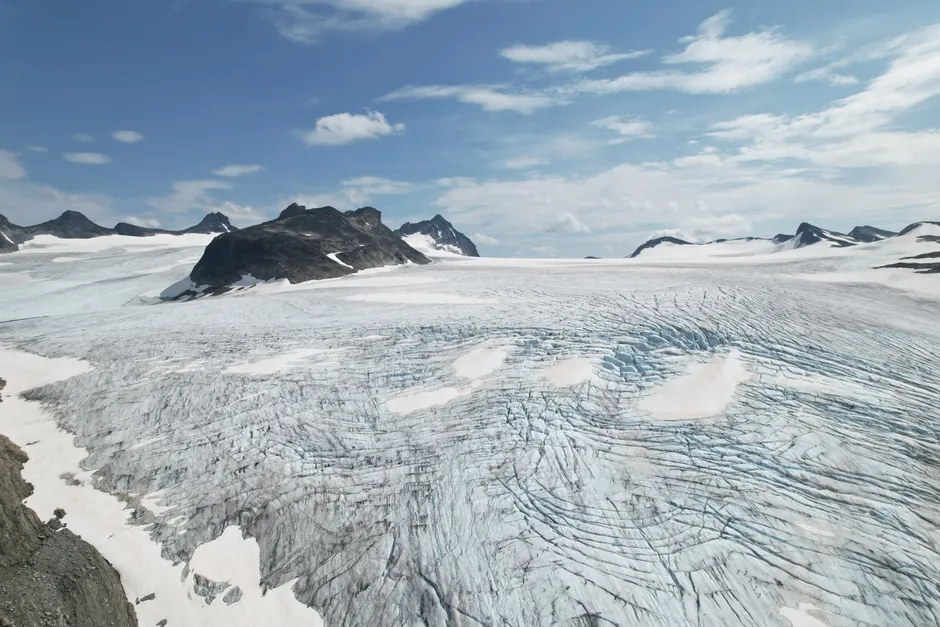
The disaster began on the morning of Wednesday 26 August, when a massive section of a Himalayan glacier snapped off and crashed onto the valley floor. A glacier detachment is what it sounds like: a large piece of a glacier breaks free from the main body of ice, often with little warning. The resulting torrent of water, mud, rock, and ice wiped out villages and destroyed power stations, roads, and bridges across northern Nepal. The hardest-hit area appears to be Rasuwa district, where the British Red Cross reported extensive damage to homes, livelihoods, infrastructure, and public services. The Canadian Red Cross described the event as a "catastrophic flash flooding event" that destroyed critical infrastructure across the region.
Bidur, the capital of Nuwakot district in Bagmati province, lies in ruins. The town sits on the banks of the Trishuli River, and most of its homes were swept away when mud, rocks, and debris surged down the valley. Rescue efforts in Bidur were disrupted on Friday morning as the Trishuli began rising again after a lake formed by mudslide debris near the border overflowed. Chinese state broadcaster CCTV reported that the lake, created by piles of debris from the mudslide, had begun overflowing on Friday, forcing a brief suspension of rescue operations.
The International Federation of Red Cross and Red Crescent Societies estimates that at least 93,000 people may have been affected and are in great need. David Fisher, IFRC head of delegation for Nepal, said on 28 August that thousands of homes had been destroyed or significantly damaged and that the death toll was likely to keep rising. The IFRC released emergency funds on 26 August, the day of the disaster, and said its aid would provide shelter, food, water, cash assistance, medical supplies, and long-term recovery support.
The scale of infrastructure destruction is severe. Lila Pieters Yahia, UN resident coordinator for Nepal, said more than 40 bridges had been destroyed or badly damaged and over 40 kilometers of road completely destroyed. Rescue teams reported finding bodies hundreds of miles downstream from the disaster zone in Nepal's Chitwan district, near the Tibetan border, a measure of how far the floodwaters traveled.
More than 100 people were rescued by Nepali army personnel using helicopters, and dozens of injured were transported to Kathmandu for advanced medical care. The more than 1,500 people still missing include hundreds of foreign nationals who were in the area to work, trek with guides, or make a pilgrimage. Their presence in the affected zone adds an international dimension to the disaster, with cross-border casualty implications for multiple governments.
The broader context here is the vulnerability of the Himalayan cryosphere — the frozen parts of the region, including glaciers and permafrost — to sudden glacial detachment events. While the specific trigger for this glacier break has not yet been publicly detailed by scientific authorities, the mechanism fits known patterns of glacial lake outburst floods and debris flows in the region. A glacial lake outburst flood happens when water held back by a natural dam of ice or debris breaks through, releasing a wall of water downstream. The destruction of power stations and the sheer distance over which bodies were carried suggest an exceptionally high-energy flow. The overflow of the debris dam on Friday, which forced rescue suspensions, shows the kind of secondary hazard that follows such events: unstable piles of debris can act like a dam, holding back water until they fail days later, creating renewed danger for communities and responders downstream.
Nepal's disaster response system, anchored by the army's aviation assets and supported by the IFRC's emergency funding, mobilized quickly. But with 40 bridges and 40 kilometers of road gone, access to isolated communities remains the primary operational hurdle. The IFRC's release of emergency funds within hours of the event reflects the severity assessed by humanitarian workers on the ground. Whether the 1,500 missing can be accounted for will depend on how quickly debris clearance and downstream search operations can proceed, and on whether the secondary flood risk from unstable debris dams can be brought under control.