Nepal-Tibet Glacial Collapse: A Border Disaster With Climate Roots

A glacial collapse along the Nepal-Tibet Himalayan border sent a wall of water and debris surging downstream on Wednesday morning, August 26, 2026, killing at least 768 people and leaving 3,048 missing across both countries as of August 30, according to The Guardian. The US Geological Survey identified the glacial collapse — meaning a large mass of ice breaking away and crashing downslope — as the disaster's trigger.
The death toll spans the border. Chinese authorities reported 16 deaths and 546 missing on the Tibetan side, of whom 261 were foreign nationals, including 104 from Nepal, 49 from India, 33 from Latvia, 18 from the United States, and 15 British citizens. Nepal's figures are far higher: as of August 30, 768 confirmed deaths and 3,048 missing, with hundreds of foreigners among them. Some bodies were reported swept downstream, potentially as far as India. Approximately 30 Canadians and permanent residents were also reported missing, according to a statement cited by the New York Times.
Earlier figures from Nepal's National Disaster Risk Reduction and Management Authority, reported on August 28, had put the toll at 579 dead and 1,924 missing, as noted by Good Morning America. The sharp escalation between August 28 and August 30 reflects both the discovery of additional victims and the consolidation of reporting from multiple districts and cross-border sources.
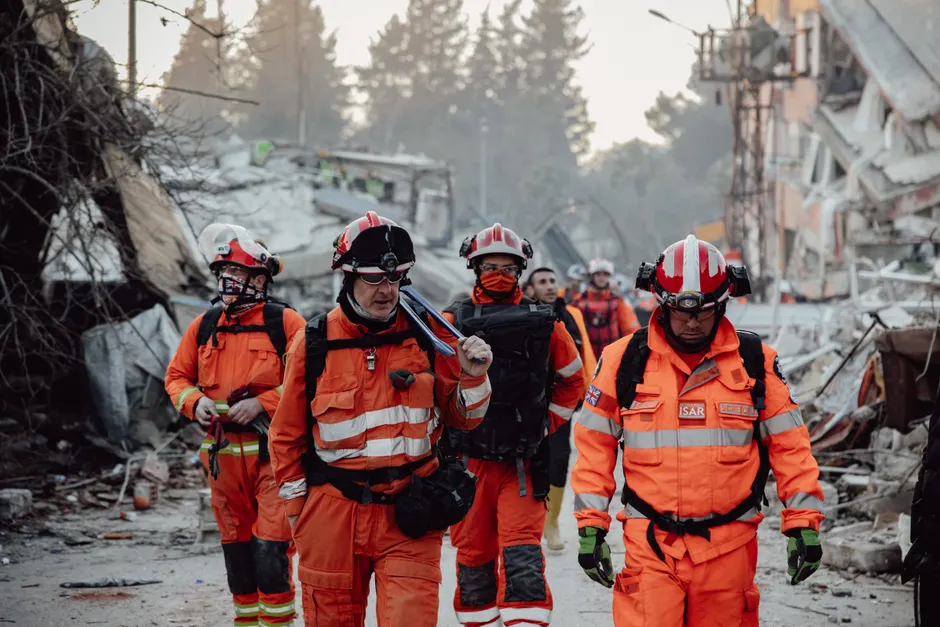
Rescue operations are focused on several hydropower sites along the Bhotekoshi River corridor in Rasuwa district. Nepal's disaster authority confirmed that 933 hydropower workers are among the missing, with priority rescue efforts concentrated on the Trishuli 3A and 3B hydroelectric sites. At the Trishuli 3A tunnel, where more than 100 workers are believed trapped, Nepal's army successfully inserted a pipe into the structure. Home Minister Sudan Gurung said air was being pumped through the small opening, with excavation and the deployment of a rescue team inside to follow. More than 3,700 people had been rescued in Nepal as of August 30.
The NDRRMA maintains a live record list titled "Rescued & Missing Persons - Rasuwa Flood" on its SETU platform, where individual cases are being tracked. Entries include individuals such as Nirajan Shrestha, listed as found safe on August 27, and PRADIP SHRESTHA, age 23, listed as rescued. Others, including Damahammad Ansari, age 45, remain listed as missing. The District Administration Office in Banke, under Nepal's Ministry of Home Affairs, has also published information about missing persons from the Rasuwa flood.
Nepal began burying bodies of victims after taking DNA samples so families could later reclaim remains for traditional funeral rites following identification. Officials called for forensic testing kits and freezer units, noting that bodies recovered from water decompose at an accelerated rate.
The NDRRMA warned on August 30 that flood flow in the Bhotekoshi River in Rasuwa had increased further, adding urgency to evacuation and search operations downstream. The government estimated that Nepal's reconstruction bill could run into the billions of dollars.
Foreign Minister Shisir Khanal called for a global response to the climate crisis, stating that despite contributing only 0.1% of global emissions, Nepalis had become major victims of climate change. The glacial collapse that triggered the flood is consistent with the kind of high-altitude cryospheric hazards — events involving ice, snow, and frozen ground at mountain elevations — that scientists have linked to warming in the Hindu Kush-Himalaya. In that region, permafrost degradation (the thawing of permanently frozen soil) and glacial destabilization have increased the frequency of glacial lake outburst floods, which occur when a lake dammed by ice or moraine suddenly releases its water. Khanal's framing positions the disaster not as an isolated national emergency but as a data point in a pattern of climate-attributed loss concentrated in countries with negligible emissions profiles.
The broader context here raises pressing questions about where large infrastructure gets built in high-risk trans-Himalayan river corridors. The Trishuli 3A and 3B hydropower projects occupy valleys directly downstream of glacial features that, as this event showed, can fail catastrophically and without warning. Cross-border river governance between Nepal and China, and the downstream implications for India, add a diplomatic layer to what is already a humanitarian crisis of considerable magnitude. The presence of foreign nationals from at least five countries among the missing ensures that consular and recovery coordination will extend well beyond the immediate bilateral response.