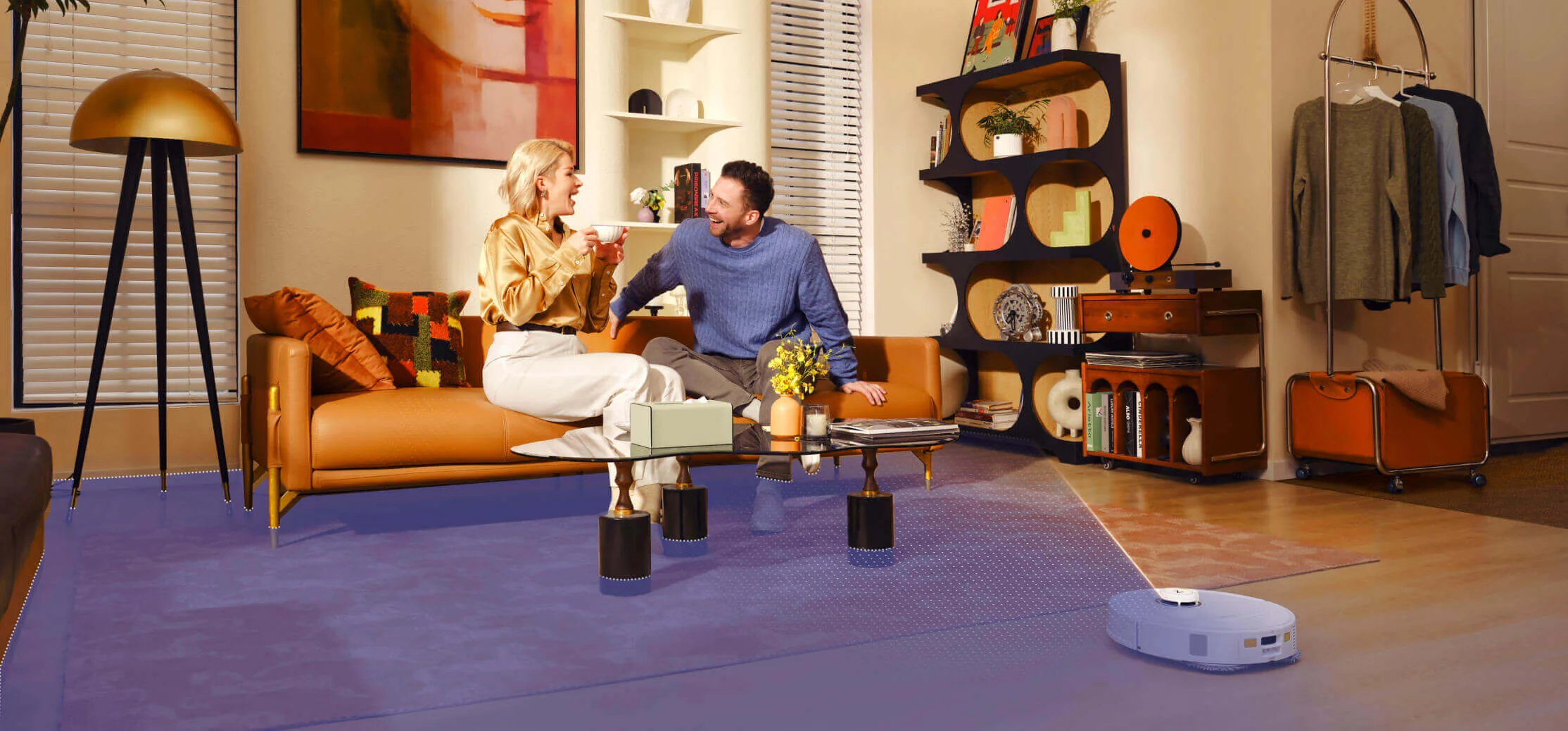
DJI's Romo 2 Robot Vacuum Adds Climbing Legs and a Local-Only Privacy Mode

DJI announced the second generation of its Romo robot vacuum, the Romo 2 series, at IFA 2026 in Berlin on September 3. The series includes two models: the transparent Romo 2 P2 and the opaque Romo 2 A2 (The Verge).
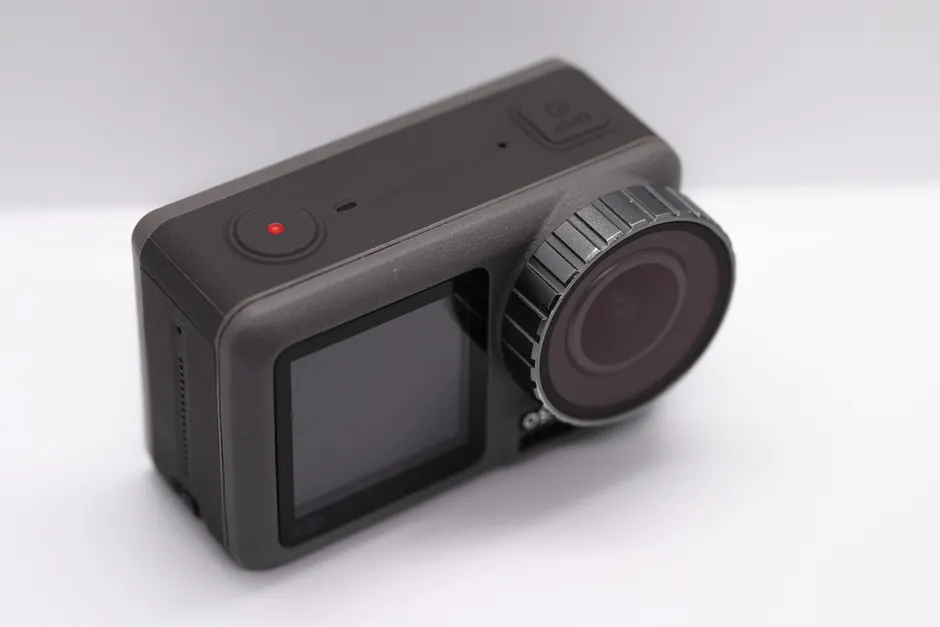
DJI markets the Romo 2 as an "AI-Powered Extended-Coverage Robot Vacuum" with the tagline "Thinks Deeper. Cleans Smarter." The launch took place at Hall 20-129, Messe Berlin, where the Romo 2 debuted alongside the DJI Osmo 360 II action camera and a power ecosystem. Pricing and a release date were not announced at the time.
The Romo 2 introduces two physical legs that let it climb over single steps up to 4cm (1.5in) high, or two steps at roughly double that height. The vacuum reaches up to 36,000Pa of suction on carpet — a measure of how forcefully the device pulls in air and debris. New brush and mop arms extend cleaning reach toward sideboards and underneath furniture. DJI claims an 85 percent reduction in volume compared to the first-generation Romo, making the device substantially quieter.
Navigation has been substantially upgraded. The Romo 2 can detect and avoid cables and obstacles as small as 2mm, and it can identify transparent surfaces such as mirrors and glass. DJI attributes this to what it calls "human-like reasoning and concept transfer," meaning the vacuum learns from obstacles it has already encountered and adapts to unfamiliar objects. The device supports four cleaning modes: Vacuum & Mop, Vacuum, Mop, and Vacuum Then Mop, with custom cleaning plans configurable through the DJI app.
The most consequential feature, from a security and privacy standpoint, is Local Data Mode. DJI describes it as "a new industry standard for home robotics." When enabled, it cuts the DJI Home app's internet connection and stops syncing of photos or camera feeds. Users can also fully disable the camera and microphone and delete any stored data. Local Data Mode is scheduled to roll out to the Romo 2 in Q4 2026, with plans to extend it to the first-generation Romo line.
The security framing is not incidental. The first-generation Romo had serious vulnerabilities that allowed attackers to access thousands of devices worldwide, exposing home floorplans, camera feeds, microphone audio, and granting full remote control. For a device that maps the interior of a home and carries both a camera and microphone, those flaws were not a minor footnote. Local Data Mode directly addresses the attack surface — the points where an attacker could exploit the device — by giving users the ability to cut off the device's data path to the internet and physically disable its sensors.
A US launch of the Romo 2 is considered unlikely. US restrictions and the FCC's ban on foreign-made robot vacuums prevent DJI from launching recent products in the country. The Osmo 360 II, announced at the same event, is also skipping the US market.
The broader competitive context is that robot vacuums have moved from basic random-path cleaning to LiDAR-mapped, obstacle-aware navigation over the past several years. LiDAR — the same laser-scanning technology used in self-driving cars — lets the vacuum build an accurate map of a room. DJI's addition of physical climbing legs and on-device reasoning for obstacle adaptation pushes beyond the current envelope, and the 36,000Pa suction figure is competitive at the premium end of the market.
The privacy posture is where DJI may differentiate most meaningfully. The robot vacuum category has faced repeated security scrutiny, and not just for DJI's devices. Vendors have been criticized for camera-based navigation that streams or stores interior imagery, often with unclear data handling. A hardware-level off switch for sensors combined with a local-only data mode, if implemented as described, would give buyers a degree of control that has been absent from the category.
In this author's view, DJI's characterization of Local Data Mode as "a new industry standard" is a marketing claim, not a recognized standard adopted by the broader industry. The feature itself is concrete and welcome, but the framing positions DJI as setting a norm that competitors have not agreed to.
For readers outside the US, the Romo 2 series will be available in markets where DJI's home products are sold. The omission of pricing at launch leaves an open question about where the P2 and A2 land relative to competitors like Roborock and Ecovacs, both of which occupy the premium segment the Romo 2 targets.