Somalia's Federal Forces Repel Fourth Assault on Baidoa as Political Standoff Deepens
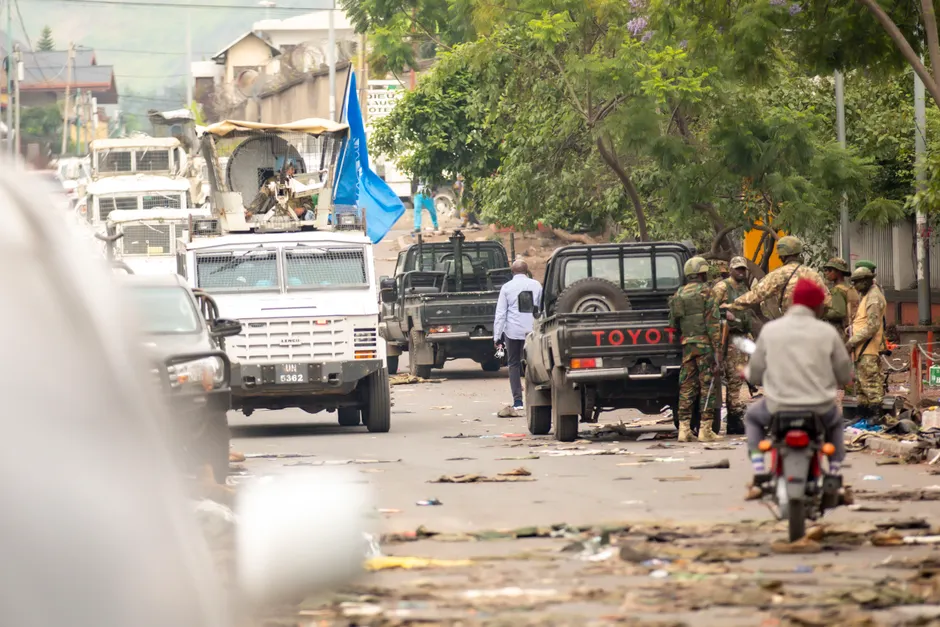
Somalia's military repelled a coordinated assault by two armed groups on Baidoa, the largest city in South West State, early on September 3, 2026. The Defence Ministry said militias loyal to Abdiaziz Hassan Mohamed Laftagareen — the ousted governor of South West State — launched the attack, which began with explosions aimed at terrorizing civilians before the army responded and, in its words, inflicted a heavy defeat on the attackers. The fighting lasted several hours. Witnesses told AFP that gunfire and explosions could be heard across different parts of the town, forcing residents indoors. By midday, several residents reported Baidoa calm after roughly six hours of battle.
The competing narratives on the ground remain impossible to reconcile. A spokesperson for the pro-Laftagareen forces told AFP that their fighters had captured parts of Baidoa and that fighting was still ongoing. The Defence Ministry said it was investigating the number of fighters killed and would release details once its assessment concluded. The ministry also accused the attacking groups of operating alongside al-Shabaab, the al-Qaeda-linked militant group that has waged an insurgency in Somalia for over a decade. Garowe Online reported the same split in claims: the government asserting it repelled the assault, Laftagareen's camp claiming its fighters had briefly entered parts of the city.
The September 3 assault is the fourth major clash in Baidoa this year tied to the political and security dispute between Somalia's federal government and Laftagareen over control of South West State. Somalia operates as a federal system, meaning power is shared between a central government in Mogadishu and regional state governments — though that balance is frequently contested. The federal government sent troops to oust Laftagareen from the governorship in March 2026. He launched a failed attempt to retake the state in May, when two senior Somali National Army commanders were killed in a roadside ambush outside Baidoa amid an election dispute. Fighting broke out again in July, and in August his forces fought federal forces for control of Baidoa in clashes that killed dozens, including at least four civilians. Reuters reported that federal troops drove the assailants out on August 17, killing about 30 of them, and verified social media videos showing the fighting.
Laftagareen was among the opponents of President Hassan Sheikh Mohamud's attempts to move Somalia toward democratic elections, replacing a system based around clan elders selecting representatives. That reform effort has placed Mogadishu on a collision course with regional leaders who view the transition as a mechanism for federal overreach — that is, the central government using the cover of reform to concentrate power at the expense of the regions. The deployment of federal forces to Baidoa in late August, reported by Garowe Online amid a growing threat from Laftagareen loyalists, signaled that the government intended to hold the city militarily rather than negotiate a political settlement.
The Defence Ministry's decision to publicly link Laftagareen's militias to al-Shabaab is a notable escalation in framing. Baidoa and its surroundings have been a recurring theatre of al-Shabaab operations. Somali National Army forces have engaged al-Shabaab militants near Baidoa repeatedly, including an operation in June 2025 that the government described as inflicting a heavy defeat on the group, and a preemptive strike in April 2025 that eliminated approximately ten fighters. The historical pattern of al-Shabaab activity in the region gives the federal government's accusation surface plausibility, though the ministry did not provide specific evidence of operational coordination between Laftagareen's militias and al-Shabaab in the September 3 attack.
The broader context here is a federal system under simultaneous strain from an electoral reform process and armed resistance from a former regional executive who retains enough military capacity to mount repeated assaults on a strategic city. Each round of fighting in Baidoa has drawn federal forces deeper into South West State's political crisis without producing a durable outcome. The August clashes ended with federal troops in control and roughly 30 opposition fighters dead; the September attack appears to have followed the same pattern, with the army again repelling the assault. The cycle suggests that while Laftagareen's forces lack the strength to hold Baidoa, they retain the ability to destabilize it, and the federal government has not yet found a mechanism, political or military, to end the confrontation.
Casualty figures from the September 3 fighting have not yet been released. The Defence Ministry's assessment is ongoing.


