Baidoa Fighting Puts Somalia's Power Struggle Back in Focus

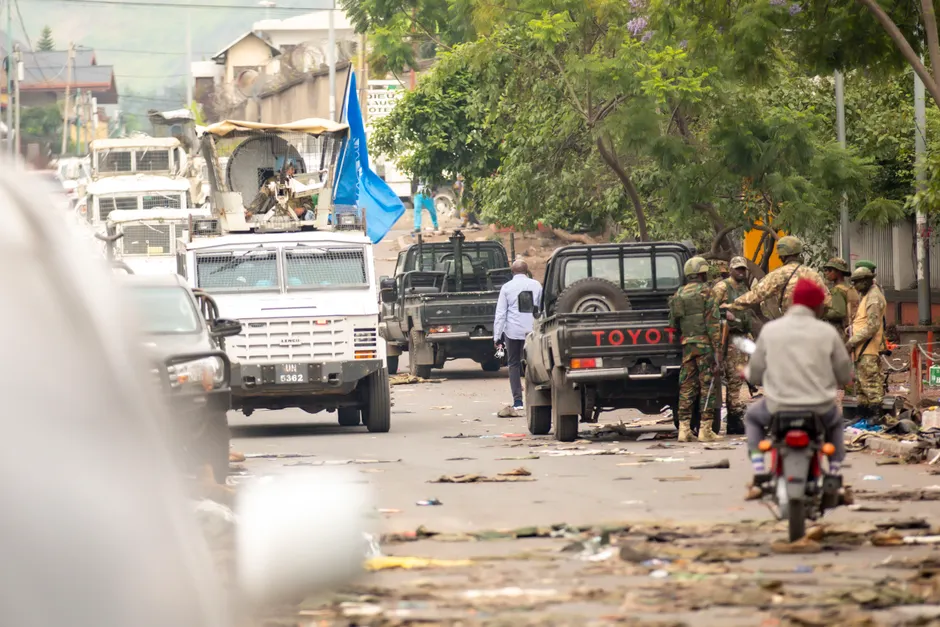
Intense clashes broke out in Baidoa, in southwestern Somalia, on September 28, 2026, between federal government forces and fighters loyal to the ousted president of South West State.
Thousands of local fighters entered the city that morning, before gunfire and explosions spread across Baidoa. Witnesses reported fighter jets and drones overhead as the fighting spread quickly.
Senior army commander Mohamed Ali said the national army confronted the local fighters, inflicted heavy casualties, and drove them out of the city. Ousted South West leader Abdiaziz Hassan Mohamed Laftagareen congratulated the fighters, saying the aim was to maintain security and restore stability in Baidoa. The two sides gave competing accounts, so public claims about who controlled the city differed while combat continued on the ground Al Jazeera.
The toll for civilians rose within hours. Doctors Without Borders (MSF) said three people died in the clashes, including a healthcare worker. Medical teams at Bay Regional Hospital received 69 patients affected by the violence, including five children.
MSF said roads leading to hospitals were blocked during the fighting, leaving many wounded unable to reach treatment. Most civilians had difficulty fleeing because fighting was happening in all directions. A health facility was severely damaged and an ambulance was looted. Two medical staff working with MSF teams were robbed and one was injured.
The September 28 fighting follows a direct federal intervention in March. Somalia's federal government sent troops to oust Laftagareen that month. The national army took control of the biggest city in South West State on March 30. Laftagareen resigned after federal forces took control of Baidoa. South West State then said it was suspending all cooperation and relations with the federal government in Mogadishu Reuters.
Since then, Baidoa has cycled through incursions and reprisals. Laftagareen-aligned forces entered Baidoa more than seven times since May, according to local reporting. The federal government backed Madobe in a South West power struggle in May. Clashes erupted on the outskirts of Baidoa in late May between federal troops and forces loyal to the ousted leader Garowe Online.
Fighting had broken out twice before this round. On August 17, Bay Regional Hospital reported four deaths and 94 people wounded. That round involved explosives. Somalia's defence ministry said Somali troops killed about 30 attackers in that fighting. A hospital official put the toll at dozens of combatants and at least four civilians killed, with 98 others wounded Reuters. Fighting erupted again on September 3, when 71 people were treated for injuries and one death was recorded.
Donor funds available for Somalia were roughly $300 million, down from $2.2 billion in 2022. These funds pay for displacement aid, trauma care, and child hunger programs already operating in Bay region.
The broader context here is a dispute over who governs a federal member state, one of Somalia's semi-autonomous regions, and who controls its administration and armed power. Much like a national capital trying to pick a regional governor, Mogadishu sent the Somali National Army in to decide the succession. Laftagareen loyalists answered by slipping large groups of fighters into Baidoa, then leaving rather than holding fixed positions. Each entry forces federal units to clear urban streets, with air and drone power used over a densely populated center. Each clearance harms civilians and damages medical buildings.
Looking at what this means for aid groups and policymakers, three variables matter next. The first is sustainment, the ability to keep fighting. Repeated entries since May suggest loyalist networks retain staging access and recruitment outside the city. The second is medical neutrality and access, the idea that hospitals and staff should stay out of the fight. Blocked hospital roads, a looted ambulance, and robbery of staff point to erosion of protection around health facilities. The third is fiscal bandwidth, or money to respond. A shrunken aid budget limits surge capacity if urban combat turns routine rather than episodic.
What to watch now is Baidoa itself, the hinge of the South West dispute. Federal commanders assert clearance. Laftagareen asserts legitimacy and security provision. Civilians remain between those assertions, with casualty intake at Bay Regional Hospital as the most reliable proxy for intensity.