NVIDIA's Arm-Based RTX Spark Chips Arrive October 2026 with Six Laptop Makers on Board
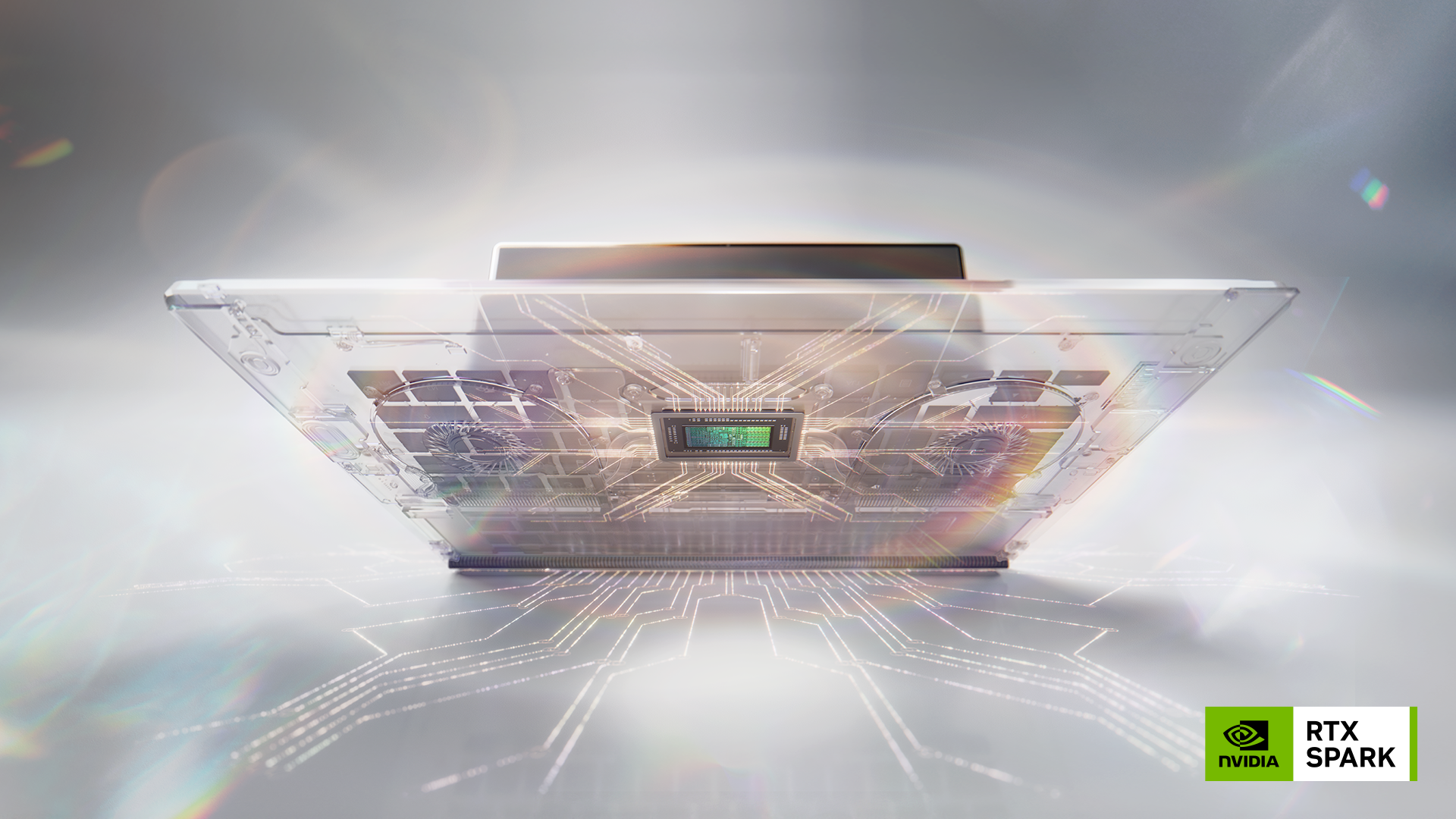
NVIDIA's Arm-based RTX Spark chips will reach consumers in October 2026, with the flagship N1X arriving in two distinct configurations across laptops and miniature PCs from six major manufacturers The Verge.
The full N1X pairs a 6144-core Blackwell RTX GPU with a 20-core Grace CPU and between 24GB and 128GB of unified memory. A reduced variant lowers those figures to 5120 GPU cores, an 18-core Grace CPU, and 24GB to 32GB of unified memory. Most RTX Spark N1X laptops are expected to ship with the lower-spec configuration, though NVIDIA has not detailed pricing or the split between the two tiers.
Unified memory is shared between the GPU and CPU, meaning both processors draw from the same pool of RAM rather than maintaining separate memory banks. At capacities up to 128GB, this is something the PC laptop market has not seen from either x86 silicon vendors or Apple's M-series chips at that tier. For developers running large language models locally, the memory ceiling matters more than raw compute speed in many workflows, and a 128GB shared pool in a portable form factor addresses a genuine bottleneck for on-device AI workloads.
The Arm-based Grace CPU running Windows raises the usual compatibility questions, since most Windows software has been compiled for x86 processors. NVIDIA and Microsoft have been laying the software groundwork for Arm on Windows for the better part of two years now.
The top N1X will appear not only in high-end laptops but also in miniature PCs, including Microsoft's Surface RTX Spark Dev Box. RTX Spark laptops will be available in 14- to 16-inch sizes and are engineered to be as slim as 14 millimeters and as light as three pounds, according to NVIDIA's earlier product announcement NVIDIA Newsroom.
Six manufacturers will launch RTX Spark N1X laptops in October: Asus, Dell, HP, Lenovo, Microsoft, and MSI. The breadth of participation is notable, though it is not yet clear how many individual product models each partner will bring to retail.
NVIDIA is promising 100fps at 1440p with ray-tracing and DLSS enabled for the N1X. Ray-tracing simulates how light behaves in a scene for more realistic visuals, while DLSS uses AI to upscale lower-resolution frames, effectively boosting frame rates without a proportional hit on image quality. The company's phrasing leaves room for interpretation about which configuration that target applies to, and under what game or benchmark conditions. For a chip that pairs a Blackwell-class GPU with a Grace CPU in a sub-three-pound chassis, the claim is aggressive but not implausible given what DLSS frame generation has shown on existing RTX hardware.
The second RTX Spark chip, the N1, will not arrive in 2026. NVIDIA has not publicly dated its release window beyond that.
The two-tier strategy tells its own story. By offering a reduced N1X that most laptops will actually use, alongside a fully-enabled part reserved for premium models and developer boxes, NVIDIA is creating the kind of product segmentation familiar from its GeForce lineup but new to the Arm-on-Windows space. The Surface RTX Spark Dev Box running the top N1X suggests that Microsoft sees value in giving developers access to the maximum configuration as a target platform, which could ease the path for software optimization across both tiers.
The decision to hold the N1 back beyond 2026 means the lower end of the RTX Spark lineup will remain unaddressed during the initial launch window. That leaves the entry-level Arm-on-Windows space to Qualcomm's existing Snapdragon X platforms for the foreseeable future, and limits NVIDIA's footprint to the premium tier for at least the remainder of this year.
For a first-generation product in a category that did not exist a year ago, the N1X launch lineup is substantive. Six manufacturers, two silicon configurations, a developer-focused miniature PC, and a unified memory architecture that separates the platform from both x86 laptops and Apple Silicon. The open questions are performance under real-world workloads, software compatibility for older x86 applications on Grace, and whether the 100fps 1440p ray-tracing claim holds across enough game titles to matter to buyers. October will begin answering those questions.


