Nepal Mourns Over 1,300 Dead in Himalayan Glacier-Flood Disaster

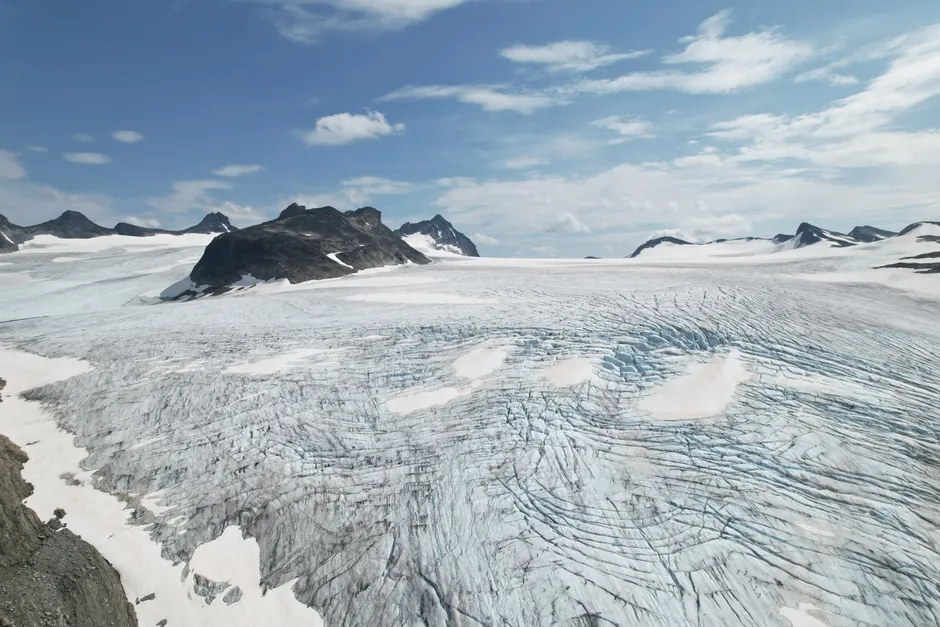
Nepal observed a national day of mourning on Monday, 7 September 2026, for more than 1,300 people killed in catastrophic flooding that struck the Himalayan border region between Nepal and China's Tibet autonomous region on 26 August. The disaster began 13 days earlier, when a glacier calved — meaning a chunk of ice broke off — and collapsed into a river, triggering flash floods and mudslides. According to Al Jazeera, at least 1,380 people have died and more than 5,500 remain missing. AP News, reporting the same day, placed the death toll at more than 1,300 with some 5,000 missing.
Nepal's Ministry of Home Affairs ordered government offices within the country and diplomatic missions abroad to fly the national flag at half-mast. President Ram Chandra Paudel, the ceremonial head of state, toured flood-affected areas on Monday to survey the damage firsthand.
The government deliberately held the mourning day without accompanying commemorative programmes. Phanindra Paudel of Nepal's National Emergency Operation Center (NEOC) said no events were organised because search and rescue operations remained active in the disaster zone. The toll has been climbing since the disaster's early days: as of 4 September, Reuters reported at least 1,294 killed in Nepal alone, a figure that rose past 1,300 by 5 September as more bodies were recovered.
The disaster's epicentre is the cluster of hydropower infrastructure along the trans-Himalayan river system. Rescue teams have concentrated on 12 hydropower projects, where approximately 900 workers remain missing and an estimated 500 are believed to be trapped in various tunnels. Specialised rescue teams from India, China, South Korea, and the United States have been deployed to search through debris, damaged structures, and flooded tunnel networks at the project sites.
Survivors have continued to emerge from the rubble more than a week after the initial flood event, offering rare relief amid a mounting toll. On 4 September, two people were pulled alive from a Nepal hydropower tunnel nine days after the disaster Reuters. Nepal's army also recovered two bodies from a tunnel at the Langtang Hydropower Station during the same operational period. A Chinese national was rescued from a separate tunnel on 5 September, ten days after the flash flood Reuters. On 6 September, Reuters reported that a Nepali woman was found alive days after her family had already begun performing mourning rites.
In total, search teams have rescued four people from flood-affected sites: the Chinese national pulled from a tunnel at a hydropower installation, two hydropower workers extracted from another tunnel, and the Nepali woman recovered from her buried house. The extended survival windows in collapsed tunnels are consistent with the way hydropower infrastructure is designed — these structures can trap air pockets in partially flooded passages, though the survival rate across the 12 affected projects remains extremely low relative to the number of missing workers.
The broader context here is the intersection of what scientists call glacial-lake outburst flood (GLOF) risk and dense hydropower development across the Himalayan arc. A GLOF occurs when a glacier or glacial lake suddenly releases a massive volume of water, sending a fast-moving, debris-heavy wave downstream. The 26 August event was triggered not by monsoonal rainfall but by a structural glacier failure — a mechanism that produces high-velocity, sediment-laden flood waves capable of overwhelming infrastructure designed for conventional hydrological extremes. The concentration of casualties among hydropower workers, with roughly 900 missing across 12 projects and an estimated 500 trapped in tunnels, points to the particular vulnerability of underground infrastructure to GLOF-induced surges. The scale of the missing, exceeding 5,500 people thirteen days into the response, suggests that recovery rather than rescue is becoming the dominant operational paradigm for a substantial portion of the affected population.
The international rescue footprint, drawing teams from four countries spanning the region and beyond, reflects both Nepal's limited domestic capacity for deep-tunnel extraction and the transboundary nature of the affected river system. The involvement of Chinese teams is particularly salient given that the glacier collapse occurred on the Nepal-Tibet border, implicating upstream conditions within China's autonomous territory and raising questions about bilateral glacial monitoring and early-warning infrastructure that will likely outlast the immediate rescue phase.