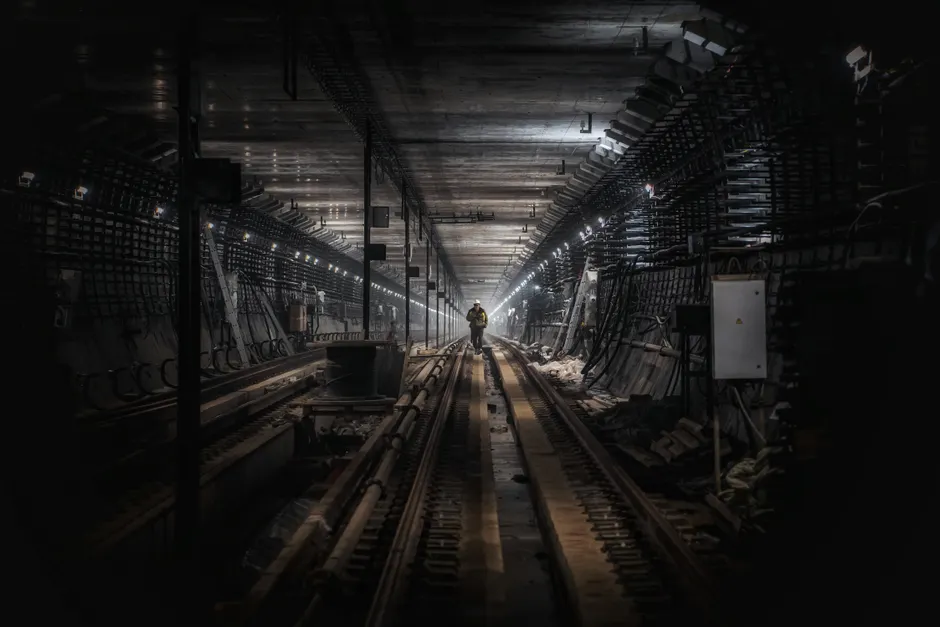
Nepal Floods: Five Bodies Found in Chilime Tunnel as Thousands Remain Missing

Rescuers recovered five bodies from the Chilime tunnel in Rasuwa district, according to reporting published on Sept. 16. ETV Bharat
Crews constructed a road over debris and through the river and cleared slush to reach the tunnel portal, the entrance to the tunnel. ETV Bharat
The broader context here is the physical problem behind that work. At hydropower sites, flood-borne sediment and shifted river channels can seal intakes, adits that serve as side entries, and access tracks long after water levels fall.
About 5,200 people remained missing, including 636 foreigners, after floods swept mountain communities and hydropower sites. Reuters That figure is the most recent available and supersedes earlier counts.
BBC live coverage on Aug. 29, described as day six of the rescue operation, put the death toll at 903 with 4,247 people missing. BBC By Sept. 4, more than 1,200 people had been killed. Reuters By Sept. 7, authorities put the number killed at at least 1,380. Reuters
Workers at hydropower projects account for one group among the missing. On Sept. 8, army rescuers said about 121 of 900 missing workers could be trapped in hydropower tunnels, and rescue efforts were focused on workers trapped in three tunnels, including Chilime and Upper Trishuli 3A. Reuters
A day earlier, on Sept. 7, officials had said four of six missing workers at the Chilime hydropower project could be alive. Reuters The Sept. 16 recovery of five bodies from the Chilime tunnel updates that earlier assessment for that site.
Chilime is a 22.1 MW plant in Rasuwa district, 133 km north of Kathmandu, commissioned on Aug. 25, 2003, with annual energy generation of about 150 GWh. Chilime Hydropower Company MW means capacity at any moment, while GWh means total energy over a year. Chilime Hydropower Company Limited, incorporated in 1995, owns and operates the plant. Chilime Hydropower Company Nepal Electricity Authority holds 51% shareholding, while 49% is held by the general public, including 10% equity ownership by local people. Chilime Hydropower Company The company sells bulk electricity to Nepal Electricity Authority at a long-term PPA price, a long-term deal to buy power. Chilime Hydropower Company
The floods wiped out 10% of Nepal's power generation capacity. Reuters
What this means for the grid is that the loss is more than megawatts. Tunnel flooding, the need to remove silt, and damage to headworks that guide water into plants and to transmission lines that carry power away can keep otherwise intact capacity offline, like a road closure keeping drivable cars parked.
The broader context here is the overlap of labor, steep terrain, and energy infrastructure. Tunnels offered a possible survival pocket, which explains the focus on three sites. They also concentrated search problems. Slush, debris and broken access limit heavy equipment, force sequential clearing, and extend exposure for rescue teams.
Looking to the next phase, two caseloads will move on different timelines. Identification and repatriation for the missing, including 636 foreigners, will involve consular processes and forensic capacity. Power-sector restoration will involve parallel technical assessment of civil structures, electromechanical systems and PPA delivery obligations. The ownership structure at Chilime, with a majority NEA stake and local equity participation, places both tasks squarely with public institutions.