Indonesia's First Aircraft Carrier Arrives, an Aging Gift With Big Costs
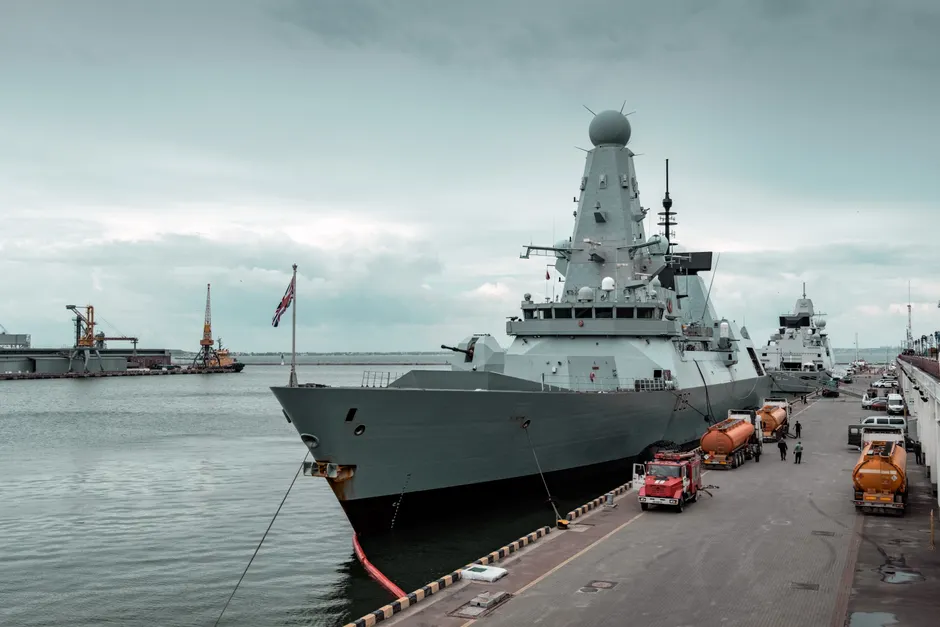
Indonesia took delivery of its first aircraft carrier on Friday morning, Sept. 18, 2026, when the former Italian warship ITS Giuseppe Garibaldi arrived at the naval base in Tanjung Priok port in North Jakarta.
The arrival was marked with a military ceremony. The ship will formally join the Indonesian Navy next week as KRI Gajah Mada. The Guardian
She is 41 years old. Italy retired the Garibaldi in 2024 after using her as a short takeoff and vertical landing carrier — a ship with a short deck for jets that lift off quickly and land vertically — with room for those jets and helicopters. President Prabowo Subianto said the ship could carry up to 10 medium-sized helicopters in Indonesian service.
The transfer makes Indonesia only the second country in Southeast Asia with a carrier, after Thailand's HTMS Chakri Naruebet, commissioned in 1997.
Italy agreed in March to give the carrier to Indonesia. Italy's Ministry of Defence published an official press note titled 'SMENTITA 7 Marzo' on March 7, referring to an announced parliamentary question about giving the Garibaldi to the Indonesian Navy. The Guardian
In April, Italy's parliament backed the donation. The ship was valued at 54 million euros and described as obsolete. The transfer supports defence ties and avoids the cost of dismantling the ship. Reuters
In Jakarta, the acquisition has prompted heated debate over cost and utility. Indonesia's finance ministry approved $450m in financing for the aircraft carrier program in 2025. MP TB Hasanuddin, a member of parliament's Commission I, said retrofitting the carrier alone could reach 16tn rupiah, about $900m. The Guardian
The gap between a free hull and the price of making it work is the central issue. The hull itself cost nothing. Indonesia must still pay for upkeep of a four-decade-old flight deck, aviation fuel systems, sensors, engines, spare parts no longer in series production, and training crews for deck operations with planes and helicopters. Think of it like getting an older airport at sea for free, but having to rebuild almost everything around the runway.
The broader context here is what kind of carrier power Indonesia plans to operate. Set up for 10 medium helicopters, the Gajah Mada would start as a helicopter carrier and command platform for amphibious lift, moving supplies between ships by air, anti-submarine warfare, and humanitarian assistance and disaster relief across an archipelagic state. That is a different choice from operating attack jets that take off short, with different needs for deck certification, munitions handling, and air group integration.
Looking at what this means for Rome and Jakarta, the deal builds a closer defence relationship at limited cost to Italy while shifting long-term maintenance risk to Indonesia. For Indonesia, the test will be commissioning, work-up, and keeping the ship available over time. Parliamentary scrutiny of the $450m financing against the higher retrofit estimate suggests the budget debate will continue after the commissioning pennant is raised.