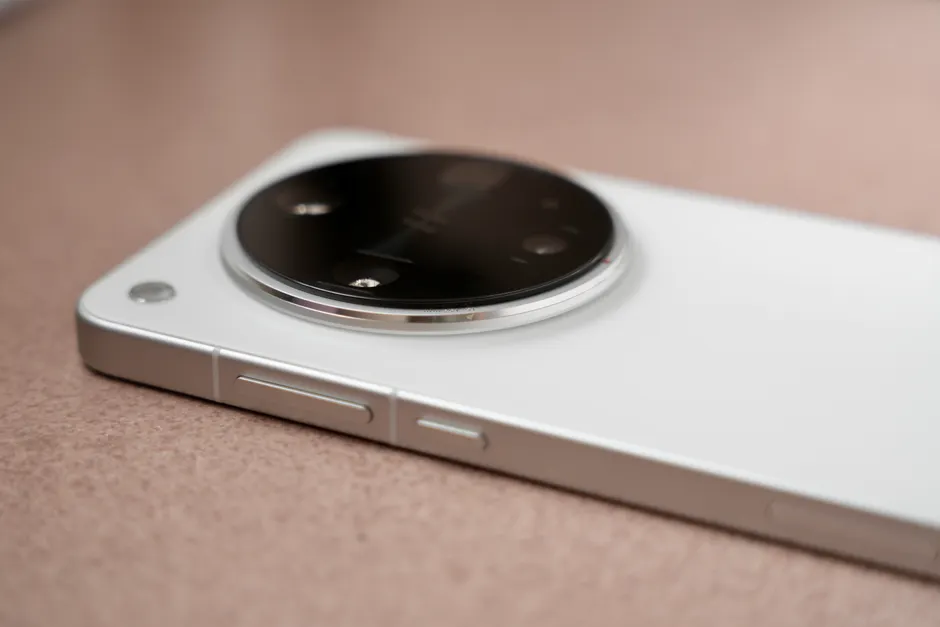
Vivo's X500 Pro Max bets on the main sensor, not the megapixel count

Vivo's X500 Pro Max costs €1,799 (about $2,000), and its main camera departs from the resolution race that has shaped several recent Chinese flagships. According to The Verge's review published on 2 November 2026, the phone pairs a 50-megapixel main sensor with a 1/1.28-inch optical format and Sony's Lytia L910. That sensor uses LOFIC (lateral overflow integrated capacitor), a design that gives each pixel extra storage for charge from very bright highlights. It is rated at 17 stops of dynamic range, where each stop is a doubling of light. The sensor is both smaller and lower in resolution than the one in the Vivo X300 Ultra.
The main lens has a 24mm focal length, where the X300 Ultra used 35mm. The periscope telephoto camera is carried over from the X300 Ultra, according to the same review. The phone was announced in September 2026. The Verge's launch coverage from 21 September describes a 200-megapixel, 3.7x telephoto camera and support for a 400mm teleconverter lens. Vivo's own product pages list the telephoto sensor as 1/1.4-inch, branded as a 200MP ZEISS APO Telephoto Camera, and name the Telephoto Extender Gen 2 Ultra as compatible with the device.
The rest of the platform is conventional for the segment. The display is a 6.85-inch, 1440p (1440x3168) 144Hz OLED, the same physical size as the X300 Ultra, and the phone weighs 248g. The SoC is MediaTek's Dimensity 9600 Pro rather than the latest Snapdragon flagship part. Memory is LPDDR5X Ultra, and one Malaysian configuration is listed as 12GB+256GB in Gray. The 7,800mAh battery supports 90W wired charging and 40W wireless charging. Video capture includes 4K slow-motion at 240fps.
The resolution decision stands out against the rest of the 2026 field. The Verge reported in October that Oppo's Find X10 Pro Max is the first phone with three 200-megapixel rear cameras. Xiaomi's 18 Pro phones use a 200-megapixel main camera on a 1/1.28-inch-type sensor, paired with a 50-megapixel ultrawide, per The Verge's September coverage. The Vivo sensor shares the 1/1.28-inch optical format with the Xiaomi main camera but carries a quarter of the pixel count, and it sits on a different readout architecture.
In my view, the trade-off is the central technical question in this device. A 50-megapixel readout on a 1/1.28-inch sensor with LOFIC gives the image signal processor (the chip that turns raw sensor data into a finished photo) a different problem than a 200-megapixel readout does. Highlight recovery and high dynamic range scenes are where LOFIC is designed to earn its place, and a 17-stop rating is a claim that only sustained testing under mixed-light conditions can verify. Pixel binning, which combines neighbouring pixels into larger effective ones, and the computational pipeline will decide much of the real-world result. Those are the parts of the stack that spec sheets do not expose.
The broader context here is the split between two camera philosophies in flagship Android hardware. One optimises for maximum pixel count and long-reach cropping, the other for sensor quality per pixel and tonal range. Vivo's choice to keep a periscope telephoto, carry it across generations, and reallocate effort to the main sensor suggests a bet that dynamic range and colour fidelity matter more to most buyers than a larger megapixel figure on the box. Whether that bet pays off will show up in side-by-side captures and in how the phone's software handles them, not in the headline numbers.
For anyone building or evaluating mobile imaging pipelines, the X500 Pro Max is a useful reference point. The sensor choice, the focal length shift to 24mm, and the retained periscope give a concrete configuration to measure against the 200-megapixel designs now in the market.