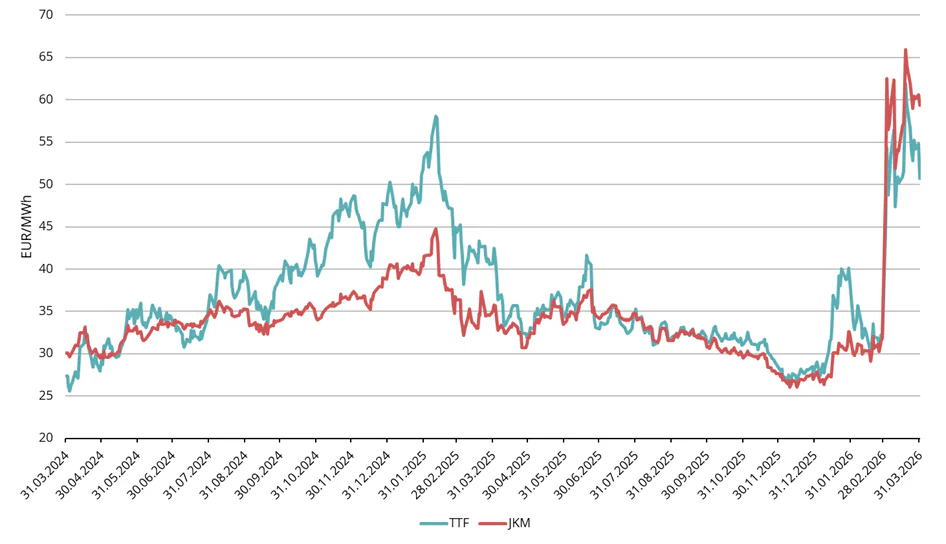
European Gas Falls 3% in Worst Week Since June, Still Up 10% on the Month

European gas was headed for its worst week since mid-June on September 25, 2026, as traders took profits. The pullback came as the extra charge for geopolitical risk, the risk premium, that had lifted prices to multi-month highs earlier in September started to fade, according to Yahoo Finance.
EU natural gas traded at 72.71 EUR/MWh on September 25, down 2.98% on the day. It was still up 10.53% over the past month, according to Trading Economics. The loss was weekly. The trend over the month was still up.
Early September had built steady upward momentum. On September 4, European gas was set for a fourth straight weekly gain, according to Bloomberg. Late-September selling trimmed those September gains. It did not wipe them out.
Higher prices were already changing how power gets made. Soaring gas prices were pushing European utilities back toward coal as of September 24, according to Reuters. Coal-fired power generation was projected to rise by a quarter over the next six months, as reported on the same date. That figure is a forecast for fuel switching, not power already produced.
This year's swings go beyond September. On March 3, European gas spiked to its highest since 2023 on uncertainty around a shutdown at the world's largest LNG export facility, according to Bloomberg. It later fell for the week in March as traders weighed how the Iran war would affect global energy supplies, according to Bloomberg.
The broader context here is a market pricing fear first and actual supply second. A drop of almost 3% in a day alongside a gain of more than 10% on the month points to investors closing long bets, selling out of positions that profit when prices rise, rather than a change in immediate supply and demand. Some of the early-September premium is coming out. A good part of it is still in the price.
Looking at what this means for positioning, the coal switch matters. A projected 25% rise in coal-fired generation over six months suggests profits from gas-fired power, known as spark spreads, stayed weak compared with profits from coal-fired power, known as dark spreads, during the gas rally. If that forecast holds, it would limit extra gas use in power while tightening emissions and coal transport. It would also make gas demand more sensitive to further price rises. Expensive gas reduces its own demand through substitution.
In my view, the open question is whether that geopolitical premium washes out fully or sticks. A four-week climb to multi-month highs, then the sharpest weekly fall since mid-June, leaves the market still up on the month. That setup can break either way. Fresh supply headlines could rebuild the premium fast, since the monthly gain shows buyers have not fully sold out. Continued calm could bring more profit-taking, since the weekly fall shows sellers are willing to sell rallies. For trading desks handling options exposure around near-term expiry and winter contracts, that difference counts. Headlines will drive direction. How much risk premium the market keeps will drive the cost of holding positions and the swings around them.