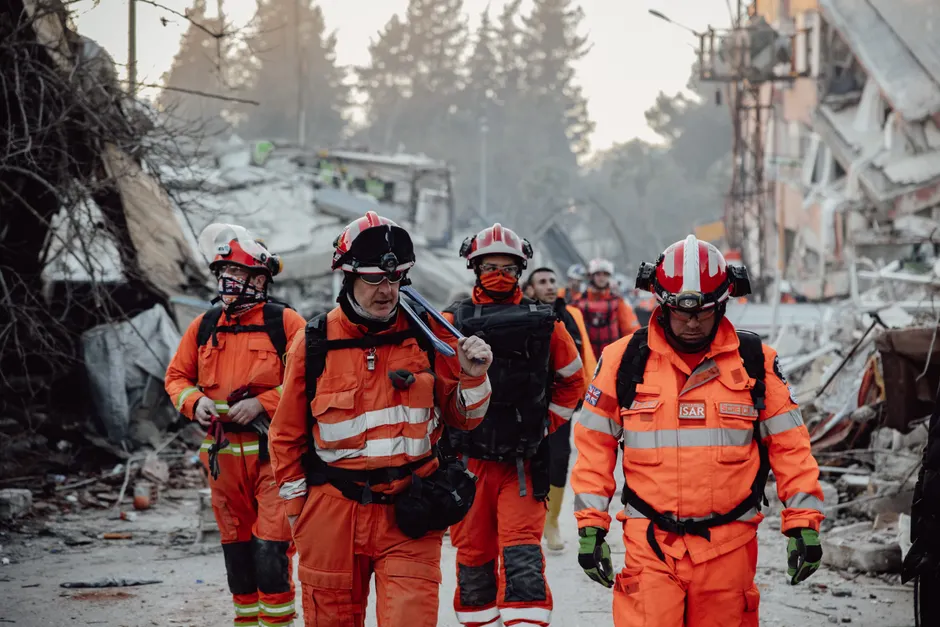
Venezuela Hit by Two Massive Earthquakes Within Minutes—Here's What We Know

Venezuela Hit by Two Massive Earthquakes Within Minutes—Here's What We Know
Two powerful earthquakes struck Venezuela on June 24–25, 2026, killing at least 188 people and injuring more than 1,520, with hundreds still missing. A magnitude 7.2 tremor hit first, centered about 160 km west of Caracas. Less than a minute later, a magnitude 7.5 earthquake struck the same region. That back-to-back sequence—coming in such rapid succession—made the damage far worse than a single quake would have, according to Reuters.
The coastal state of La Guaira, nestled between Caracas and the Caribbean Sea, took the heaviest blow. Buildings collapsed across tightly packed neighborhoods. AP reported that some of the worst casualties occurred there. La Guaira's location adds to its vulnerability: the city is squeezed between steep mountains and the sea, leaving little room to absorb the violent ground shaking when earthquakes this powerful strike.
The numbers we have—188 confirmed dead and over 1,520 injured—are still provisional. After earthquakes of this scale, rescue teams find bodies in layers: first from collapsed buildings on the surface, then from deeper rubble and landslides over the following days. The missing-persons count, which AP has not pinned down precisely, carries the most uncertainty right now.
Why Venezuela Is Seismically Vulnerable
Venezuela sits on the boundary where two massive slabs of Earth's crust meet—the South American Plate and the Caribbean Plate. This is a zone of complex faulting where the plates grind past and push into each other at oblique angles, generating earthquakes regularly. The El Pilar and Boconó fault systems here have produced destructive quakes before: the 1812 Caracas earthquake and the 1997 Cariaco earthquake (magnitude 6.9) are the historical markers locals remember.
A magnitude 7.5 is a serious earthquake anywhere. The less-than-one-minute gap between the two tremors in this case could mean one was a foreshock followed by a stronger mainshock, or they were two ruptures on nearby fault segments that happened to break almost simultaneously. Either way, here's what matters: buildings already weakened by the first shake collapse more easily when the second, larger one hits. That's why casualty rates were disproportionately high, even in structures that technically met building codes.
The Challenge of Rescue and Recovery
Venezuela's ability to respond to a disaster like this has been undermined for years. Economic decline, crumbling infrastructure, and the loss of trained technical staff have left the country with limited resources. In a crisis, fuel is scarce, heavy equipment is hard to find, and medical supplies run short. A major earthquake in Venezuela plays out differently than the same quake would in a country with intact supply chains and functioning institutions.
La Guaira also hosts Venezuela's main international airport, Simón Bolívar International. Whether the runway and terminal survived the quakes intact is still unclear in confirmed reports. If the airport was damaged significantly, it would slow down relief flights coming in—a bottleneck with direct consequences for the injured and displaced.
As of June 25, Al Jazeera's live coverage placed the injured at 1,520, with the situation still evolving. The gap between injury and death figures partly reflects the pace at which hospitals are admitting the wounded and rescue efforts are still ongoing across multiple towns.
What Comes Next
Over the next few days and weeks, the full scope of destruction will become clearer. This includes not just lives lost, but how many buildings, homes, schools, hospitals, and water systems have been rendered unusable. In countries already struggling with poverty and inadequate housing, earthquakes create displacement that lasts months or even years after the initial shock. Venezuela—with its exposure to seismic risk, aging building stock, and limited state capacity to rebuild—faces the harder end of that recovery burden.
International aid offers will matter enormously. How the Maduro government responds to those offers, and the political conditions attached to them, will be worth monitoring closely in the coming days.