Why Switzerland's Glaciers Just Hit a Breaking Point
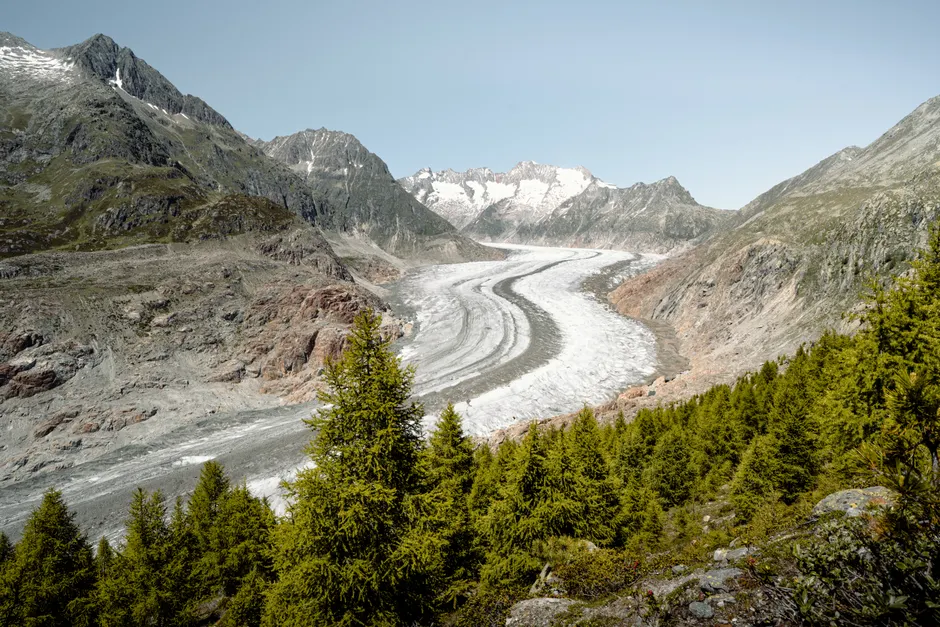
Switzerland's glaciers reached a critical milestone on 29 June 2026: Glacier Loss Day, according to ETH Zurich. On this date, the seasonal snow that accumulated over winter was completely depleted. What remains is bare permanent ice — and every melt from this point forward is a net loss of ice, not seasonal snow.
This date matters more than it sounds. Here's why: snow is a good insulator. When glaciers still have winter snowpack in early summer, that snow layer shields the older ice underneath from the sun's heat, delaying major melt by several weeks. But once the snowpack vanishes — as it has this year — the older ice is exposed. Bare ice absorbs more solar heat than fresh snow does, and because July and August are the Alps' hottest months, that extended window of exposure drives substantial additional melting across those critical weeks.
The timing is the symptom of a larger problem. Swiss glaciers lost 3% of their total volume in 2025, Reuters reported in October. That year saw less snow than normal plus heat waves in June. A 3% loss in a single year is historically severe. Switzerland has roughly 1,400 glaciers, and losses on this scale typically take decades to recover — if they recover at all under current climate trends.
Beyond the dramatic swings, there's a steady baseline loss happening every year. According to MeteoSwiss, Swiss glaciers shed 0.73 ± 0.08 cubic kilometres of ice annually — a real, measurable volume that's gone from the mountain system for good. The Cryospheric Commission monitoring report confirms that this retreat across both length and area has held steady for decades now, with no reversal in sight.
The practical consequences reach far beyond scenic loss or tourism. Alpine glaciers function like natural water storage systems. In summer, when rain is scarce and farmers and cities need water most, glaciers slowly release meltwater. As that storage shrinks, the system starts to fail: rivers like the Rhine and Rhône — which depend on glacial melt during dry months — will see lower water levels precisely when demand peaks. Hydropower plants generate roughly 60% of Switzerland's electricity, and they're directly exposed to changes in how much water flows through these rivers and when. Water treaties between Switzerland, France, Germany, and the Netherlands were written decades ago, based on historical flow patterns that no longer hold true. Those frameworks haven't been updated to keep pace with how fast the glaciers are actually disappearing.
The broader context here is the gap between the science and the response. The data on glacier change is detailed and well-maintained. The governance structures — the rules about who gets water, how much, and when — have not kept up with the pace of physical change. Whether that gap closes before alpine water stress triggers real conflict over scarce supplies remains an open question.


