Googlebooks Have Strong Hardware, but The Verge Says the Software Holds Them Back

The Verge has published a review of Google's Googlebook laptops concluding that every unit it has tested so far has strong hardware and that the software is the problem. The outlet says it does not recommend buying any Googlebook in its current state.
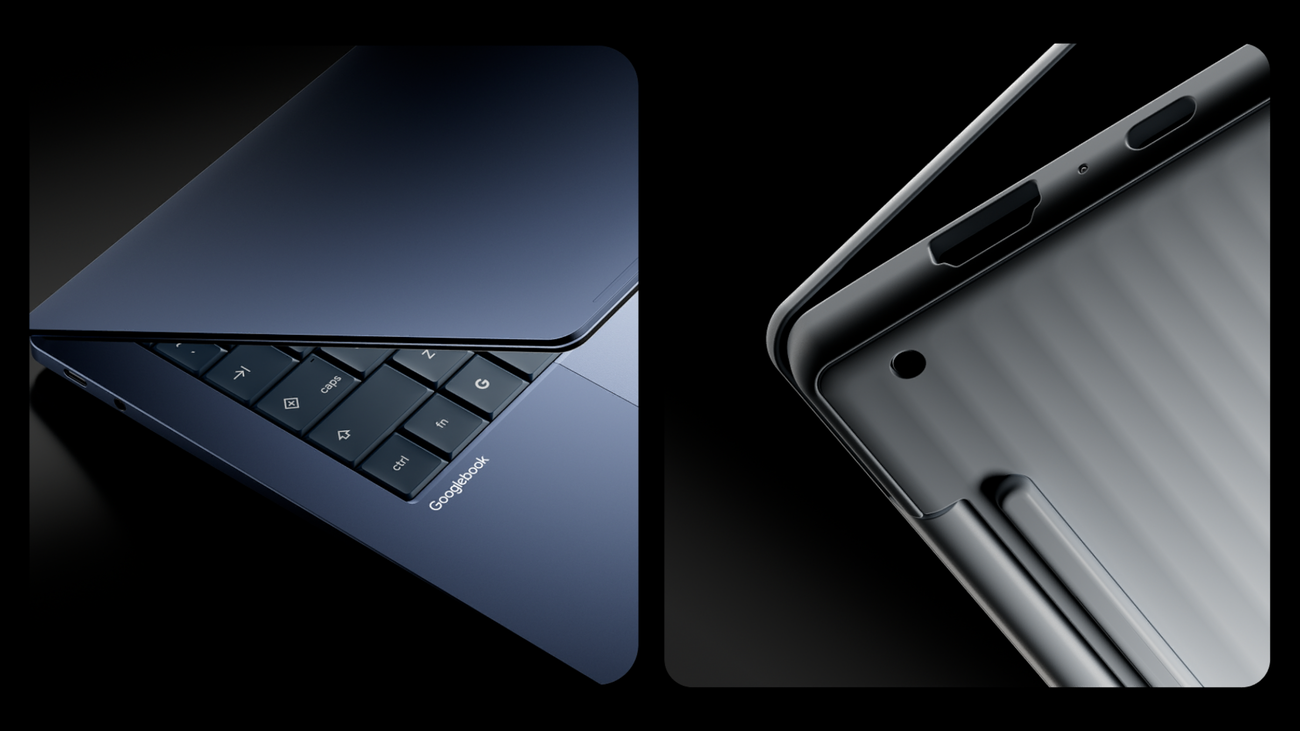
The line is built by HP, Acer, Lenovo, Dell and Asus. According to The Verge, Google wanted the Googlebooks to feel premium, and all five manufacturers delivered on hardware. Google's launch materials describe premium construction with magnesium alloy and carbon fiber, and battery life of up to 14 hours. The Verge reports that every Googlebook it tested has very good battery life and at least 16GB of RAM, the working memory that holds open applications. The cheapest model costs $900, according to the same review.
The Acer Googlebook 14 is the only 2-in-1 convertible, a laptop whose screen folds back into a tablet, among the models The Verge tested. It has a sturdy metal chassis and a 2880 x 1800, 120Hz OLED touchscreen with stylus support. OLED panels light each pixel individually, and 120Hz means the image refreshes 120 times per second, which keeps scrolling and pen strokes smooth. The reviewer measured eight to nine hours of light-to-mixed use on battery. For a pen-driven workflow, that display and form factor are the most distinctive items in the lineup so far.
The criticism centers on Googlebook OS. The Verge describes it as a frustrating experience with annoying bugs and lackluster app support. Its central complaint is architectural: the OS feels like Android, Google's phone and tablet system, with a keyboard and trackpad grafted on, rather than a cohesive laptop operating system. Specific gaps include the lack of portrait orientation support. The Auto-Rotate toggle only flips the display 180 degrees, so a convertible cannot be used in a true portrait layout.
Bloomberg's September coverage describes the Googlebooks as built around Gemini AI, with the ability to run phone apps on the laptop, AI-powered file search and a contextual awareness feature. The Guardian, reviewing the machines on October 20, described them as premium laptops let down by underdeveloped software, a verdict that matches The Verge's. The Verge had earlier published an interim set of notes from its testing, written when five new Googlebook laptops had just launched.
The broader context here is the division of labor. The hardware portion of the Googlebook proposition, with aluminum-class builds, long battery life and generous memory, appears to be largely settled, and the five OEMs have executed on it. Everything else depends on an operating system that reviewers say is still maturing, and on phone apps that must behave well on a large landscape display with a keyboard and trackpad. Those are the parts that determine whether a Googlebook feels like a laptop or like a tablet on a stand.
In my view, the more useful question for buyers and for developers is not whether the hardware is good, since reviewers agree that it is, but whether the software gaps are closing fast enough to matter for a purchase made now. The Verge's answer, for the models it has tested, is no. The same reviews suggest a path forward: a solid hardware baseline means that improvements in orientation handling, app support and stability would translate directly into a better machine, without any need to redesign the devices. Whether that happens is a question for future testing, and for the next update to the OS.