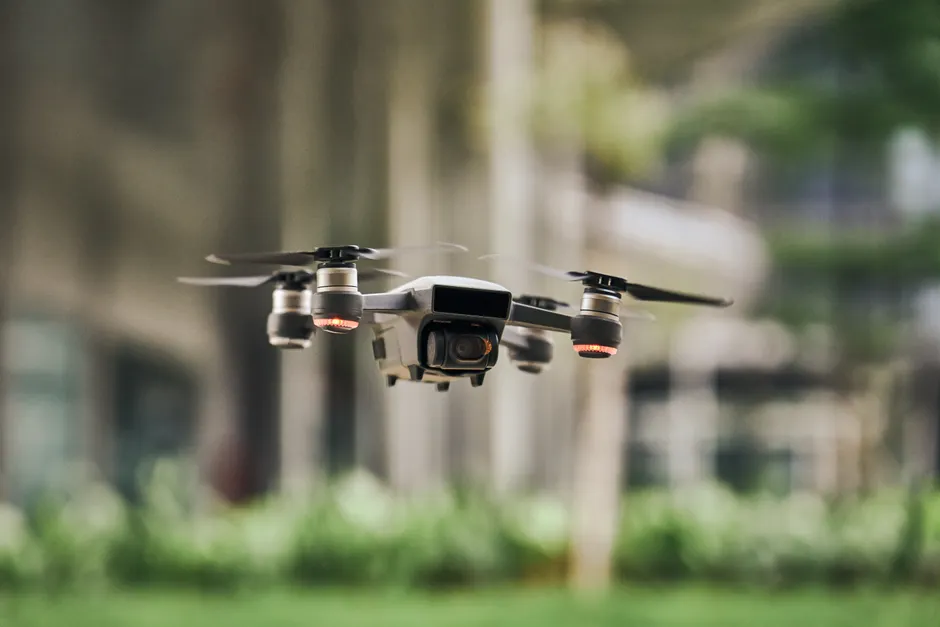
Zipline Raises $1.5 Billion at a $21.5 Billion Valuation as Walmart Adds 300 Drone Sites

Drone delivery operator Zipline has raised $1.5 billion at a valuation of $21.5 billion, according to TechCrunch, which reported the round on November 5, 2026. The same day, Zipline and Walmart announced a new multi-year agreement to add 300 drone delivery sites across the United States.
The round was led by Paradigm, WCM Investment Management, and Layer Global. Valor Equity Partners, Fidelity Management & Research Company, Uber, Tiger Global, J.P. Morgan, ARK Invest, and Salesforce Ventures also participated. Zipline plans to use the proceeds to expand its U.S. manufacturing facilities and hire more workers to build a nationwide drone delivery network. The company is at the planning stage on that build-out, and the capital is earmarked for it.
The Walmart relationship dates to 2021. The two companies currently operate 21 active drone delivery sites together, and the new agreement would extend that footprint by 300 additional sites. Walmart first described its drone expansion in January 2024, when it said it would make what it called the largest drone delivery expansion of any U.S. retailer. In June 2025, Walmart announced drone delivery in five new cities, and Zipline launched its first Platform 2 (P2) site at Walmart stores in Mesquite and Waxahachie, Texas. In May 2026, Walmart reported more than one million drone deliveries to hundreds of thousands of customers. At CES 2024, Walmart had named Wing and Zipline as its on-demand drone delivery partners.
Zipline was founded in 2014. Its early operations were in Africa, where it delivered blood in Rwanda before expanding to Ghana and Nigeria. Its first U.S. operations began in 2020, ferrying medical equipment and supplies to Novant Health in North Carolina. The company received Part 135 air carrier certification from the Federal Aviation Administration (FAA) in 2022. Part 135 is the FAA rule governing commercial on-demand flights, and it is the authorization that underpins Zipline's operations.
The two aircraft platforms serve different missions. Platform 2 drones are designed to carry up to eight pounds to customers within a 10-mile radius. Platform 1 drones can cover 120 miles round trip for long-range deliveries. Zipline said its share of delivery revenue grew from 10.8% to 34.9% between March and October of 2026, according to the company.
The valuation has moved quickly. In January 2026, Reuters reported that Zipline had raised $600 million at a $7.6 billion valuation. The November figure is nearly three times that. Walmart, for its part, became the first retailer to reach a $1 trillion market valuation in February 2026, according to Reuters.
The broader context here is that the economics of drone delivery depend less on the headline valuation than on throughput, meaning how many deliveries a network completes in a given period, and on cost per delivery. A 300-site agreement only becomes a durable business if the aircraft can be built in volume, flown within the Part 135 framework, and loaded and dispatched at a cost a retailer can sustain across thousands of daily orders. The funding is aimed at the manufacturing and staffing side of that problem, which is where the company's near-term execution will be measured.
In my view, the more useful question for technology professionals is whether the revenue-share figure reflects a shift in how delivery is priced and routed, or simply a faster ramp at one partner. Neither the funding announcement nor the revenue share isolates unit economics, and that is the number that will decide whether this network scales as planned.
The optimistic reading is that a network of this size makes low-weight, time-sensitive delivery a routine option rather than a pilot. Medical supplies moved by drone in Rwanda and North Carolina, and grocery-scale loads moved over short radii in Texas, all rely on the same basic proposition: a small, automated aircraft can close the last few miles faster than a van. Whether that proposition holds at 300 more sites is the question the next year of deployments will answer.