Gemini Comes to Apple CarPlay as a Standalone App
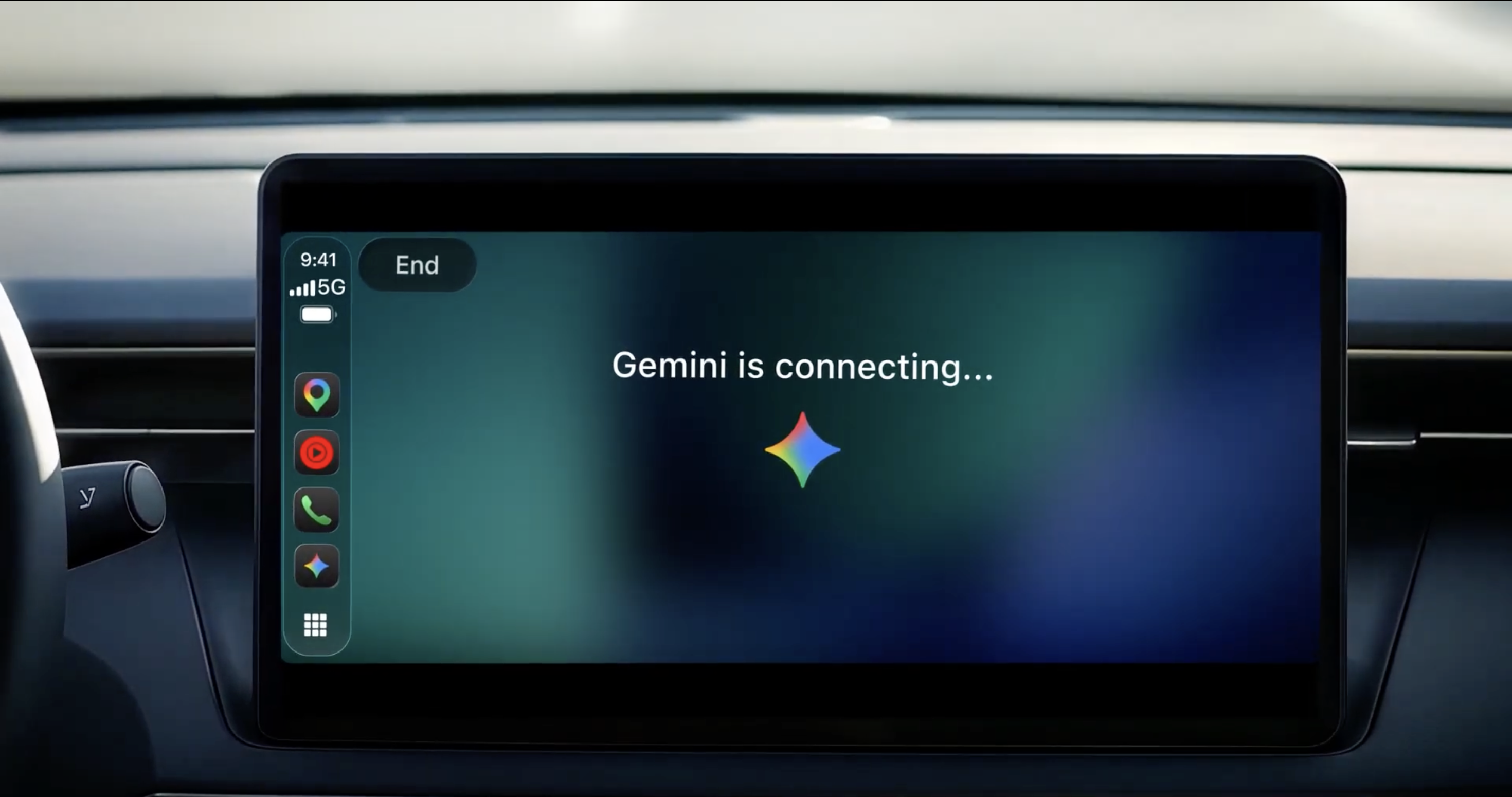
Google has added the standalone Gemini app to Apple CarPlay, so drivers can reach the assistant from the car's display. Engadget reported the change on November 11, 2026.
Gemini was already available on CarPlay, but only through Google Maps. The standalone app now appears on the car screen. Users open it by tapping the Gemini icon on the display.
The CarPlay feature works with every language supported by Gemini Live, the spoken, real-time mode of the assistant, as opposed to typed chat. It has several prerequisites on the iPhone side. The latest version of the Gemini app must be installed, microphone permissions must be enabled, and the user must have used Gemini Live at least once on the phone. Engadget
Conversations started in the car sync with the Gemini iPhone app and remain in chat history. A session that begins at the wheel can be picked up on the phone later, and it stays in the same history as text and voice conversations held elsewhere.
Google's own announcement, titled "Talk it through with Gemini, now on Apple CarPlay," was written by Karan Daryanani, Sr. Product Manager. It appears on the Google Gemini blog.
In my view, the prerequisites say more about the architecture than the headline does. The car's head unit, the built-in infotainment computer, acts as a display for a session that is still anchored to the phone. The iPhone supplies the microphone input, the account, the chat history, and the prior Gemini Live activity that gates access. The dashboard is a client, not an independent assistant. For developers and platform watchers, that split matters, because it determines where data lives and which device must be set up before the car side works.
The broader context here is that CarPlay has long been a channel through which third-party apps reach the vehicle via the phone, subject to Apple's entitlements and the iPhone's permission model. Gemini's earlier route through Google Maps was one version of that arrangement. The standalone access is a second one, and it widens the set of conversations that can happen while a driver's hands are on the wheel.
In my view, driver attention is the obvious open question, and the listed requirements do not settle it. A spoken exchange with a capable model asks more of the driver than a turn-by-turn prompt does. How well the interface keeps that exchange brief and interruptible will matter more than the feature list.
In my view, continuity is the most useful part of the release. A conversation that starts on the road and resumes at a desk, under the same history, removes a seam that previously existed between the car and the phone. Integrations of this kind tend to matter more over time than any single voice command.