Voyager 1 Set to Travel One Light-Day From Earth
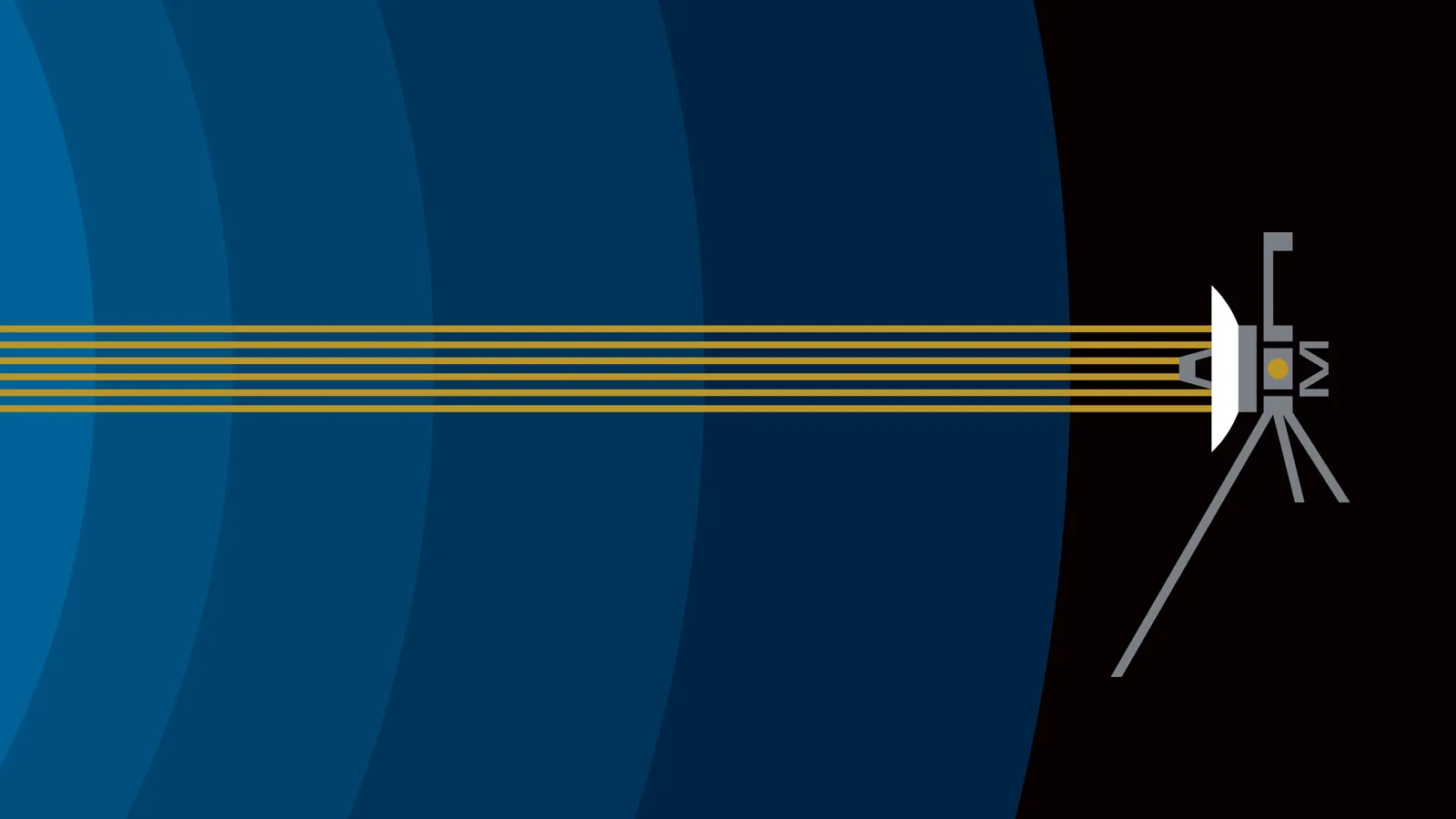
NASA's Voyager 1 probe is set to become the first human-made object to travel one light-day from Earth, according to Al Jazeera.
A light-day is the distance light can travel in 24 hours. Voyager 1 is expected to have covered at least 16 billion miles since its launch in 1977, which equals that distance. Light, the fastest thing in the universe, would need a full day to cross the same gap.
The probe is moving far more slowly than light. It is currently travelling at roughly 36,000 miles per hour through interstellar space, the region between the stars. At that pace, NASA expects Voyager 1 to take 18,000 years to cover a full light-year.
Voyager 1 was launched in 1977 and was sent shortly before its twin, Voyager 2. Its flyby of Saturn in 1980 marked the end of its main planetary mission. NASA's twin Voyager spacecraft went on to complete the first in-depth reconnaissance of the outer planets, according to NASA. The probes are now chartering the edge of interstellar space, and they are moving apart in different directions at more than 3 astronomical units per year. One astronomical unit is the distance from Earth to the Sun, about 93 million miles.
Both probes are still sending data home. Each day they relay readings on the strength and direction of the magnetic field around them, the pressure of the surrounding space, dust, and galactic cosmic rays, which are high-energy particles that originate beyond the solar system. Voyager 2 is expected to reach one light-day from Earth in 2035.
Keeping the spacecraft working is a continuing task. A NASA team sends commands to the probes roughly once a week, and more often if a probe runs into trouble. In October, NASA briefly lost contact with Voyager 1 for a reason that has not yet been determined.
Suzanne Dodd, the project manager for Voyager 1, described the probe as "a national treasure." Voyager 1 also took the "Pale Blue Dot" photograph of Earth in 1990, and the golden record it carries was assembled under a committee led by Carl Sagan of Cornell University.