Nvidia's RTX Spark Desktops Are Now on Sale From Asus, Dell and MSI
Nvidia's RTX Spark N1X chip is now available in desktop systems from Asus, Dell and MSI, according to The Verge. Desktops from Acer, Gigabyte and HP are coming later.
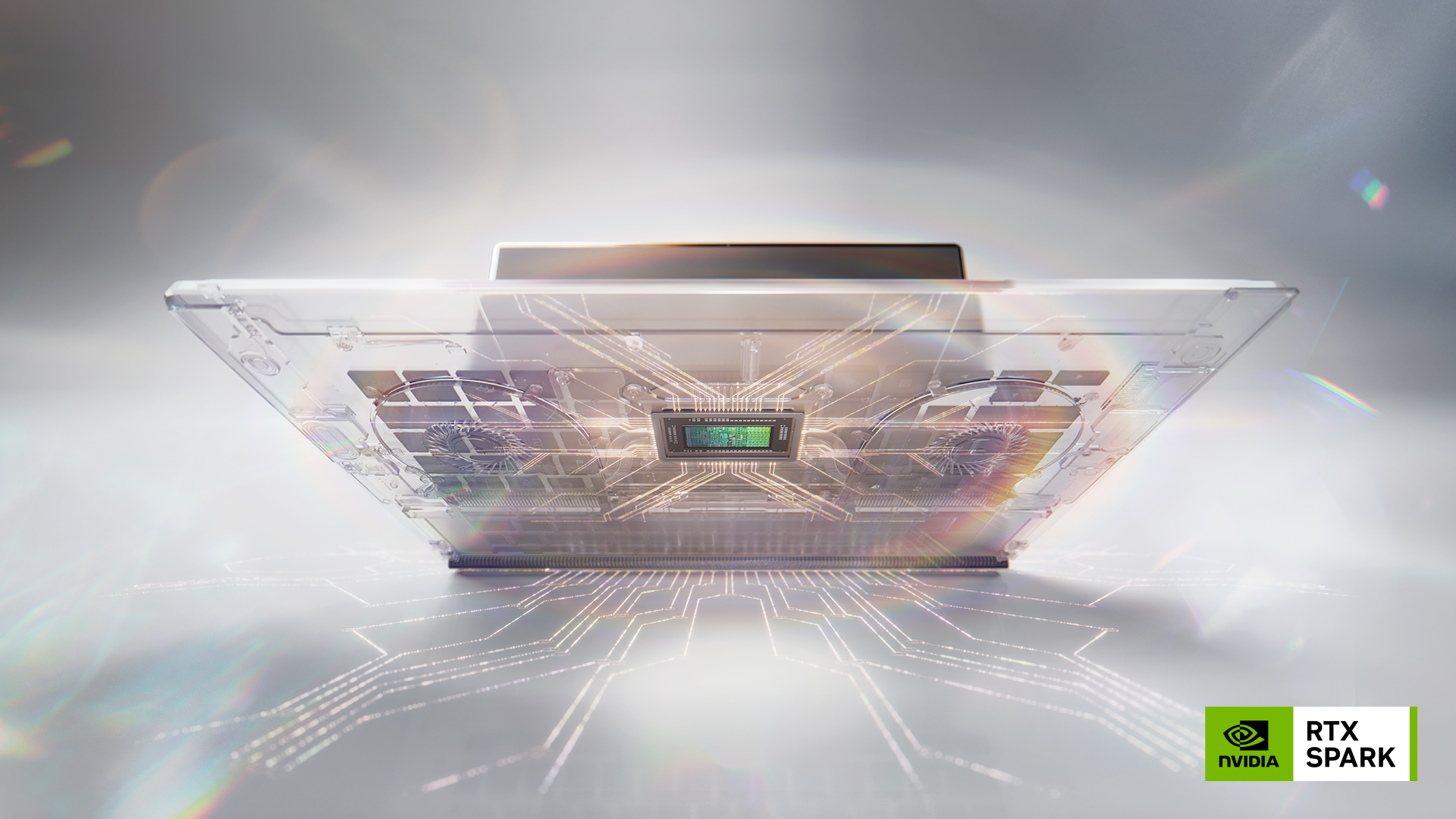
The mini PCs pair a 6144-core Nvidia Blackwell RTX GPU with a 20-core Nvidia Grace CPU. Memory goes up to 128GB. Nvidia says the systems deliver up to 1 petaflop of AI performance, meaning one quadrillion floating-point operations per second.
Asus is selling the ProArt GR1X from $4,499, a configuration with 64GB of memory and 1TB of storage, according to the Asus announcement and the Verge report. Higher configurations sit above that entry price.
On the software side, the RTX Spark desktops support CUDA, Nvidia's GPU programming platform, natively. They also give developers Linux development tools through Windows Subsystem for Linux (WSL), which runs a Linux environment inside Windows. A Windows machine can host a Linux toolchain without a separate computer or a dual-boot setup. Microsoft's Surface RTX Spark Dev Box is slated to start shipping this month, which places it in November 2026. Shipping has not yet begun for that device.
The practical picture is a desk-sized machine aimed at local AI development. CUDA matters most to working engineers because it is the default environment for most of the model code they already run. A desktop that runs it natively avoids the porting and driver-mismatch work that has slowed local experiments for years. The WSL tooling covers the other gap. Many inference servers, build chains and container workflows assume a Linux userland, the core set of Linux system tools and libraries.
Memory is the other lever. At 128GB, one desktop can hold model weights (the learned parameters of a model) and the working buffers around them, which would not fit in a typical workstation GPU's memory. That does not make these systems a substitute for data-center accelerators, and nothing in the announced specifications suggests it. They are a plausible place to prototype, evaluate and debug models before moving a job to shared infrastructure.
In my view, the price point is the number to watch. At $4,499 for the entry ProArt configuration, the hardware is priced for professionals and small teams rather than hobbyists. The purchase decision will hinge on how much iteration a team does locally compared with renting cloud capacity, a trade-off the industry has faced many times. The answer will vary by workload.
The staggered rollout also matters for procurement. Asus, Dell and MSI systems are available now, while Acer, Gigabyte and HP units are still to come. Enterprise buyers standardizing on one platform will likely wait for the full vendor set. Individual developers can choose among the systems already on the market.
The broader context here is that Nvidia is extending its CUDA platform onto Windows desktops in a form factor between a laptop and a workstation. For developers who work across Windows and Linux, native CUDA and WSL-hosted Linux tools remove compromises that have shaped local AI work for years. Whether these machines become a routine part of model development will depend on how the shipping configurations perform under real workloads. The coming weeks should provide the first answers.