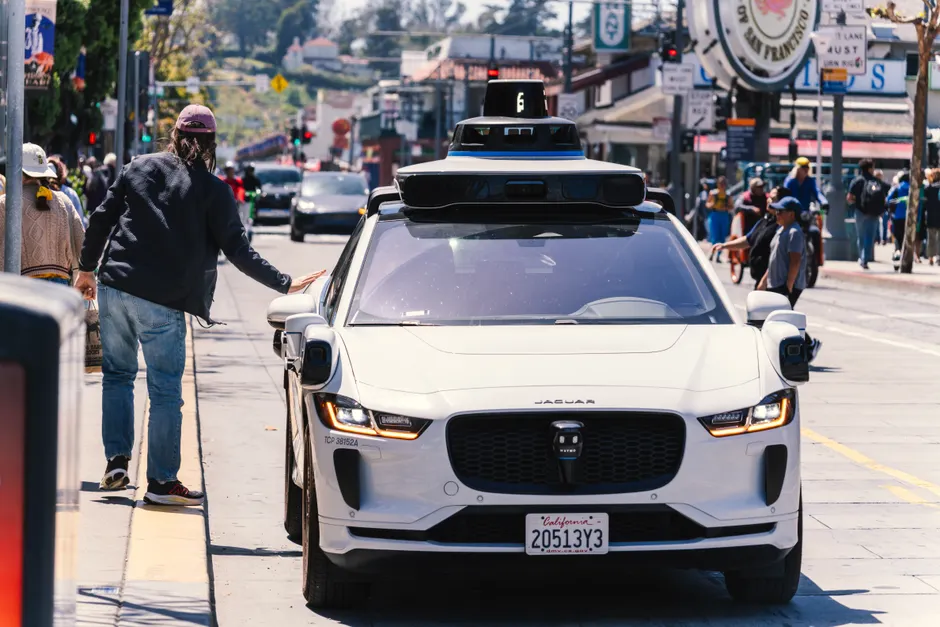
California Bans Waymo Robotaxis From Interstates as Freeway Rides Pause Nationwide

The California Department of Motor Vehicles has banned Waymo vehicles from all California interstates, and Waymo has paused commercial freeway rides across all of its U.S. markets. The Verge reported both actions, which follow a run of incidents involving the company's driverless fleet.
The most recent incident on the list occurred on November 6. A driverless Waymo vehicle on Interstate 280 attempted to overtake two California Highway Patrol cruisers during a traffic break. Between October and November 2026, Waymo also reported 11 instances in which its vehicles failed to recognize a freeway lane closed for construction and drove into the restricted area.
Those October and November reports came after freeway service had already been suspended and then restored. Earlier in 2026, Waymo temporarily halted freeway rides after its robotaxis entered active construction zones in Arizona and California. The company issued a recall in June for construction-zone entries and gradually resumed freeway operations starting in late July, following a software update. The 11 construction-zone instances reported for October and November therefore occurred after that remediation was deployed.
The recall history extends well beyond freeways. Waymo filed a recall for an intersection crash in which a vehicle followed a police officer's stop command until passing traffic blocked its view. The vehicle then lost track of the command and drove into the intersection. The company updated its entire fleet software so that vehicles remember manual traffic signals even when an officer is briefly out of sight. Waymo has also filed recalls related to passing stopped school buses and driving through flooded roadways.
For engineers, the sequence describes a perception and planning stack, the software that interprets sensor data and decides how the car moves, that has been patched repeatedly against specific scenarios: work zones, emergency-scene signaling, school bus stop arms, and standing water. Each remedy is delivered as an over-the-air (OTA) software update rather than a hardware change. The fleet-wide signal memory fix shows that a behavior can be carried across the whole fleet at once. The freeway incidents show that a fix for one class of scenario does not automatically hold for a neighboring one, much as a driver who has learned one detour sign may still miss the next. The construction-zone failures recurred after the June recall and the July resumption.
In my view, the regulatory response is best read as a judgment about operating domain, not about the robotaxi concept as a whole. A freeway is a high-speed environment where a missed lane closure leaves a vehicle little margin to react, and the CHP-cruiser overtaking event involved emergency vehicles during a traffic break. The interstate ban and the paused freeway service remove that domain from the fleet while the company works through the reported failures. Surface streets, where the same fleet continues to carry passengers under the framework described in the report, are a different operating envelope.
The broader context here is that each of these recalls is a bounded, reversible fix. The software changes that restored freeway service in July are the same mechanism that would be needed to restore it again, and the fleet-wide signal update shows that behavior changes can reach every vehicle without a physical retrofit. Whether the construction-zone and freeway-lane problems can be closed to the standard regulators expect is the open question. The answer will come from re-validation data and from the conditions the DMV sets for reinstatement.